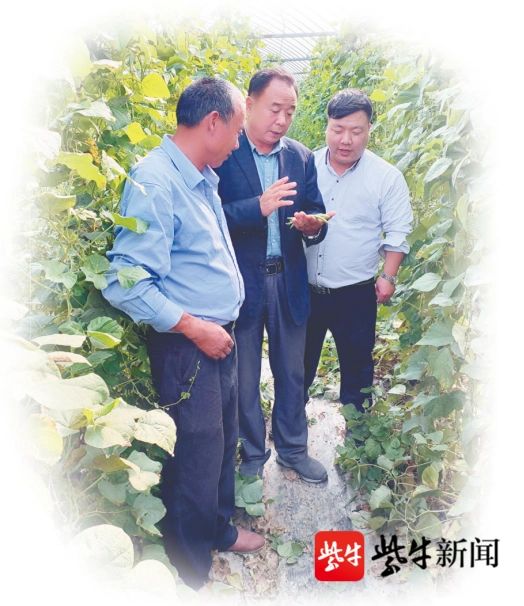
The method of planting lilies
How to grow lilies
With lilies planted, it is desirable that the north choose a place of refuge in the sun and that the south grow in a little shade. The planting time is appropriate for august-september. Here's my method of planting lilies for you。
How to grow lilies
One, put the balls up. Don't turn the ball. Some balls don't have roots yet, and it's buds that open up。
Ii. Preparation of soil: sandy soil, which is very fertile, protected and drained, and which can be made of itself, peat or earth: river sand: pearl rock = 2. 2:1 and cannot be planted with clay, with well-watered soil, suitable for ball root plants。
Third basin: lily belongs to a two-layer root flower, so a deeper basin is required, usually 20 cm caliber, with two to three heads. Three are tight, and the flowers are nicer。
Iv. Cultivation: it is best to disinfect before buying lily balls and wash them with an imported polybacterial solution of 1,000 times. First, 10-15 centimetres of soil will be filled at the bottom of the basin, the ball will be laid, the earth will be covered by about 5 centimetres, water will be poured, and several days will be put in the shade for three to five days。
V. Water: keep it moist at normal times, by holding a piece of earth with your hand, squeezing it hard, and having water sewn through your fingers but not dripping down. Don't overwater it, it's easy to rot, but it's too much and it can't be half-watered. It's best to use running water for two days. A further 1,000 times the solution of the imported polybacterium is applied twice a month, preferably with an air humidity of 60-80 per cent, preferably stable and, if the humidity varies too much, prone to foliage, especially during the period of fresh flowering. If it was not for large-scale cultivation, one or two basins were to be raised at home, it would be less nuanced and twice a day。
The point of growing lilies
The irrigation systems used in the north are drip irrigation, spray irrigation and home-made irrigation, which are common in both flood irrigation and home-made irrigation. The advantages of flooding and home-made spraying are economic. The disadvantage is that water is not easily controlled and can increase greenhouse temperatures and damage soil structures; the disadvantage of home-made spraying is that water is not even. In order to produce high-quality cut flowers, spray and drip irrigation are preferred。
The main heating methods in the north of the heating system are pipe heating and air heating. Pipe heat is equally distributed and temperature is easy to control, but input costs are high. Air heating is fast, but care is taken to level its distribution evenly and to ensure that the combustion gas is fully discharged。
The cooling methods used by cooling systems in the north are microsprays, sunnets and ventilation。
Prepare for planting
The soil structure is important for lily growth, and it is appropriate to be rich in decomposed and deep, loose and well drained. The appropriate soil ph values for lily-synthetic soil, saline-resistant soil, oriental lily should be between 5. 5 and 6. 5 and the most appropriate soil ph values for asian lily and iron-gun lily should be 6. 0 to 7. 0。
The soil in the northern part of the country is mostly border and heavy, with ph7. 2-8. 0 values, which is not permeable enough to affect growth; the high ph values affect the nutrients required for normal plant absorption, leading to various symptoms of deficiency. Soils are improved with organic fertilizers or herbs before lily is grown and soil phs are adjusted with iron sulphate + lemon acid。
Two main methods of soil disinfection are common: steam disinfection and chemical disinfection。
Vapour disinfection: less used in practice。
Chemical disinfection: it is divided into soil disinfection and heavy soil disinfection. Conventional soil disinfection refers to the soil we planted for the first time, using a general microbicide plus insecticide treatment; heavy soil disinfection refers to soil that has been planted repeatedly, at which point the soil must be strictly disinfected and is currently dominated by chlorination, which has the advantage of being effective, having the disadvantage of being used in a complex manner, requiring specialized personnel and having high toxicity and high residues. Alternative products are evaporated at a minimum speed, with simple use, low toxicity and low residues。
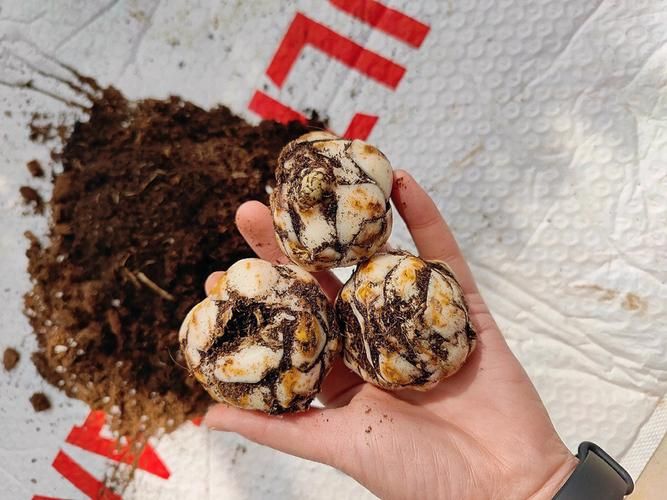
The thawing and disinfecting of seed balls is done immediately upon arrival, and the thawing of seed balls is done slowly at 10 °c - 15 °c. If cultivation is not carried out in a timely manner, it should not be frozen again, otherwise it is vulnerable. The balls shall be placed at 0°c - 2°c and kept for two weeks. The plastic film shall be opened at 2°c ~ 5°c for one week。
When the ball is completely unfrozen and disinfected, the main method of disinfection is impregnation, mainly by polybacterial leachate (in practice, if the ball is free of abnormalities and is able to plant in a timely manner, it can also be sterilized or sterilized with water after planting)
Depth and density of cultivation
Different types, specifications and seasons vary, usually from spring to summer, which is lighter, to winter. A list of the density of the eastern lily cultivation is given below (in terms of a ball per square metre)
During summer planting, due to higher temperatures and in order to prevent stasis, the northern part tends to grow after 2-3 cm, up to a level of 4-5 cm from earth, and up to a level of 6-8 cm from earth in winter and spring。
Greenhouse management after planting
In order to obtain high-quality lilies, temperature control in the greenhouses is important. During the root period (the first three weeks after planting), the ideal temperature should be between 12°c and 13°c, favouring the growth of the libertarian root, which is less than 15°c than the growth of the root. When the root starts to grow, the new root will soon replace the base root, providing 90 per cent of the moisture and nutrient for the plant, so the developmental state of the root is critical if quality lily is to be obtained。
In cases where conditions permit cold storage during high-temperature seasons or cellars to take root, this method should be sensitive to the control of base moisture content and should not be excessive。
After the end of the rooting period, the temperature gradually rises from 15 °c ~ 17 °c to a maximum of 28 °c, and is below 15 °c, which can easily cause falling buds and yellow leaves。
It is desirable to keep the humidity between 80 and 85 per cent of the air, but at the same time to avoid excessive fluctuations, which could inhibit crop growth and cause some sensitive leaf burning. The temperature room is more wet at night, and the morning ventilation is phased and slowly reduced, especially when the relative humidity outside is low, such as very cold or very warm weather. In addition, the relatively low humidity in the greenhouses should not be watered in large quantities during the day, and in such cases water should preferably be watered in the morning。
There are no specific criteria for soil moisture, "hands in groups, fall loose" is enough. The availability of cool water once before planting during the high-temperature season not only reduces the temperature of the soil but also contributes to the growth of roots. The planting should be followed by a perforation of water once, and a second one, depending on the soil, usually for no more than three days, followed by irrigation depending on the soil。
Fertilizing
(1) half an acre greenhouse, with 6-8 cubic metres of decomposition organic fatty (cows, sheep, pig dung) and mixing with soil, preferably completed about 15 days before planting;
(2) a suitable amount of long-activated fertilizers may be applied to the bottom of the plant, together with appropriate quantities of long-activated fertilizers and appropriate quantities of insecticides and microbicides. In general, five and a half acre greenhouse application of ammonium phosphate and 10 kg of potassium sulphate compound fertilizer in the eye, with the condition that it may be increased by approximately 20 kg of bone powder. Insecticides can be used for fururandane or iron sterilisation, and microbicides can be used for geocreaceous or dichlorfon;
(3) in the eastern liquilla, it is desirable that calcium nitrate, potassium nitrate, ammonium diammonium and urea be used interchangeably;
(4) some leaf fertilizers or plant growth regulators shall be applied as appropriate during growth, depending on growth。
How to grow lilies