The great peak is a very classic european-american hybrid, and although it was born for many years, it is still japan's largest-growing grape species. After the second victory, japan donated this variety to china, which has since opened up the miles from which china has been actively cultivating mixed grapes in europe and the united states. This breed has been in china for many years and is still one of the largest grape varieties ever cultivated in china. Despite such problems or technical difficulties in planting giant peaks, it is undeniable that they are large, skin-defeated, juicy and fragrance of strawberries, a very good grape food。
I. Evolution of varieties after the great peaks entered china
Let us begin with a brief review of the evolution of varieties after the giant peaks entered china. There are now two large-scale chinese-cultivated peaks, one of them, and one of them, the budding of the giant peaks found in liaoning, which we call the peaks. It's not right that many friends now call liao ningli's giant peak. Liao feng is a well-defined breed of early ripening of the giant peaks we found in liaoning. Their taste and quality are basically the same as those of mega-peaks, but their strength is concentrated in the earlier stages of maturity, typically 15-20 days earlier than the mega-caps, and they are relatively lighter than the mega-tops and easier than the mega-tops, but they are more difficult to sit on than the mega-tops, so that the technological requirements are relatively higher for sit-in management。
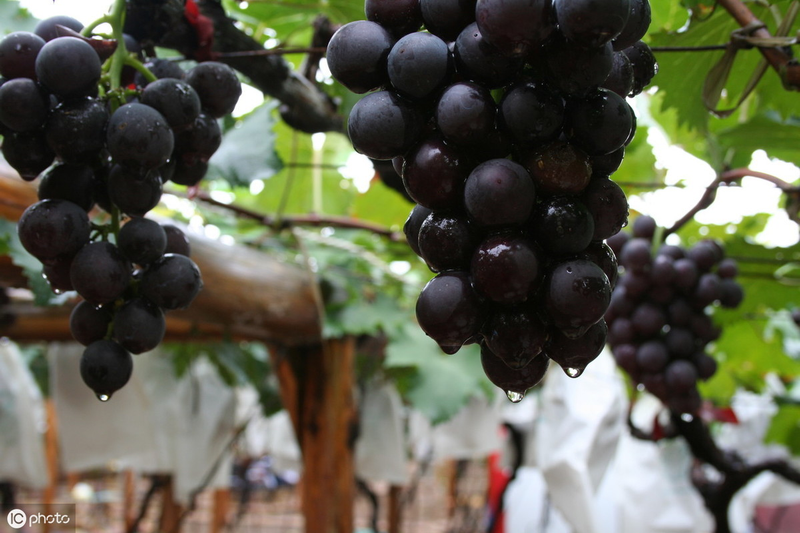
With the development and progress of our grape varieties, we have now discovered several more pre-maturity spasms, for example, in the zhejiang river, where we have discovered multiple pre-maturities and now super-premature peaks, which are generally older and can be 7-10 days earlier than the peak, and where the taste and quality do not differ qualitatively from the peak, but are, after all, a new species. The deficiencies in new varieties and some of the technical difficulties in cultivation need to be slowly revealed in the various plantings. Thus, although these varieties exist, they are not the focus of today's presentations because they are premature. Today we are also focusing on the peaks and the peaks that have been validated and registered。
Ii. Natural fruit cultivation on giant peaks
When it comes to giant peaks, many friends joke, saying, "crazy, giant peaks." it's true that there's a lot of problems with the plume, like having a bad seat, having a bad color after sitting, having a bad water control, and having a good fragrance when it comes to color. In these respects, it is indeed a relatively difficult breed. However, we would like to emphasize that these problems have largely been better addressed thanks to technological advances and the accumulation of cultivation experience。
In mega-topping models, it can be divided into natural fruit cultivation and denuclearization treatment cultivation. Natural fruit cultivation, i. E. Making grapes sit on their own and self-developing their own nuclei; non-nuclei treatment cultivation, which corresponds to natural fruit, refers to the use of plant growth regulators that have proved to be generally safe and that are commonly used in europe, the united states and japan, to ensure the quality of megapolymers, known as denuclearization。
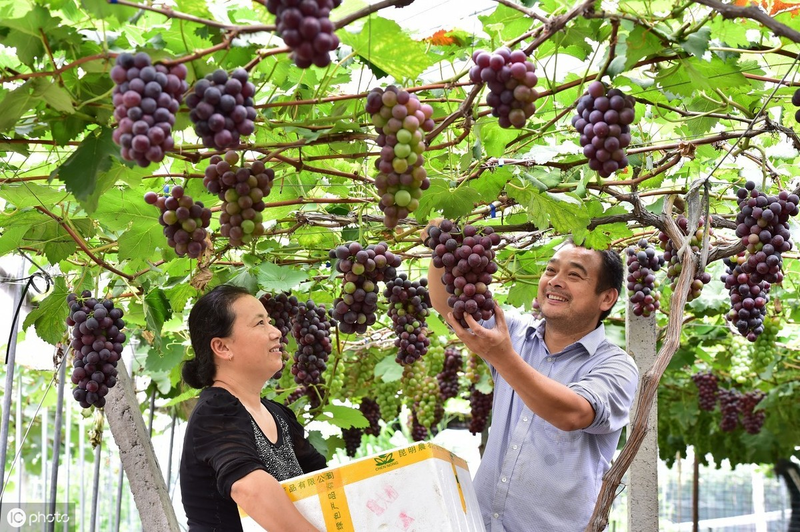
So we will be discussing today mainly around the natural fruit cultivation of giant peaks. The core of the natural cultivation of giant peaks lies in tree phase control or position control. What do you mean, a tree or a tree? It refers to plant growth, through which we can clearly judge the nutrition of the fruit tree itself。
Here we begin with the basic knowledge that the development of grapes can be divided into two types: reproductive development, nutritional development, and, of course, reproductive and nutritional growth. Nutritional growth refers to the growth and development of roots, roots and leaves, which are the main absorbent and nutrient synthetic organs of fruit trees. The roots absorb water fat and feed it to the leaves, which, in light, transform the water fats absorbed by the roots into nutrients, which we call photosynthesis. So, what we're providing to fruit trees is fertilizer, but fruit trees grow with nutrients, which are not the same as nutrients. Fertilizers, when available, have to be absorbed through the root system and the light co-operative use of the leaves in order to be converted to nutrients. Roots, tubers and leaves are therefore nutrients of plants that provide nutrients mainly for the growth of grapes, but also for their own growth。
Reproductive growth is clear: flowers, seeds, fruit, organs that eventually form a raisin and produce. In the development of flowers, seeds and fruits, they consume only nutrients and do not produce them. We must therefore achieve a good balance between reproductive and nutritional growth in the management of fruit trees, so that roots, roots and leaves can grow themselves and provide sufficient nutrients for the growth of flowers and seed fruit。
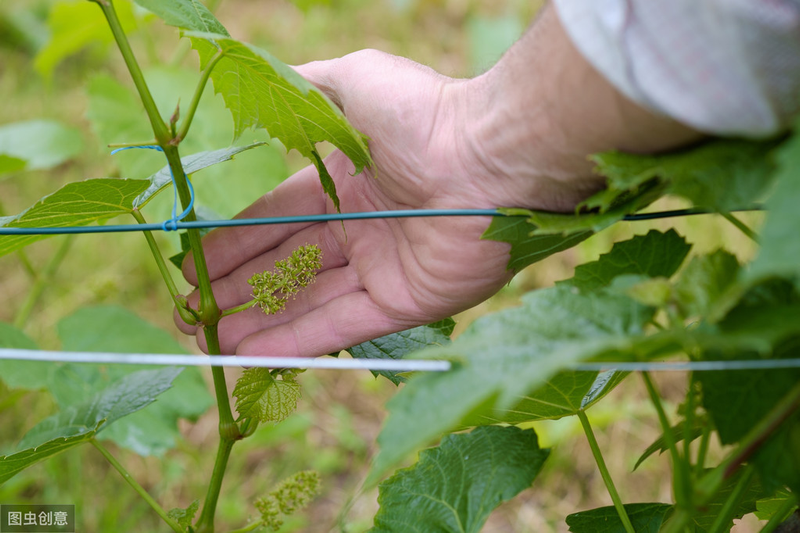
We are most afraid of the two vicious cycles of grape production, one of which is that the leaves thrive and that their synthetic nutrients are all taken away by themselves, causing the branches to grow. The growth of the branches means that the nutrients are consumed in large quantities, and the flowers, seeds and fruits are distributed less, so it is certain that they will be difficult, low yield and small fruit. With little fruit, the demand for nutrients is low and the demand for nutrients is low, so the growth of fruit does not constrain the growth of branches, so the branches grow even more。
When nutrients are consumed whitely on branches, it is difficult to guarantee the nutrients allocated to the guillotine, so the amount of flowers spent in the second year, or production in the second year, is lower, so the growth of the fruits is more difficult to bind the branches and the branches grow more and more. This is a vicious circle caused by the excessive growth of the branches and the most obvious in the process of cultivation of the giant peaks。
A lot of friends say that the smaller the peaks, the harder it is, the more difficult it is, the more your tree looks, and the more its branches grow. In this case, we're going to examine whether there's something wrong with the trim and the fat。
The second vicious circle is that the branches are too strong to guarantee their own growth, let alone nutrients to satisfy the growth of the fruits. This is a situation where trees are too weak to grow. If the branches do not grow, the nutrients are relatively much saved, and the fruit is generally not bad, but the fruit sits well, the ears are big, the demand for nutrients is higher, and the branches are further held back, making them longer. It is a vicious overdraft of tree nutrients and a vicious circle. If we are to grow these great peaks, care must be taken to avoid these two vicious cycles。
Summary
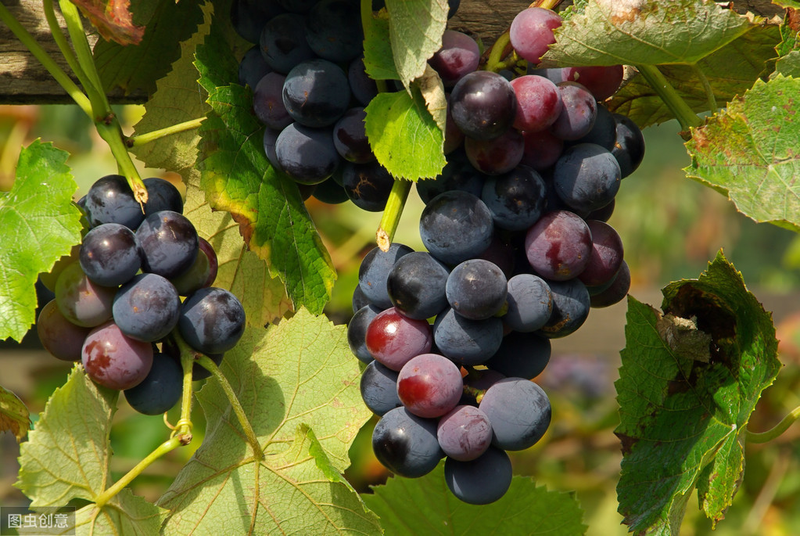
To achieve natural sit-in, mega-peaks must control tree positions and balance nutritional growth with reproductive growth, i. E., ensure the normal growth of branches so that they can provide sufficient nutrients for the growth of the fruit and the splitting of the buds of the second year. But the branches must stop growing, and there must be no conflict between the branches and the fruits that take their nutrients. It is important to note that the fruit cannot be taken, and that the natural fruit of the giant grapes is difficult to guarantee。
(thank you for reading! Click on the lower applet to view the video and access the year-round cultivation management techniques of the giant grapes
(the applet has been added here, please view the front page of today)