The history of monkey mushrooms begins with a spores and continues to stretch into mononucleic filaments, but cannot form sub-entities. Only a single nucleus of two genders can produce a fertile binucella silk through a heterosexual union. Developmental conditions: the incidence of wild monkey mushrooms occurs in less dense forest conditions, with air circulating, high humidity and around 20°c。
Nutritional mushrooms are wood rotors and have a strong capacity to break down wood. There is widespread access to carbon sources, nitrogen sources, mineral elements and vitamins. When planted, tree-appropriate wood is the most economical and excellent source of carbon. And sugar cane dregs, cotton seed shells and so on are ideal sources of carbon. Neptunium and rice are good sources of nitrogen, and other available sources of nitrogen include urea, protein, ammonium salt, nitrate, etc. The growth process also requires a suitable carbon nitrogen ratio, which is appropriate for the fungus growth phase of 25:1 and for the sub-entity fertility phase of 35~45:1. In addition, a certain amount of mineral ions such as phosphorus, potassium, magnesium and calcium are to be absorbed into the growth of the fungus。
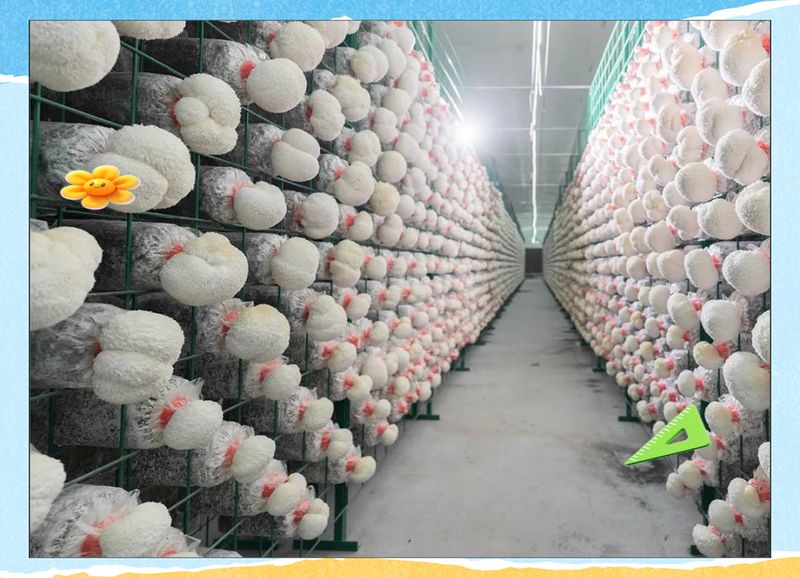
Temperature fungus fungus growth temperature range of 6 °c ~ 34 °c, with a maximum temperature of about 25 °c, less than 6 °c, and the metabolic effect of the fungus has ceased; the fungus growth is slow and aging at more than 30 °c and growth at 35 °c. The temperature range for sub-entity growth is 12°c ~ 24°c, with 18°c ~ 20°c most appropriate. When temperatures are higher than 25°c, the sub-entity grows slowly or does not form a sub-entity; when temperatures are lower than 10°c, the sub-entity starts to get red, and as temperatures fall, the color is darkened and its value is foodless。
The suitable water content of the hydrologic and moisture culture matrix is 60-70 per cent, when the water content is less than 50 per cent or more, when there is a significant reduction in the original base decoupling of monkey mushrooms, and when the sub-entity is mature and yields are reduced. For the requirements of relative humidity, 70 per cent is appropriate for the development phase of filament culture and 85 per cent - 90 per cent for the formation phase of the sub-entity, at which point the sub-entity grows rapidly and white. If less than 70 per cent of the sub-entity's surface is severely dehydrated, mushrooms dry, yellow, short and unextended, leading to a reduction in yields; the opposite air is relatively wet above 95 per cent, the fungus is long and coarse, and the mushrooms have a small heart and branch form, forming “fruit mushrooms”. A monkey head 5-10 centimetres in diameter with a daily water evaporation of 2-6 grams。
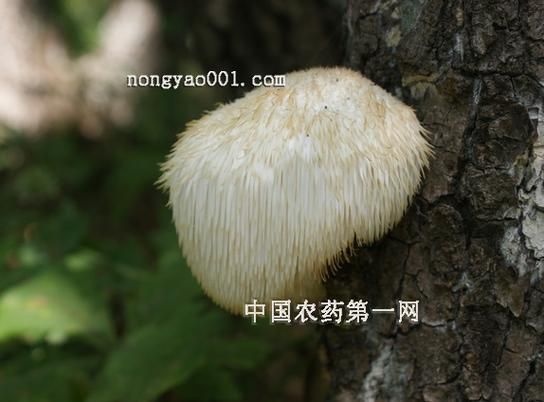
Air monkey mushrooms are a good aerobic fungus and are very sensitive to co2 concentrations, and when co2 concentrations are higher than 0. 1 per cent in air, it is important to keep fresh air in the mushroom houses, as they stimulate the continuous branching of the fungus and form coral-like malformation mushrooms。
Light is largely not needed during the growth phase of the fungus mushrooms, but cannot form the foundation without light, and 50 lx dispersing light is required to stimulate the original base. The sub-entity growth phase requires sufficient dispersible light, with mushrooms growing full and white at 200-400 lx, but with greater than 1,000 lx, mushrooms are red, of poor quality and lower yields. The epilithic growth of monkey-head mushrooms is obvious and therefore it is not appropriate to change the direction of the container too much in management, otherwise the fungus curvature mushrooms are formed。
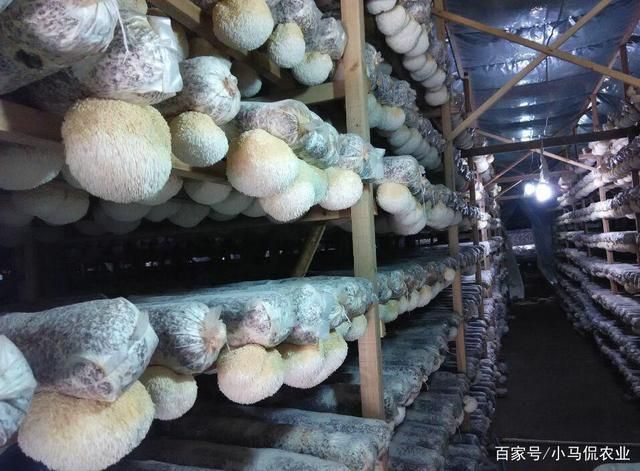
The acid alkaline monkey mushroom is a alkyl fungus, which can grow at ph2. 4 ~5 but is most suitable at ph4. When ph is above 7, mycelitis is poorly grown, the fungus is irregular and the sub-entity growth phase is most appropriate at ph4 ~5. Lee su