2021 heilongjiang province compendium of crop cultivation technologies 34
(i) main cultivation technology models
While monkey mushroom cultivation is now on a certain scale in many parts of our province, the problem that stands out is the low proportion of first-class products, which not only reduces the value of commodities but also affects the economic efficiency of producers. The technology model addresses the quality of monkey mushrooms。
(ii) supporting technical elements
Cultivation season
In march, the third class was taken to the shed in early may, the first harvest took place from 1 june to 20 june, the second on 20 june to 15 july and the third in early september to the end of september。
Genetic selection
The monkeys chose blackway 9910, junfon 1, 2。
3. Bacteria management
(1) raw materials. Selecting raw materials, rational formulation of cultures. Plantation materials require the choice of hard sawdust, which is better than fresh. Wheat and rice herbs require fresh, non-stereogenic, non-toxic mycelium. The selected materials need to be fresh, non-stereogenic, non-mixed, and evenly balanced. Small amounts of minerals, such as phosphorus, potassium and magnesium, are added to the culture and are more effective. The moisture of the nutrients is generally adjusted to 65 to 70 per cent, with an alkalinity of about 5. 5 and a ph below 4 or above 7 not conducive to the growth of mysis or sub-entity。
(2) the culture-based formulation. Formula one: sawn bottom 77% - 78%, wheat 20%, plaster 1% - 1. 2%, sugar 1%. Formula two: 71% to 71. 5% saw, 25% paddy, 1% plaster and 2. 5% corn paste. Formula iii: 50 per cent saw bottom, 20 per cent wood-earthing waste, 10 per cent wheat mill, 15 per cent rice mill, 1 per cent soybean flour, 2 per cent corn paste-3 per cent and 1. 2 per cent plaster powder。
(3) pack. Pyramid bags of 17x36x0. 05 are packed in bags and material is critical. About 0. 5 to 0. 6 pounds per bag. The weight of the bag is 1. 2 to 1. 4 kg and the material is 20 cm high. Upon completion of the material, the material centre is placed in a fungus with a diameter of 1. 5 to 2 cm (to the bottom) and is then fitted with a loop, which is then reinforced by a cotton seal. The material should be assembled quickly and enter the sterilization phase as soon as possible。
(4) sterilization. When the pot is installed, the temperature of the pot shall be as fast as possible, with a pressure of 100 to 108°c, and the fire shall be kept on top and in the middle. When the bag enters the pot, it rises to 100 °c within 2-3 hours, then maintains a temperature protection of 100 °c for 4 hours and finally stops the tungsten for 6 hours。
(5) vaccination. Clean up the indoors. The walls of the culture room require smooth and smoothing, with lime painted over the interior wall, temperature above 25°c, temperature protected for 48 hours, application of an oxygenated acetic acid solution to the interior wall and bacterial frame, and application of an effective ingredient of 4% efficient fluoride clothopylene permethrin and 0. 3% methachlor benzoate are treated as a net pest. The door was filled with a high-speed drying of all the walls and strains of the room, followed by a layer of lime-proof and fung-proof floor. The doors and windows were re-closed prior to vaccination and 3 per cent of the soul solution was used for a full spray disinfection。
Vaccination kits are used. A small, secondary primary seed is used to access the pocket, then a block is fixed to the upper hole of the inoculation in order to produce the fungus at the same time, usually covering 35 to 40 bags per bottle。
(6) cultivation of fungus. Within 1 to 10 days of vaccination, the temperature of the culture room is 20 to 28°c. The internal temperature of the bag rises to 2°c higher than the room temperature as the fungus develop, at which point the room temperature should be moved to around 25°c. Sixteen days later, the fungus gradually entered the metabolic period, which should be controlled at 20-23°c. In winter, natural temperatures are low and can be increased. Anemic periods require indoor drying and air is less than 70 per cent wetter than 75 per cent. Keep it around 22-25°c, not more than 28°c. More than 25°c is ventilated, every morning and every night. It usually takes about 30 to 40 days for mybs to be full of mybs, while keeping an eye on the light。
Mushroom management
Monkey-head mushrooms usually appear in a bag of myceloids, and then begin to appear in their original base, into sub-entities, and have the fungus placed in the shed in time. In general, the shed is divided into three layers, with two layers on the ground and 60 cm above the first shelf。
(1) sub-entity management. Open the mouth: remove the tampons in the neck or remove the duct tape from the inoculation, and cover the bags with plastic film, which is lifted every 2 to 3 days, prompting the formation of mushrooms. When the mushrooms are 2-3 centimeters in diameter, the film is removed. Regulating temperature: when the fungus enter the shed, the temperature remains at 16-20°c to provide a boost. It usually takes 10 to 18 days to harvest from the bud to the mushrooms. During the mushrooming phase, special attention should be paid to temperature control, which, in the event of excessive temperatures, can be reduced by four measures: one space-based spraying of aerosolized water, two gavages wetted and three shades thickened; intermittent venting hours, late-opening ventilation, opening two huts at noon, smoothing the air and promoting the normal growth of the buds. Control humidity: the sub-entity growth period requires the scientific management of moisture and the application of different quantities of water, depending on the size of the mushrooms, the colour of their expression and the clear climate. Spraying is generally not the case for squirms, or for bags to the right or to the right or to the ground at the mouth. The site air is maintained at a relative humidity of 85 to 90 per cent. When the spatial humidity of the fungus is less than 70 per cent, the formed sub-entity ceases to grow; the growth of the fungus resumes with increased humidity and permanent traces of the fungus remain. Over 95 per cent, combined with poor ventilation, can cause bacterial contamination. Maintaining the appropriate humidity can be achieved by: one gavage pouring water and increasing humidity. 2 head to sky, space spray. 3 tight shed plastic sheeting. Increased ventilation: the sub-entity grows up with ventilation every morning and night. But don't let the wind blow the mushrooms straight, lest they shrink. In the case of poor ventilation, excessive carbon dioxide deposition, stimulating the continuous division of the bacterium handle, inhibiting the development of the centre, and creating coral-type malformations mushrooms. Moderate light: dispersive light during the mushroom period, typically 300-600 lekes. The mastery of `three-point-seven-point-and-seven-point sun' to meet the growth needs of the sub-entity。
(2) disease control. Symptoms: easily occurring at high temperatures and humidity. The previous period was shown in white block form and attached to a bottled cotton ball. With a capping of cotton balls, then from white to red, the later stages produce large quantities of red powdered spasms, which fly with the wind, spread everywhere and spread very quickly. Prevention and control: artery is found and taken out with paper or cloth in a bottle and buried outside the house (should be far from the planting room). Because of the efficacy of the spores, the areas passing through are sprayed directly with sprayers. Morphine mushrooms: improper nutrients, high co2 concentrations, produce coral-type monkeys. Humidity is poorly managed, resulting in the emergence of bald and impervious monkeys in part. Temperature and low wetness can make monkey-head organisms red. Prevention and control: when preparing a culture, care is taken not to mix wood and other toxic substances in trees such as pine, pyl, safrole, etc. During the filament culture phase, attention is paid to temperature and humidity, as well as to ventilation. Where coral series sub-entities have been formed, they can be eradicated in early hours, together with culture foundations, to regain normal sub-entities. During sub-entity culture, the appropriate temperature and humidity is guaranteed and the light is controlled below 1,000 lek。
5. Phased harvest
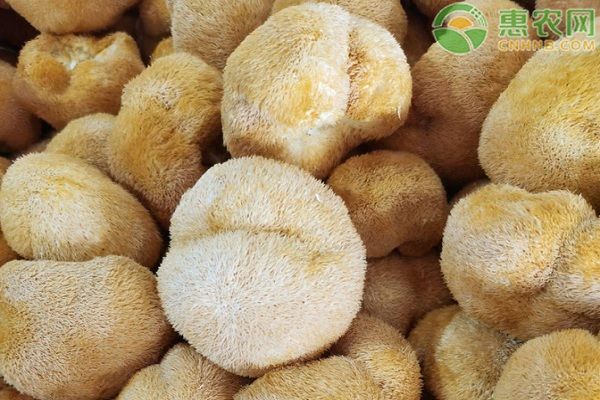
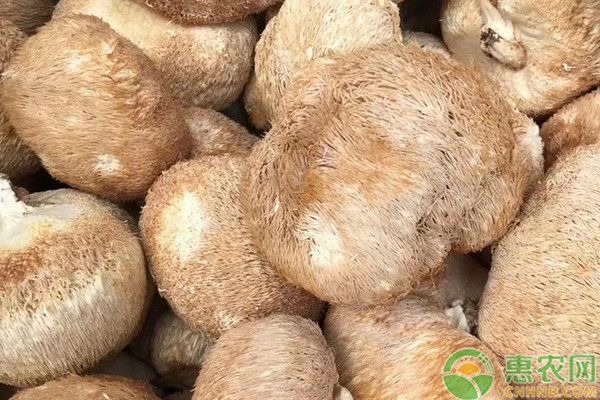
(1) harvest. Sphinx or salted monkey mushrooms are collected when the sting has not yet been extended or has been formed but is not more than 0. 5 cm in length and has not been released in large quantities. The substance maturity of the pharmacological monkey mushrooms, which dry with dehydration, can be extended to pick up about a centimetre of bacteria. When the harvest is made, it is only possible to cut it from the base of the handle with a sharpened blade. It is not appropriate to keep the foot too long or to damage the fungus, which is generally appropriate for approximately 1 cm. Three can be collected, with a high yield of 1-2 and a high grade of 80 per cent of total production。
(2) the method of cultivation of the dichotomy. After the first mushroom harvests, water was stopped for three days and ventilated for 48 hours, so that the post-harvest shroom surfaces were constricted to prevent impurities. The temperature is then adjusted to 23°c ~ 25°c, so that the fungus accumulates nutrients. The 8-15-day base appears and the 10-day larvae formation reduces the temperature to 16°c-20°c and increases air moisture to around 80%. At the end of 80 to 100 days under normal temperature conditions throughout the production cycle, the rate of biotransformation is generally 80 to 100 per cent。
6. Process technologies
If the sub-entity does not eat immediately after harvest, it should open, dry or indulge in salt for processing at the cannery. The collected monkey bacterium can be freshly sold and can be dried, dried or stored in salt。
(1) dry. The bacterium collected will be removed from the fungi section and released to the bamboo curtains, exposed to the sun, first cutting the face up for a day and then turning over to dry。
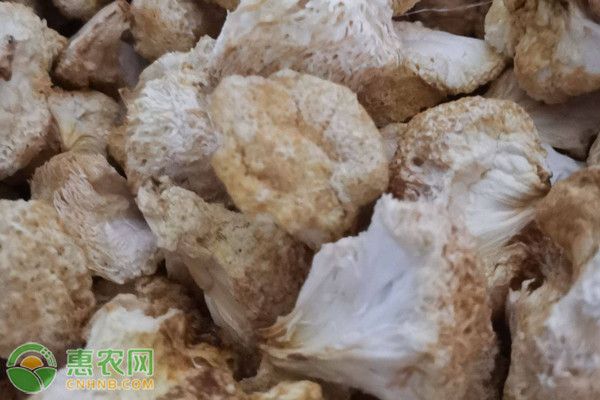
(2) dry. The fresh monkeyheads will be harvested, dry for 1 to 2 days, and baked by size. Baking temperatures were raised from 40°c to 60°c until drying. The dry product contains 10 to 13 per cent of water and requires that the fungus be kept intact and cooled into plastic bags in a timely manner and kept in seal。
(3) salting. The fresh monkeys collected shall be removed from the bacterium, their bacterium removed from the water, their dust removed, they shall be boiled in boiling water for 10 minutes, and they shall be recovered and then cooled in the water. 25% salt (by monkey weight) added to the water, layered with salt stored in pools or drums. In seven days, the pool or barrel is filled with saturated salt water (i. E. 2. 5 kg salt per 50 kg of water, cooled to saturated salt water) and sealed with salt grains of 1 to 2 cm thick。
7. Analysis of benefits
Twenty-five thousand bags per acre, 0. 05 kg of dry products per bag and 1. 25 million kg of acre. Based on the average sale price of $68 per kilogram, each bag is worth $3. 4 and the acre is worth $85,000. (a) $0. 55 per bag of fungus species, $0. 15 per worker, $0. 07 per piece of equipment depreciated and $0. 07 per piece of water* land, at a total cost of $ 1. 77 per bag and $44. 25 million per acre; the net benefit per bag was $1. 63 and the acre was $40. 75 million。