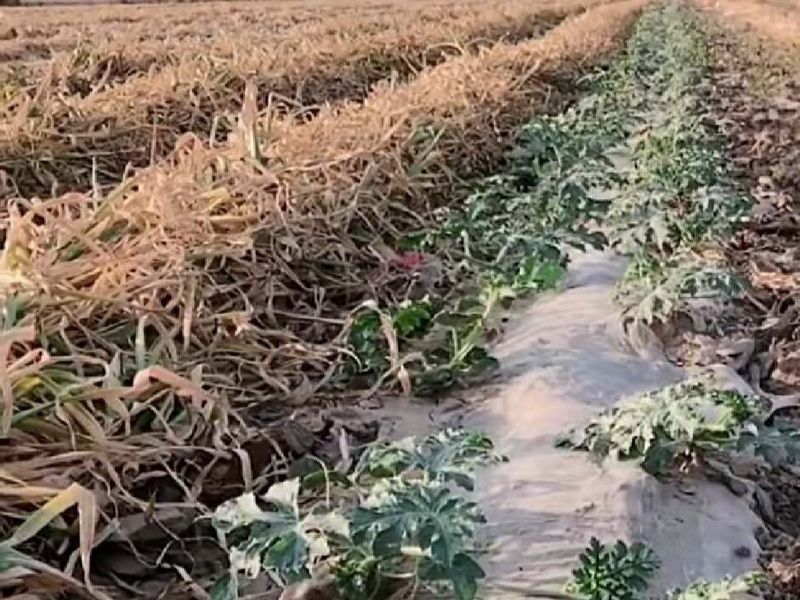
As the garlic is just done, many farmers are looking at the bare pieces of land, either by planting corn soybeans directly, growing them year after year, salinizing them in less than two years, laying the eggs of the worms, and growing and thinning their crops. The more fertilizer is used, the more the production is not going up, the less the money they earn for most of the year. The vicious circle is made more difficult by the fact that the land has been destroyed directly by the use of garlic, the waste of a season of light and warm water resources, the lack of a rational balance in the power of the land, and the outbreak of garlic disease in the coming year。
Crops are crop-crushed, there is a large amount of garlic left in the ground, and there are harmful substances from the garlic roots, which tend to burn roots and solitude in any crop. The selection of a pair of sub-cropping species, which can take full advantage of the revenue generated by the vacant land, can also be used to improve the soil, degrade the toxin through crop characteristics, synchronize it with the ground, without extra inputs to adjust the weight at higher prices, and simply bring it back to the ground, which is an old field know-how。
One, garlic grows four taboos. Land
Many of the following four types of crops are firmly uncultivable and are the most prone to error in everyday areas。
One: stop growing garlic vegetables
Garlic, onions, pickles, onions, and onions are lycées, which are fully ubiquitous and infested with pests and infestations. In the garlic soil, there are maggots, rusty and leafy diseases, and onions. The disease base is multiplied. The roots of the same crop are consistent in nutrient absorption and soil-specific trace elements are depleted, and even with a large amount of fertilizers, the plant is still small and thin, yield is falling off the cliffs, strangulation for more than three years and even seed loss。
Two, a paprika tomato
Vegetables such as eggplants are well developed, require high levels of fertility, have stringent environmental requirements for the soil, alkalinity of garlic, organic imbalances, planting of eggplants, peppers and tomatoes, and are highly susceptible to growth retardation of the root system, longing of slow-growing seeding cycles, falling fruit, malformations of fruit. The combination of eggplant and garlic wheelwork is not reasonable, soil harmful strains are rapidly growing, root and ailments are high, the cost of routine drug treatment increases, and yields are difficult to secure and profitable。
Three, short-term quick-leave
Swafts such as barley, lettuce and cabbage, which are short and long-lived, cannot defusing the soil deep enough to consume only shallow nutrients from the surface of the ground and do not improve the problem of deep slabs. Moreover, the high harvest of leaves, the high frequency of water being poured into the fields, the accumulation of salt from garlic residues on the surface, the susceptibility to salinization, yellow leaves, thick fibres, poor tastes and a significant discount on the value of goods。
4 - large plots are only a single corn species
A lot of farmers grow corn all over the land, and it's so cheap, it's so long-term monolithic. Undergraduate crop cultivation, imbalanced soil microbial community structure, high rate of organic consumption, decaying silts in the field and increasing the number of underground pests each year. Maize root secretions are inoperable and garlic residues are toxic, plots are monolithic, maize is prone to early decay and fall, seed grains are not full, the demand for higher production can only be accompanied by a constant increase in compound fertilizer and the cost of planting land increases year by year。
Ii. Five appropriate garlic crops with double standards for land (triple sets of scattered family plots, large areas, low-cost lazy people)
Plan i: home gardens (1-5 acres), split foods + small sales
1. Peanuts — first choice for nitrogen-fixing land, good for oil and food
The roots of peanuts are home-grown, capable of stabilizing nitrogen in the air, naturally replenishing the soil with nitrogen fertilizer, the problem of nitrogen overload caused by the extensive use of compound fertilizer in the middle and garlic periods, the laxation of the plate layer and the improvement of the particle structure of the soil. The grounding of peanut roots in the earth is about 30 centimetres, which breaks the bottom of a plough formed by years of garlic farming, increases the permeability of deep-soil permeability and effectively degrades garlic residues。
The main points of planting are: after the garlic park has been cleared, the roots of garlic and the ground are completely cleaned, 25 centimetres are ploughed and the membranes are planted, 40 centimetres and 18 centimetres from the cave, with two peanuts in each den. Bottom fertilizer is used only with a small amount of potassium phosphate used by consumable farmers, without urea being added to prevent peanuts from growing up in vain. In the case of saplings, pedestals, late foliage control, normal management of an acre of land production can stabilize at 600 pounds, peanuts themselves extract oil, surplus peanuts sell to cash, and land fertility is steadily rising。
Watermelon/melon - high economic returns, melons improving surface soil
The melon crop is grown in vines, leaves fall, dead chicken rotting and then converted to organic matter, thickening the soil tillage, and the water guaranty is able to contain some of the harmful strains left by garlic and reduce endemic diseases. The drainage of garlic plots is generally better, and watermelons are not allowed to grow because of the habit of sapling water。
(b) practical details: the selection of watermelon seedlings, avoiding the replanting of melons, the release of a small amount of raw lime into the ground, the planting of high plants, and drip irrigation. Less fertilizing in the pre-plant period and more potassium fertilizer in the oxidation period, guaranteeing melon sweetness and head. Once the harvest is completed, the vines are crushed and tilled into the ground, decomposed and the soil organic matter is raised directly, and a acre of melon fields yield far more than ordinary food crops and are suitable for finely managed small gardens。
Soybeans — low-cost land grub and easy to manage
Soybeans also have the capacity to semen nitrogen, and crop rotation is a scientific model for agricultural extension, with a high level of nitrogen consumption in garlic, soybeans filling the soil with nitrogen, and a perfect mix of nutrients. Soybean field management is extensive, free of frequent pharmacizing and trimmed, followed by daily weeding after planting, with minimal manual input and suitable for farmers who do not want to spend too much effort on it。
Cultivation norms: after a scrambling process, a high-yield soybean variety is selected, with a seeding rate of about 8 pounds per acre and a distance of 35 centimetres. Nitrogen fertilizers are virtually non-existent throughout the whole life cycle, and a small amount of boron fertilizers are sprayed during the flowering season to increase the number of fowls. After the mature harvest, soybean straws are crushed back to the fields, the soil is continuously improved, the sale of beans is reduced, the land is softer and the next season is followed by garlic, and the disease is significantly reduced。
4. Potatoes - deep-planted pine earth, drought resistant and infertile garlic land
The roots of the cassava meat are growing horizontally and vertically in a two-way manner, inflating through the soil layer, with deep natural cultivation of the pine soil, addressing the core pains of garlic floor knots, poor permeability, fattening of the potatoes, mainly with potassium fat, and staggering of garlic with a balanced consumption of nutrients in the soil without local nutrient deprivation. Potatoes have a strong drought-resilient properties, while the rain on garlic plots in the summer is not evenly growing and drought-resilient。
Cultivation steps: chlorinum-containing fertilizers are banned, with a croaketal cassava with a distance of 70 centimetres and 25 centimetres. The seedlings are followed by the planting of roots, the planting of grass, and the sealing of chickens to avoid the rooting of vines and nutrients. The production of potatoes is high, fresh potatoes are sold and processed, storage cycles are long and can be realized throughout the year, and plots are grown through potatoes, and the earth is fertilized and fertile。
5 sesame - small-scale oil crops, antibacterial conversion price ratio high
Sesame root genres inhibit many harmful fungus in the soil, reduce the basis for garlic earth-borne disease, produce short-lived sesame life, mature around 90 days of summer broadcasting, and grow autumn and winter vegetables once the sesame is harvested, using the land twice a year. Sesame requirements are low in fertilizer, simple management, few pests and diseases, low consumption of medicines, stable purchase prices for sesame over the years, and significant benefits from small-scale cultivation。
The seeding requirement is: a centimetre of the ground covered in light, the difficulty of planting deep seedlings, a pound of seedlings per acre, seedlings between seedlings, and control of planting density. Potassium phosphate is sprayed during the flowering season, with a high level of oil in seed grains, a slurry-backing process to improve the soil and small areas of cultivation to save money。
Option ii: a series of large parcels (more than 10 acres of grown-scale) with high-scale, mechanized operations
1. Soybean (band complex) cultivation between summer corns: the national master rotation model, direct mechanized cropping of garlic, four rows of corn combined with six rows of soybeans seeding, mechanized seeding, harvest integration and labour savings. Corn uses upper-level light, soybeans for nitrogen-fixing land, high- and low-level combinations for full use of space, balanced soil nutrient consumption, elimination of monocropping hazards, corn preservation, soybean soybean soybean soybean soybean soybean production and geosynchronous conservation, in line with the demand for benefits of scale cultivation。
Sorghum storage: sorghum sorghum sorghum resistant to salin, toxin resistant, garlic-coated soil environment, roots of developed strong pine soil, sorghum sorghum sorghum sorghum to sell for seeding in farms and steady returns. The whole process of mechanized farming, management, resistance to diseases and pests, the end of cultivation, the return of straw to the fields, the return of organic matter to the soil in large quantities, and large areas of cultivation, which need not be handled with care and care, save the economy。
3. Shibuya: the grains are drought-resistant and infertile, require a wide variation in fertility and garlic, after rotation, balanced soil nutrients, mechanized cropping of grains, stable marketing routes for small rice, fine grain roots, good effect in improving the structure of the grains of the soil, easy farming practices in the form of sheeting, suitable for the size of the field。
Option iii: low-cost lazy farming programmes, low-productivity, low-medicine, low-input
1. Ultimate grass: for many years, roots are deep up to two metres deep, deep improved garlic flooring, salting problems, very strong nitrogen fixation, multi-year planting at a time, cutting down pastures and selling them to large farmers, annual income, constant maintenance of the land, almost no use for fertilizer pesticides, first choice for lazy people。
2. Wild purple clouds are green fertilizers: no food, special breeding land, the planting of purple cloud seeds after garlic is harvested, natural growth in winter, tillage into the soil in the coming year, with natural organic fertilizers, degradation of garlic poisoning, re-organisation of organic matter, doubling of the growth of garlic, vegetables and food crops in the next season, zero planting costs, pure breeding patterns。
3. Sweet corn for feed: ordinary sweet corn is sold for green ears, straws are crushed directly back to the fields, long-lasting pests and pests are produced, the number of doses is limited, a small amount of bottom fertilizers is applied, low inputs, quick harvests and a balance between income and subsistence。
Iii. General practical techniques for garlic planting, avoiding the risk of increasing productivity
1. Clean-up work must be done thoroughly to eliminate insect ovulation
Following the harvesting of garlic, the earth's scattered garlic, garlic, garlic, waste membranes must be completely cleaned out of the ground, and the debris will slowly rot in the soil, carrying maggots, fungus that continue to contaminate the soil and subsequent planting of crops. Conditional plots with simple soil disinfectants sprayed back to the surface, low-cost reduction of the disease base and direct increase of the seed rate by more than 10%。
2. Deep tilling is the core. Don't just do a surface spin
For many years, garlic was planted, the bottom of the plough was hard to seal, the roots of the crop could not fall and nutrient absorption was hampered. Before planting, deep tillage was controlled at 22-28 centimetres, the hard layer was broken, the upper and lower soils were exchanged, the permeability and permeability of the upper and lower layers of soil increased significantly, the effects of which were multiplied by the application of fertilizers to mature farmers, and it was forbidden to use only a rotary tiller to sow and cure the symptoms。
3. Water fertilizer supply, not blind, water fertilizer
The garlic plot itself retains a number of fertilizers during the garlic planting period, and the grounding crop is initially established, with a ban on large quantities of urea, compound fertilizer and a high degree of burning. Based on demand-driven fattening of crop varieties, the concentration of melon fruit on potassium fattening, the low application of nitrogen fattening to soybean crops, the indigence of dry water, the timely digging of ditches during the rainy season, the avoidance of drying in the fields and the management of scientific water fattening, both cost-saving and preventing secondary soil salinization。
4 accompanying straw to restore the field and maintain the earth's strength
When the seasonal crop harvest is completed, the straw is all shredded, the length is contained within 5 cm, the field is spread evenly, and the straw is slowly decomposed within the soil, the source is constantly replenishing organic matter, moderate and trace elements, the long-standing struggle to return to the field, the purchase of soil herbs from year to year, the more fertile the plots become, and the advantage remains。