Technical aspects of strawberry shed cultivation
(i) standardization。
One applied base fat. The selection of organic fertilizers, such as pigs, sheep, free and chicken dung, containing organically rich, fertile, defusing, deep earthy, well-drinked and well-drinked fields, which have been piled up for months and covered in membranes and treated with solar high-temperature fungi, and the application of appropriate amounts of fertilizer into the field. Fertilizer per acre is 400 kg organic fat, 150 kg vegetable cake, 50 kg compound fat (sulphur) and 10 kg urea. Fertilizer is used to sow water, so that it is fully fertilized into the soil, so that when the soil is naturally dried up, it can be purified. When the gills are ready, spray herbicides。
2 soil disinfection. A soil infestation with trichlorfon was conducted to reduce the occurrence of land pests。
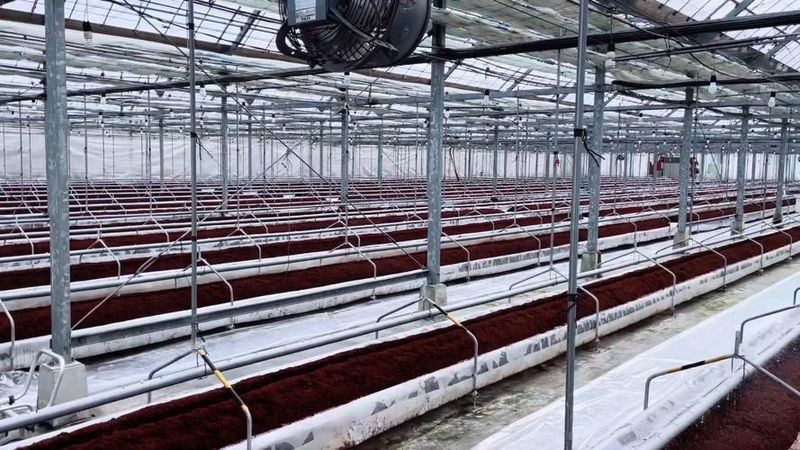
3 set. The timing of the planting should be determined on the basis of the degree of sprout fragmentation, which can be established through a lens at 50 per cent. In the practice of production, the lumbers are divided by the presence of visible bows and ear leaves on the base of the leaves. Under climatic conditions, each year, the shelf life of the city is set in mid-august. A 6-metre wide standard shed with eight rows planted from 10-15 cm. East-west planting, with 10,000-12,000 acres. The seedling bow is grown in turn towards the edge of the ditch and requires that the roots be cut in half, otherwise the trees themselves will grow and the number of flowers will increase and the fruit will be reduced. The depth of cultivation requires that the tree core stem be levelled to the surface of the soil, so that it remains shallow and unheard. Sapling water is poured immediately after planting and is subsequently duly watered in the light of the damp conditions of the soil in order to facilitate recovery. (c) recapture in due time upon completion of the operation and late october, in response to climate change。
Plantation management
Strawberry trees are planted until the bud grows, generally requiring the retention of 5-6 leaves and the retention of a bud, the timely removal of too many old leaves and sprouts and breech buds, and the removal of yellowed leaves and dead leaves from the tubers and the timely removal of runners to reduce consumption. We'll take out the little branches and the weak ones. In general, 7 to 9 results per sequence are left to increase the fruit and improve its quality。
Iii. Strawberry temperature control
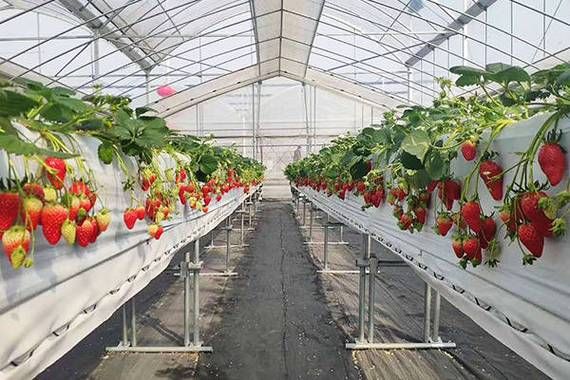
Strawberry growth temperature is 20-28 degrees, and high temperatures above 36°c and below 5°c are not conducive to strawberry growth. The average day temperature is between 25 and 28°c and does not exceed 30°c and 7°c at night. The initial flowering period was maintained at 25 degrees and the final flowering period at 23 degrees. Between late december and the end of january, when the temperature of the shed is less than 5 degrees, small retorts should be placed in the shed, and three layers should be used to protect the temperature at extreme temperatures. The bouquet is controlled below 80 per cent before it blooms and 60 per cent before it blooms. In order to prevent high-temperature, high-wet diseases, ventilation is used around noon. By april of the following year, the apparent return of temperature could remove the diaphragms on both sides of the shed, increase ventilation, act as a cooling or wetting effect and prolong the production period of the fruits。
Iv. Flowing bees
Strawberries can pollute themselves, but there is a lack of transmission of insects in the shed, which can lead to malfeasance and malformations. The introduction of bee-assisted pollination has had a significant effect on quality improvement and increased production. The bee-laying should take place at the beginning of the flower, without spraying the agent, so as not to affect pollination to produce deformity. And graft properly so as to stay low and weak。
V. Fertilizer water management
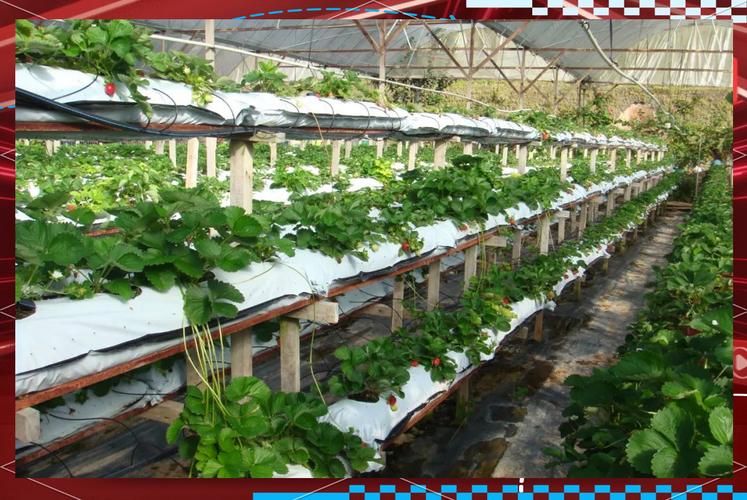
Large shed strawberries are less used for fattening because they are rich and mostly organic. However, the timely addition of potassium phosphorus fat and poly minimis elements based on strawberry growth cannot be ignored. Strawberries require sufficient moisture throughout their growth, and soil moisture during flowering can be dried up slightly, with more water required during strawberry growth and berries expansion. Water recharge can be combined with fertilisation, which can be applied to a solution that is soluble in water about 1,000 times. When soil moisture is high and water is not necessary, fertilizers can be applied directly into the soil through pipes, which can be diluted up to 4,000 times when the soil is dry, as well as by piped water, which is both economical and convenient. In order to avoid the acidization of strawberry fruit, the rate of production has increased with the recovery of temperature in the second year of spring, and potassium fertilizer should be increased at around 5 kg per acre of 0. 3% potassium sulfate。
Vi. Bug control
With the expansion of strawberry cultivation in our city and the increase in the number of years of cultivation, the incidence of pests has increased, as have new pest species. The main insects are aphids, pheasants, asymptomosis, powdery and sprouts. For aphids and red spiders, 20 per cent corrosive vinyl, 40 per cent of the fruit is 1,500 times. Asymptomatic diseases are readily occurring during periods of high temperature, high humidity and high strawberry growth and can be combated at a rate of 50 per cent of the speed of 800 times. Chrysogenic diseases in some of the current strawberry-growing areas should be sprayed every other week with a 1000-fold polyoxin agent or 600-fold enzymes of enzymes, using leaf extraction and ventilation。
Based on the development of strawberries in our city, it is worth noting that one cannot grow in the same field for two to three consecutive years. If planted on the same field for many years, the large quantity of multi-dimensional trace elements required for strawberries would be lacking, resulting in low yields and lower quality. Second is the fact that strawberries are grown because they are not purged and their characteristics are degraded, and they need to be purged or introduced into new varieties。