In recent days, journalists have been informed by the beijing city agricultural technology extension station that the spring plastic shed cucumber cultivation in the kyoto suburbs is about to enter its planting period. The expert at the station, wang tien, described scientifically sound farming systems as a key technology for organic vegetable production, both for the rational use of agriculture and natural resources and for the conservation, restoration and construction of cropland and ecology, thereby fostering healthy agro-ecological systems。
Vegetable cultivation systems are a system of technology that combines the formation, configuration, sophistication and inter-cropping of crops in a region or production unit, and is compatible with local agricultural resources, production conditions and production in the farming industry. In order to guide the production of organic vegetables in the suburbs of beijing, the following technical recommendations are made by the beijing agricultural technology extension centre for the development of “reasonable cultivation systems” from the point of view of planting and wheeling/interproduction systems, for the benefit of a wide range of producers。
Rationalize the planting period
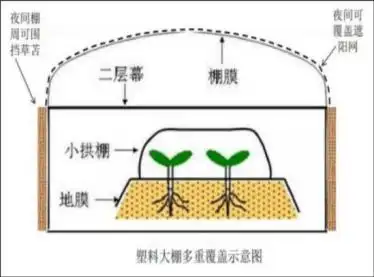
You have to pick the planting period. The cucumber is a typical hot crop with high light requirements and, in order to make rational use of natural light heat resources, it is advisable to schedule production pits for the production phase during the luminous season. Based on the climate characteristics of beijing, the temperature properties of the plastic sheds and the growth and development properties of cucumbers, in spring cucumber production, the suitable planting period for the single-storey plastic sheds was set at late march (mid-april in the northern mountains), and harvests began to take place in early may (mid-may in the northern mountains) and ended in early july (up to mid-october in the northern mountains). In order to further extend the harvest period, the plains could use multiple-cover technologies to advance the planting period to early march and early march. According to data monitoring, the average minimum temperature of the third stage in march could have reached 8°c, fully meeting the requirements for normal cucumber growth and development, and nearly a month earlier than the single-story plastic shed, both extended the harvest period and helped to capture the peak price peaks in the pre-spring period and reap better returns. Based on years of demonstration, using multiple-cover technologies, total benefits and efficiency gains of 44. 6 per cent of total output could be achieved by mid-may by 35. 2 per cent。
Care must be kept in mind. Special attention should be paid to changes in the external temperature of seedlings following their planting in the spring, in addition to pre-plant low-temperature seedlings to increase the temperature tolerance of the seedlings, early preparation of facilities for cooling and emergency warming techniques, and protection against the loss of production caused by the winter-break, such as the low temperatures below 0°c in single-story sheds on 27 and 28 march 2020, which reached 3 hours and 5 hours, respectively, with a minimum temperature of -2. 9°c and a critical low temperature below 5°c, which lasted 8. 5 hours and 9. 5 hours, respectively, and had a significant impact on production。
Scientific rotation
In addition to meeting the requirements of the gb/t 1963-2019 regarding the environment of the place of production, the choice of production block (shelter) takes into account the production of the front crop and the overall rotation of the plot (shelter)。
The rotation system is detailed. Rotation is the cultivation system whereby different types of crops are grown on the same plot on a rotational basis over a period of time. Reasonable rotations can be effective in avoiding connecting barriers, play an important role in nurturing healthy soils and mitigating pest hazards, and are an important measure for soil management in organic agriculture. The rotation periods required for different vegetable crops vary, with cucumbers requiring more than three years of rotation for more than three crops. In developing rotational systems, consideration should be given to factors such as nutrient demand characteristics of pre- and post-crop crops, the occurrence of pests, inter-crop biochemical phenomena and economic benefits. In the case of cucumbers, with the exception of melon crops, various crops can be rotated with them, such as garlic, root, cabbage, cabbage, pulses, most vegetable crops, maize, rice, and green fats, such as guacamole。
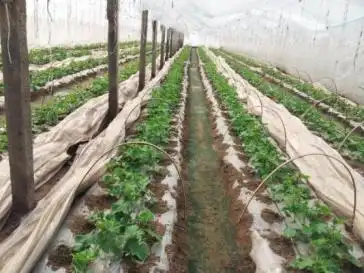
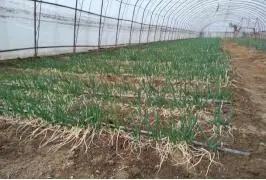
Pre- and post-production arrangements. The cucumber-producing plots should choose garlic and leafy as the front lines, avoiding tomatoes as much as possible, followed by eggplants, peppers, cabbage, beans, etc., or maize to suck salt or grow green fertilizers to feed them, with spinach, onions, onions, onions etc. To grow over the winter season; and winter-receiving plots should use deep-burned sunburn measures to improve soil physicochemicality and mitigate the effects of disease grasses on the ground。
Fair play
Quupules can be promoted through reasonable space to improve ventilation and light conditions in the sheds. Intercropping, which involves the cultivation of two or more crops at a branch or in a section of the same plot during the same growing period, is an effective measure of environmental optimization and soil management in the upper part of organic production。
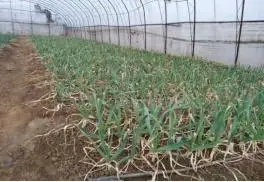
In the production of this cucumber, the choice of the crop may be made between cabbage, cabbage and vegetables such as minibage, pickles, cabbage, cabbage, cabbage, lettuce and celery, or between vanilla plants such as mints, pyrethroids and so on, i. E., one cucumber per five cucumbers for the crop, which can now be replanted, with cucumber cultivation set aside at the time of planting, waiting for room temperature and temperature to meet the corresponding standards。