The chinese medicine carries the healthy wisdom of the chinese nation for thousands of years, from the earthy fragrances of the field to the aroma of the pharmacy counter。
However, the concern that the irregularities in cultivation have led to a decrease in the efficacy of the drug, the impact of the processing process on quality stability, and the loss of gunpowder technology, which endangers the development of the drug, has been raised。
How do we get good grass to become good medicine? Let the chinese root get deeper and stronger? In recent years, a high-quality development change centred on conservation of seed resources, standardization of planting, and the transmission of innovation through artillery technology has been taking place throughout the country。
Enhanced chinese medicine "stick for root"
For the past three months, the deputy director of the forest museum of jiangxi province and assistant researcher of the forest medicines and food institute of the academy of forestry sciences of jiangxi province, golitsyn, has been visiting a row of green seedlings in the seedlings of the forest medicines and food institute. The reporter walked into a nursery area of hundreds of square metres, and saw about 18,000 pieces of gold in a neat order. Puppy seedlings, leaf sprawl, root roots are growing in artificially regulated temperatures。
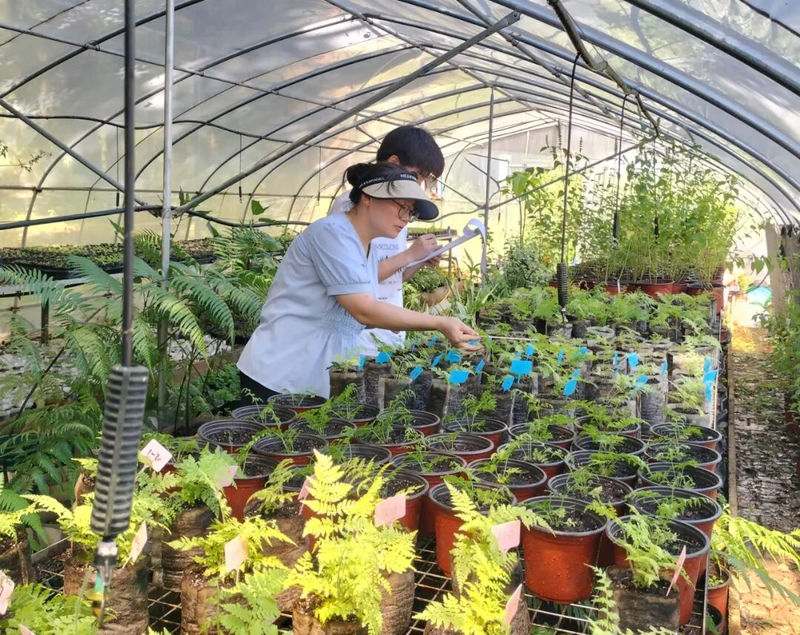
On 5 july, the deputy director of the forestry museum of jiangxi province and assistant researcher of the forest medicines and food institute of the academy of forestry sciences of jiangxi province, golitsyn, visited the seedlings of the golden dogs in the seedlings。
“we have successfully broken through the technology of efficient breeding of golden-haired sprouts, and the young are now very happy.” in her presentation to the reporter, " china report " , golitsyn was inconvenient。
Goldhound, a name derived from the golden hair covered by its roots, makes it look like a dog, is a base plant for chinese medicine dog ridges, is one of the traditional drugs of our country, and is now more than 1900 years old. It's written in "the sons of the sons of the sons of the sons of god." the main back is shut down, slow, chorus, cold, wet, knee ache, a good old man. One hundred. Sakakawa valley." dog ridges are the core ingredients of dozens of classic formulas, such as scalding kidneys, big kidneys, dog spines; golden furs are more likely to stop the bleeding。
However, the resources of wild golden dogs have been drastically reduced due to weak natural renewal capacity of the wild dog community, stringent requirements for the growing environment and long periods of over-drilling. In 2021, it was officially included in the national list of priorities for the protection of wild plants and included in the national level ii protection of plants, prohibiting illegal logging and trading。
The seed crisis has become a bottleneck in the development of the chinese pharmaceutical industry. If artificial reproduction is not achieved and the quality and quantity of seedlings of chinese medicine are guaranteed, it will be difficult to reverse the fact that clinical drugs depend entirely on wildness or imports。
The way to break through is for technology to be balanced with the protection of resources. According to golitsyn, the forest medicines team of the academy of forestry sciences of jiangxi province systematically monitors the light, humidity and soil conditions of the wildling population, simulates its native ecological environment, innovates with the use of “mimicated seeding” techniques and achieves a full cycle of controlled breeding from spores to seedlings。
“the golden-haired seedlings we have bred have grown from sprawl to replantable, reducing the cycle to 70-80 days. More crucial is the well-developed seedling root system that is being cultivated in a imitating environment, the low rate of post-plant pollution, and the survival rate of over 98 per cent.” golitschen told the reporter china report that “not only provides seed security for the return of wild populations, but also lays the foundation for the scaling and sustainable use”
The success of artificial cultivation means that golden dogs are completely free of dependence on wild resources and imported seed sources. This breakthrough is not only a scientific victory, but also a vivid microcosm of the conservation and utilization of the medicinal resources of chinese medicine。
Liu hongin, the leading professor at jiangxi university of medicine, told the journalist, china report: “china medicine belongs to agriculture and forestry at the planting end. However, due to their variety, the small use of some varieties, their low yield and the harsh conditions under which they are grown, and unlike agricultural products such as wheat and maize, the development and protection of seed resources are more challenging. However, as a result of the china drug resource survey, the country has developed a comprehensive and systematic understanding of chinese drug quality resources and has established a chinese drug quality resource bank, which is designed to protect them from loss and protect them.”
According to data from the fourth national survey of chinese drug resources, china has basically identified the chinese drug resource base and compiled information on the type and distribution of more than 18,000 chinese medicine resources, more than 300 of the more than 600 commonly used chinese medicine products have been planted artificially, and the production of industrialization and alternatives to rare medicines, such as sunken incense and musk, have been used to meet the needs of the population。
With regard to the selection of varieties, more than 700 good chinese medicine varieties have been selected by the state through special scientific and technical support, and 112 new varieties have been authorized, covering the main medicines, including ginseng, thirty-seven, rectification and yellow tea. At the same time, the establishment of a more than 40-year-old plant-breeding base that would guarantee a supply of 120 commonly used medicines has created an initial chain development pattern of “resource protection - variety selection - good seed promotion”。
“standing rules” for the production of chinese medicine
Although harvest time has passed, the pharmacist cultivation base in the atolls of the atolls of the city of ichun, jiangxi province, remains depressed。
In this 1,000-acre shell forest, digital devices such as water fertilizer integration, automatic nozzles, intelligent pest-laying lamps, data sensors, etc. Are visible throughout the forest. Pi qingyong, deputy managing director, jiang shell agricultural development co. Ltd., sakaki city, told the chinese reporter that the application of the networking system had led to greater standardization and quality of the shell base。
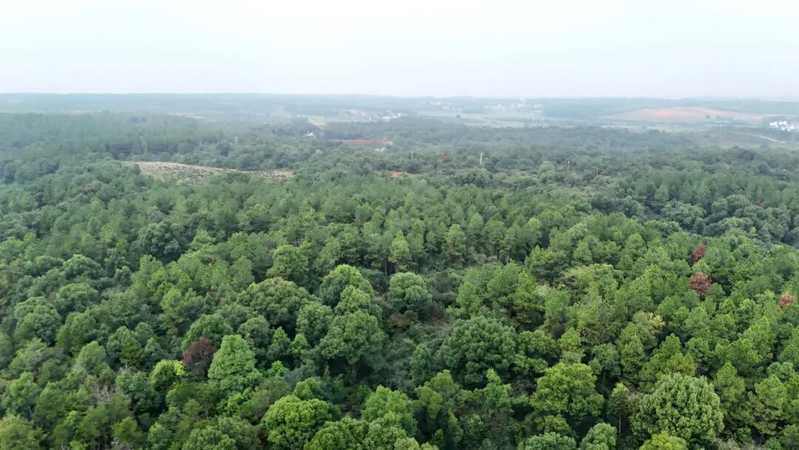
+ a prototype base for the chinese medicine husks. Photography / lismine
“since the establishment of the base in 2014, we have been engaged in a scalding operation using the business-cooperative-farmer model, in order to standardize and standardize the construction of a model base for the cultivation of chinese medicinal products and to participate actively in the development of local standards for shellfish”. Picing yong told journalists that “in 2020, the market began to standardize, standardize and economize chinese medicine, in the context of which we are continuing to promote the standardization of bases”
It is understood that in 2022, four departments, such as the national drug authority, issued guidelines for quality management in the production of chinese medicines (gap), which require enterprises to set standards for the quality of chinese medicine, which cannot be lower than the existing statutory standards。
However, there is no urgent need to build the quality management standard for the production of chinese medicinal products (gap) base in the current part of the country. According to pi qiang, two main problems exist: first, the implementation of the quality management standard for the production of chinese medicines (gap) requires a significant investment of human and financial resources, in particular the general lack of funding for small quality management standard for the production of chinese medicines (gap) and secondly, the construction of the quality management standard for the production of chinese medicines (gap) requires a certain size of storage and logistics building, which is based essentially in mountainous areas and involves more difficult planning and approval of land for construction。
“the implementation of the quality management standard for the production of chinese medicines (gap) at the chinese drug farming base is a necessary trend for the future. Next, we plan to join the leading pharmaceutical companies in importing the quality management standard for the production of chinese medicines (gap) and are now communicating with two pharmaceutical companies.” pi qiang said。
“the cultivation of chinese medicine falls within the domain of agricultural management, but the national agency for medicines has moved the chain of custody to the planting chain through the introduction of the chinese standard for the quality management of pharmaceutical production (gap) model”. In an interview with china news, jin ling, vice-chancellor of gansu chinese medicine university, stated that the drug monitoring system could lead companies to build or co-operate in the establishment of a base of raw materials, enhance the quality control of sources, and promote standardized and traceable production of major varieties. This has become an inevitable trend in the high-quality development of chinese medicine。
The art of the cannon works to make gold
In the college of medicine of the huangzhou medical university, jiangxi in front of the tablet, the chinese pharmacist zhu mei-li was skilfully preparing the chinese pharmacist — brushing, shaking, powdering, washing water, running a series of motion clouds. In a series of flippings, small amounts of powder gradually accumulate into round little pills. This traditional technique, which makes pills easy to swallow and less ingest, reflects the depth of the “dossages but the sorghum”。
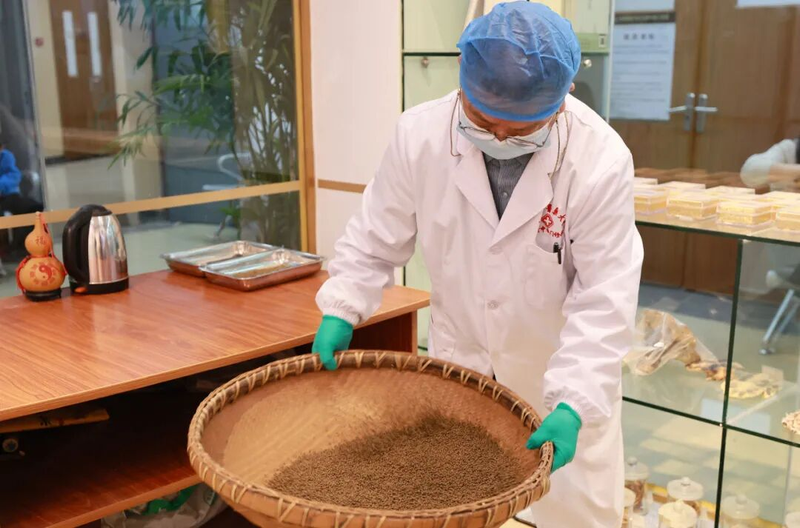
On 14 october, a chinese medicine manufacturer, chu meili, was working on a chinese pill。
Chinese medicine is one of the core techniques of chinese medicine. The achievement of the clinical goal of “coercive efficiency, substance modification and preparation” through various processes, such as purification, cutting, decomposition, decoupling, etc., carries the fruit of the wisdom of medical practitioners over the centuries。
However, with the development of modern industries, traditional hand-gunning faces challenges. Large-scale, standardized production needs make it difficult for some enterprises to fully apply the time-consuming and time-consuming process. How to find a balance between inheritance and innovation is an imperative in the modernization of chinese medicine。
In an interview with a reporter, china news, professor jiangxi medical university stated that different processing methods change the nature of the drug and thus have different application effects in clinical terms. In the case of yellow, for example, the prescriptions include fresh yellow, yellow, yellow, charcoal, charcoal, and, to name but a few, the ground. This means that, by means of different methods, it becomes a drug with different effects, i. E., i. E., i. E., i. E., i. E., i. E., i. E., i. E., i. E., i., i. E., i., i. E., i., i. E., i., i. E., i., i., i. E., i., i. E., i., i., i. E., i., i., i. E., i., i., i. E., i., i. E., i., i., i., i., i., i., i., i., i., i., i., i., i., i., i., i., i., i., i., i., i., i., i., i., i., i., i., i., i., i., i., i., i., i. Clinicians have been judged and selected according to different needs。
At present, we have established a system of standards for the quality of chinese medicines, supplemented by the chinese pharmacy code (ministerial and provincial). In the absence of certain varieties in the chinese pharmacy, the national (ministerial) and provincial artillery norms will be added to the sub-criteria for clinical use. This is one example. The kanxi university of medicine and medicine has retained the traditional obscurantism of the yellow state college of medicine, using provincial artillery norms to support the continuity of traditional skills while meeting the demand for individualized clinical medicines。
The joy of travelling between the classroom and the chinese pharmacological pile is not only a chinese medicine “professor”, but also a treasure hunter dedicated to preserving traditional skills。
In order to rejuvenate the endangered chinese medicine-making system, jing and his team went into civil society, visited old pharmacists, gathered valuable experience in the countryside, and saved a precious traditional process. From “floating” to “rice water”, from “animal blood” to “pharmaceutical juice supplementation”, these ancient methods of almost disappearing artillery are being awakened。
It was described that yao ying and his team had also established a database of chinese medicine that was tailored to clinical needs, produced services, and followed the ancient essence, to provide a solid foundation for modern chinese medicine development. As a result of their efforts, tablets of chinese medicine, such as haemorrhagic graft, tan and tan, tan and tan, and char, have been validated through scientific research。
It is believed that traditional methods can be better transformed and more effective, but their mechanisms have long relied on the legacy of experience and lack systematic scientific validation. Today, the intervention of scientific forces is deconstructing the challenge of quantifying changes in the composition of medicinal products under different processes through modern analytical techniques, providing data support for traditional techniques and promoting their upgrading in the direction of standardization and controllability, and facilitating the transition from traditional pharmaceutical processes to modern processes to meet market and people's health needs。
With regard to the development of human resources in this area, it is recommended that schools focus on incorporating the techniques of intangible cultural heritage into their teaching practices, and that the relevant curricula highlight the integration model of “non-incorporation + modern production”, which enables students to master both the essence of traditional art and the normative processes of industrial production, and to develop a composite of both cultural and innovative capacities。