How do you grow yellow fruit? What do you grow yellow fruit? Today's field and village roads are talking to you about climate conditions suitable for yellow fruit, environmental conditions, and techniques for planting yellow fruit, pest control, etc。
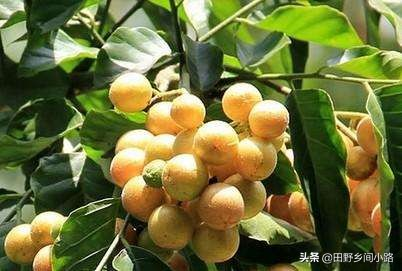
1 appropriate climatic and environmental conditions for yellow leather
1. 1 climate conditions
Yellow leather is produced in subtropical areas and warms the climate, with an average annual temperature above 20°c. Young trees are resistant to cold, adult trees are more resistant to cold, and in the case of 1-2°c, there are no obvious signs of victimization in the short term. The yellow skin requires a wet environment and adequate moisture, with an annual rainfall of more than 1,200 mm and well-spreaded areas。
1. 2 environmental conditions
Yellow leather production bases require excellent natural and agro-ecological conditions, distance from industrial zones, transport routes, clean water quality, fresh air, clean soil environment, good irrigation systems and transport conditions。
2 construction
2. 1 park selection
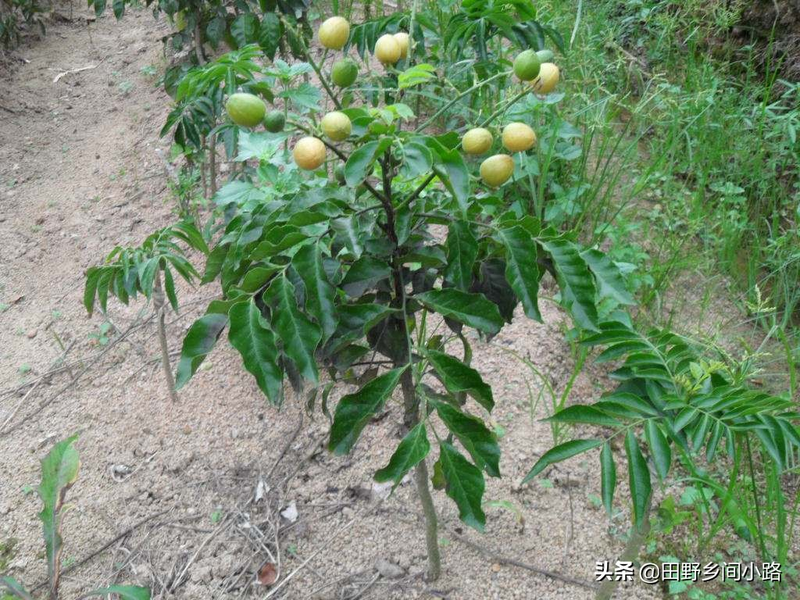
The yellow skin is more adaptable to light, both to light and to half-negative, but not too subtle. Yellow skin is less demanding for soil, and sandy, gravel, red border soil on the slopes can be adapted. Cultivation in well-drained, fertile and deep-dwelled plots ensures strong trees, high yields and long life。
2. 2 varieties selection
At present, yellow-skin varieties are mainly medium- and late-cooked: sweet yellow skin in guangzhou, yellow skin in the heart of cattle, yellow skin in the twilight phosphorus stream, etc. Of these, the sweet yellow skin and black yellow skin varieties of guangzhou produce large, evenly balanced fruit grains, with a similar maturity period and high fruit size, juicy juicy, sour sweet, good taste, soluble solids and edible rates. Good quality, strong meat, durable storage, adaptive and productive。
2. 3 cultivation
Based on the growth properties of the yellow skin, the planting season is based on either the spring planting (march-april) or the autumn planting (september-october). The sapling specifications require that the intending master drys 10 cm from the ground, with a diameter of 1 to 1. 5 cm or a marriage interface of 0. 8 cm in diameter, with a height of more than 40 cm, and a strong, disease-free, disease-free, and a well-established last branch. Cultivation density is generally 4 mx5. 5 m or 4 mx4m. Pre-planting is preceded by the digging of long, wide and deep-seated caves of 0. 6 m x 0. 6 m x 0. 5 m. Fill in base fat, 1. 5 kg per latte + 0. 75 kg of phosphorus, or 25 kg of dirt fertilizer. The layers are refilled, each of which is to be mixed with the soil, resulting in 0. 6 m in diameter and 0. 2 m in height. Choose a good weather to plant, take a shower to plant water and keep the grass wet。
Soil management
3. 1 space
Yellow-skin and adult orchards can be planted in between. In particular, young orchards, which are large, can grow short-cycle crops, such as watermelons, cucumbers, beans, peanuts, etc., and can also grow green fertilizers for harvesting and greening. Intercropping can increase economic income, and has the effect of covering, covering, improving soil and increasing organic fertilizer content。
3. 2 fertilization
3. 2. 1 teenage tree fertilization
For the first time in life, a new, slightly greener fertilizer can be used, ranging from one to two times a month, based on 50 kg water + 100 g potassium sulphate (15-15) compound fat. Fertilisation can be applied from the second year using a “two-by-one” method, which is applied once each at the onset of a new fertilisation of one to two cm and once at the beginning of a new fertilisation, with a combination of 50 g urea plus 50 g urea or 100 g urea, 100g phosphorus and 50g potassium, with the fertilization and frequency adjusted for subsequent plant growth。
3. 2. 2 resulting tree fertilization
Yellow skin is a crude fruit tree, resulting in fertilization of the tree three times a year. The first autumn fertilisation after the harvest is applied at the rate of 40 per cent of the total annual fertilisation, with organic fertilisation combined with rapid fertilisation, with appropriate calcium, et cetera. The annual application of potassium nitrogen, which is dominated by potassium nitrogen, depends on the age and growth of the soil's fertility tree, such as urea of 0. 3 to 0. 75 kg per year per tree of 4-10 years of age, or potassium chloride of 0. 4 to 0. 8 kg per year, nitrous-based compound fat of 0. 75 to 1kg per year in bada (ap 15 to 15-15) and soybeans of 1 to 1. 5 kg per year; leaf-leaf fertilization of 2 times during the onset of the fall, with 0. 2 per cent of potassium phosphate + 0. 02 per cent over-receiving, may enhance chlorophyll and the coarseness of the fall. The second application of fertilizers: 25 per cent of all annual fertilisations are applied at the end of the month to the beginning of february, and the ratio of potassium nitrogen phosphorus is 5. 5:8, reducing the use of nitrogen fertilizer to prevent the growing of flowers. The third fertilisation of fertilizers: it is usually applied before eugenic berries, mainly with potassium fertilizer, with phosphorus fertilizers and a small amount of urea, supplementing the consumption of energy after flowering, which accounts for 35 per cent of the annual fertilization。
3. 3 drainage
Cultivated on yellow skin, which causes bad root, prefers sunlight, is resistant to drought, should be followed by the timely removal of water from the garden and found to be quintozene 2000mg/l + diocone 2000mg/l+add. 20mg/l for dry season. The flowering period requires the maintenance of moderate air moisture and soil moisture; the fruit development period coincides with the rainy season and the water accumulation should be eliminated in a timely manner; and in the event of a dry weather, the fruit harvest should be followed by a timely watering or irrigation to facilitate the restoration of tree positions and the timely withdrawal of autumns to ensure normal flowering results next year。
4 canopy management
4. 1 integration of young trees
In order to achieve the desired canopy of a condensed, round head canopy, this link should be trimmed. Cultivated into 40 to 50 cm tall, or short, at 10 to 15 cm of fresh production, choosing 3 to 4 branches that are strong and evenly distributed. When the main branch is ripe, short or short, at 30 cm, two to three distributions are chosen as sub-sub-subsistences, and then two to three 25 cm branches are left in each of the branches of the first stage, with rapid expansion and formation of natural round head crowns into the final stage。
4. 2 the resulting tree trim
As a result, the tree is trimmed mainly after the fruit is harvested, and according to the growth properties of the yellow skin, the resulting branch is no longer siphoning, so it should be shorter in time. The cut-off is followed by an increase in the management of fatty water, prompting it to grow in a timely fashion and to develop a second robust outcome branch, while removing the long and weak branches from the base。
4. 3 plumbing fruit
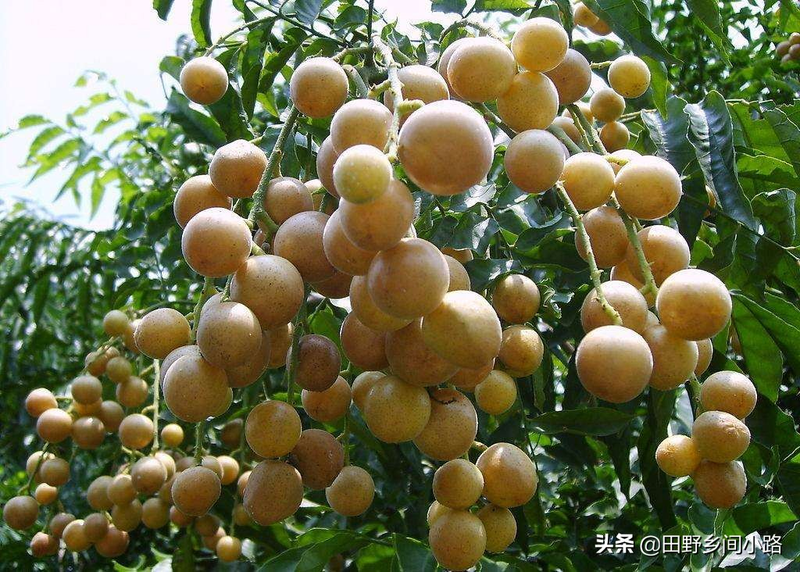
The fruit increases the fruit, so that it is equal in size and maturity. The fruit is given 25-30 d after the graft, at the end of the physiological fallout. In accordance with the results of the current year, the fruit is multi-paralysed, usually with deformation, insects and small fruit, so that the fruit is evenly distributed and equal in size, with 40 to 50 grains per ear. Pyrophyllation should be followed by the application of leaf noodles in the period from april to may, with 0. 2 per cent of potassium phosphate plus 0. 02 per cent more than received or 75 per cent less than 10d per cent of peptide 20 mg/l, two to three times more than one in a row。
5 pest management
The yellow skin is a crude vegetable tree with fewer pests and pests in production, such as anthrax, frost, coal smoke, aphids, leaf moths, wax powder, etc。
Control measures:
(1) agricultural control. Clean up the garden, then clear the fruit and branches of the earth, cut the severely affected leaves and burn them in concentration。
(2) biological control. Artificial scavengers or booby traps and sticky plywood sticky flies, ticks, aphids, aphids and other adult moths are used。
(3) chemical control measures. Anthrax, frostosis: 60 per cent of the population can be treated with 1,200 mg/l or 10 per cent of the world's height of 750-500 mg/l, with one spray in each of the new phase, in the early stages and in the coloring period. Coal-smoking: 77 per cent can be used to kill the wettable powder 1,200 mg/l ~ 1400 mg/l, with 7-10 d sprayed once at the beginning of the disease and 2 in succession. Aphids, roll moths: 10 per cent of aphids ~ 500 mg/l factor + 3. 2 per cent of amphibian cream 500 mg/l ~ 750 mg/l factor may be used for treatment, with a break of 7 to 10 d and a series of two. Powdered wax: 10% americium 600 mg/l times liquid + 80% dichlorvos 1000 mg/l times liquid can be used to contain the spread in the initial 7d spraying and 1 to 2 repeated sprayings。