


“i was also a good farmer in the shed. But these years, as the technology has changed, the shed has changed, and it is no longer possible to say that it will grow.” on 3 march, in front of the demolition of the old shed, half of which was to be expanded into a new high-standard shed in the north of the village, li mei-dong, a 68-year-old village in the east of the streets of luang city, su-jin city, said, “the former shed was based on experience and strength, and now the young man is drying with a mobile phone, a remote control machine, and the profit is high ”
What new changes have been brought to agricultural production by the expansion of innovative “lifelight models”? In the light of the spring, journalists came to the village of toshimura to interview and learn many stories about development from two generations of conversations。
Change one:
In the past, a two-acre vegetable shed had been planted, requiring two people to stay in it daily
Now, two five-acre huts can be easily managed by one person。
In a professional village that has been developing the vegetable industry for more than 20 years, almost all of the “two generations” have met with parental “opposition” when they planned to build new high standard vegetable sheds。
This is true in the east river. The central reason is that the new, high standard vegetable sheds tend to grow more than three or four times the size of the traditional old sheds, and the old vegetable farmers fear that their children will grow up blind, and will eventually be unable to do so。
This is the simplest judgement of an old vegetable farmer, based on past experience in growing sheds. However, the village's new generation of vegetable farmers has made extensive use of advanced science and technology to set aside the old farmers。
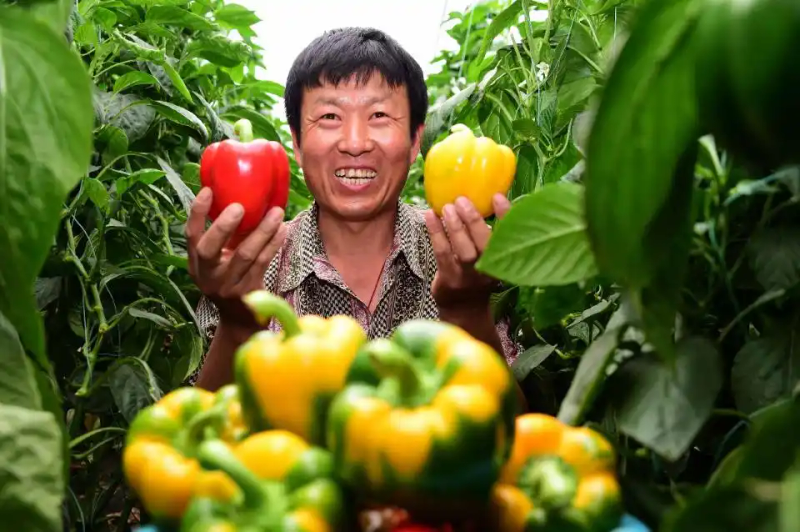
Li mei tong told reporters that, while he missed the past, he was more in agreement with the present. “the last four or five years have been particularly rapid and the village has been transformed into a new shed. Our house has built a new house for our son who was worried he couldn't do it, and now it's better than i.” li mei tong said that his new shed had an area of approximately five acres, with the capacity to plant 11,000 peppers at a time, and that his son, li ki-min, had offered to build and manage it, and li mei-dong had helped。
When their eyes were green and green. Because it is in a period when the second piece of pepper has been harvested and the third one is positive, a few of the missing mature peppers are hanging on vines, most of which are still not growing and are hiding in the green ocean。
For the first time, 2 huts in the li jimin family sold over 160,000. Two have not been counted yet, three have not been listed。
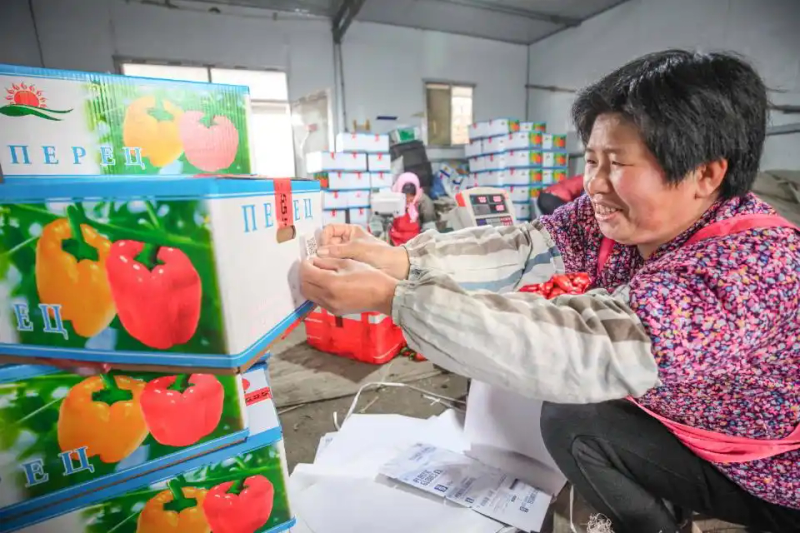
Speaking of the largest difference from the father's shed, li ki-min considered it to be a more applied application of standards and technology, “in the case of pharmacological exercises, three generations of equipment have been replaced, the first generation is a back-to-back hand-pumper, the second generation is an electric sprayer and the third generation is an orbit sprayer”。
Lee ki-min demonstrated to the press that he had a light click on the remote control, and that the orbital sprayer on the roof of the shed was slowly moving along the orbit while spraying the fog, less than an hour later, when the over 160-metre-long shed had been completed。
"with this, you can spray water, spray medicine, spray fat. If it was the old manual pharmacist, it would take six or seven hours of continuous operation, which would be exhausting.” according to lee gimin, two parents had been living in a two-acre hut in the past, almost daily; he now manages two five-acre huts on his own, generally working for an average of two or three hours a day on these modern equipment。
In the past three years, yoon sung sook, deputy secretary of the east shuu village party, told journalists that the village had built more than 100 new high-standard sheds, which were basically equipped with modern equipment such as automatic ventilators, automatic thermostats and water-composed condensation machines. The venting, wet control and temperature control links were intelligently operated, resulting in accurate perception, precision, precision management and more than doubling of labour productivity。
Yoon sung-hoon also told journalists that the upgrading of agricultural infrastructure through industrial internet thinking had led to the rise of a group of industrial strong villages, a smart park, and the transformation of vegetable sheds into “green workshops” and vegetable parks into “green factories”。
The villagers, li fok lok, were the first to grow peppers in toung shuu village, and his son, li xiaowen university, went back to the village to start a business, both in terms of farm sales and large sheds. In previous years, lee xiao wen was preparing to build a new shed, and li fok lok also objected: “the expansion of production is a good thing, but it is much bigger and much more productive, and it is enough for you to wear sacks of pepper every day.”
But li folo didn't think that after building the new shed, lee xiaowen was riding an electric tricycle into the shed to pull pepper. In the past, the sheds were small, the doors were small and the entrance and exits were bending, leaving the shed largely on human backs, with a sack of up to 60 pounds requiring another trip. Now with electric tricycles, a car can pull more than 1,000 pounds. “unemployment” of sacks once playing an important role in the production of vegetable sheds in the village。
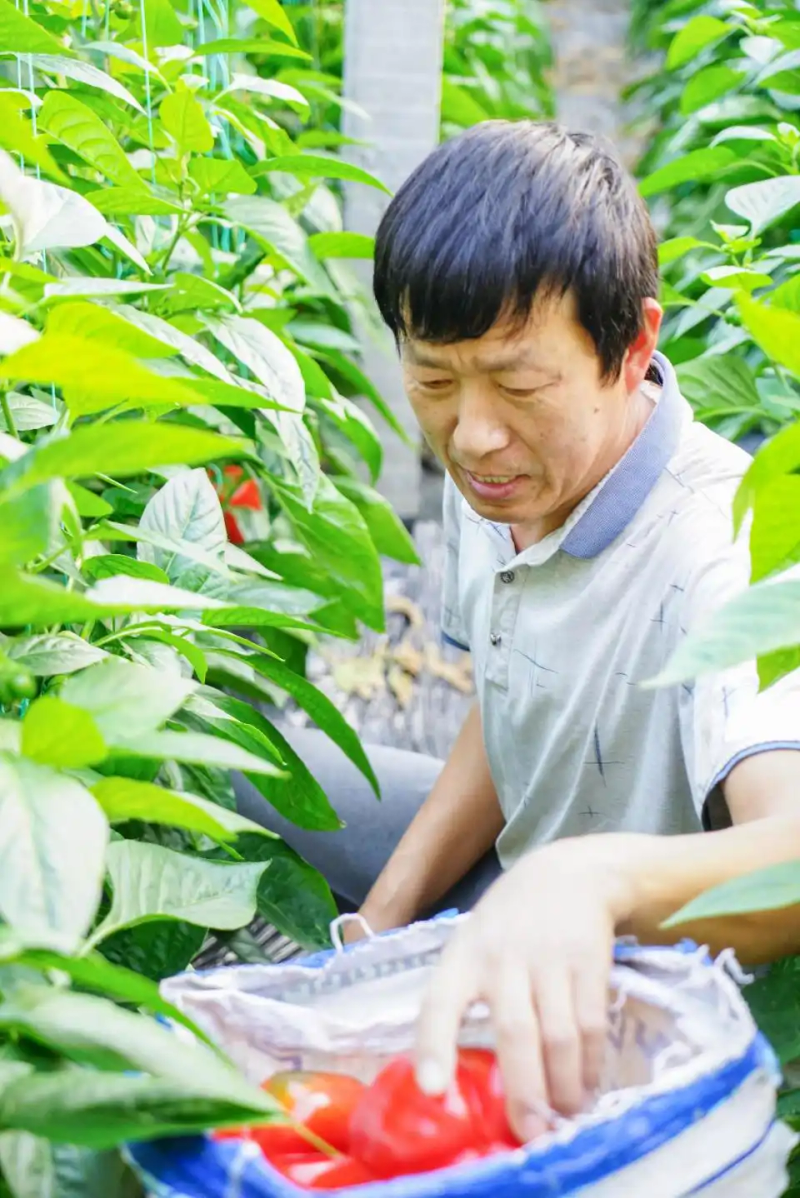
The reporter wrote down the data of the lee xiaowen family's new shed, which is 168 metres long, 21 metres wide and 9 metres high, and which allows for the installation of modern equipment; the remaining production routes also allow easy access to medium and large equipment such as electric tricycles. Here, lee xiaoven uses his mobile phone to control the big-treather drape machine, which is automated with wind temperature control, and is equipped with a water drip irrigation system, which is largely unhuman..
“as compared to old-fashioned huts, manual labour has been reduced by more than half and income has increased more than threefold.” lee xiaowen estimates that a shed in his house this year has about $250,000 in maori。
Change two:
In the past, villagers spread out
Now, through the co-opting of the party branches, the shift towards intensive business has been driven by standardization, branding and industrialization。
In the context of decentralized farming patterns, the development of the facility vegetable industry often faces three main challenges: how to build high-standard sheds, how to grow high-quality vegetables and how to sell them at good prices. This is obviously not easy for individual farmers。
“we have solved three difficulties through the village party branches, which lead professional cooperatives in fruit and vegetables, the land equity cooperative, and the mutual fund cooperatives.” the secretary-general of the eastern shuimura party, lee nieng, told journalists that the transition of villagers from decentralized to intensive farming had been accelerated in the process of solving the problem, with standardization, branding and industrialization。
The core function of the land equity co-operative, which operates on a single flow of 4486 acres of land throughout the village, has solved the problem of some villagers wanting to grow on a larger scale but lacking land, allowing for the construction of high-standard huts. The good thing about mutual fund cooperatives is that they have freed the villagers from the lack of initial funding for the construction of the shed。
It is understood that a large number of young people in the village return to their villages to build the first shed, partly financed by loans from cooperatives, which makes more young people willing to return to the village to start their own business. After 90, li ging began work with the help of the mutual financial assistance corporation for three consecutive years with the construction of a new high standard shed for one year。
The role of fruit and vegetable cooperatives is prominent. In the area of internal management, training in integrated technology, uniform product testing, uniform agricultural supply, uniform packaging sales, and common standard production have been established to safeguard the quality of vegetables, and cooperatives have been urged to obtain certification for the “basket basket” production base in the bay of hong kong, to obtain certification for export production enterprises, and to register the “dus” trademark, so that the name of the “grassing peppers” has become known。
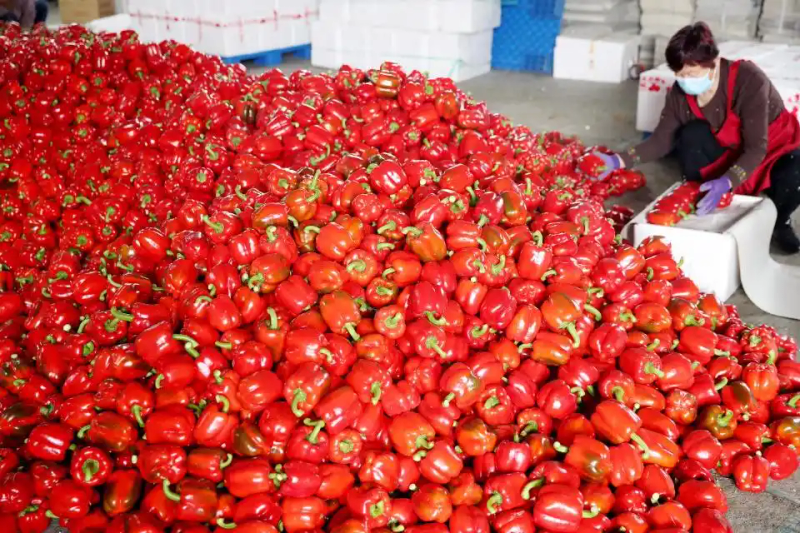
According to yoon sung-hoon, the village's original peppers, which normally weigh between 200 and 250 grams of single fruit, have reached 300 grams each, thanks to standardized planting and the extensive use of the new shed, with a better shape, taste and colour。
There is also the effect of having food sold. In response to the fact that in the past villagers did not have the right to compete for food on the edge of the field, and even to run off by bad groceries, a trade market was created by a professional cooperative for itogo in toshimura, which took a crucial step towards external marketing。
Li fu lok said he had to start by pulling vegetables around the market. Today, in five minutes, electric tricycles can be taken to the trading market, where the peppers planted are centrally loaded and exported to countries such as russia, korea and japan, to chengdu, guiyang and lanzhou。
For nearly 20 years, the vegetable lee kim yong has been in the business and has eventually chosen to stay in the east shui village trading market. “the name of the paprika is so high, so good, so good. In our market, the car must have been a 17. 5-ton semi-rigged freezer if it had given up a few carloads of peppers.” the day before the interview, lee kim yong had sent another two carloads of red pepper to russia, and was very pleased。
“the price of peppers has been rising since then, and the price of peppers has recently been up to $11 per pound and up to $7 per pound.” in lee's warehouse, the staff were busy packing the acquired peppers. When i heard lee kim yong's words, a staff member picked up two larger ones: “these are $10 dollars.”
In 2022, the east shug village vegetables and vegetables cooperative achieved 150 million yuan in sales. During the year, 12 vegetable professional cooperatives were sold over billions of yuan in lifelight and became members of the “billion dollar club”. Currently, there are 1,487 fruit- and vegetable cooperatives active in the “pain-head market”, and farmers' participation in cooperatives has reached more than 85 per cent, reversing once and for all the “one family alone” situation in the original vegetable production。
Change three:
The “new farmer” became the village's leading force for vegetable industry development, with more than 170 people returning to the village after 80 and 90 years, with families earning more than $200,000 a year。
Against the backdrop of the distress of many villages and the inability to keep young people, the number of young people returning to the village to start their own business in the past few years is increasing. “there are 218 after 70, 149 after 80 and 27 after 90, including 21 university students. Young people are knowledgeable, able to study, and organize, and have become major players in the development of the vegetable industry, with families earning more than 200,000 yuan a year。
Four 260 metres of sheds have been built in 1989 for the revitalization of the grandchildren, but they are still not satisfied, and several more are being calculated each year. His long-term intention was to build a pepper factory。
Having returned to the village to start a business, sun's revitalization, initially the crew, invested in four new high-standard sheds. "don't look at the many sheds, with modern equipment, i'm sure of it." sun reaper said that the four sheds had a total of about $1 million a year。
Young people are free to invest, and as the number of “new farmers” returns to their villages, the vegetable industry in the irrigation villages is growing faster, the huts are becoming better built, technology is becoming more advanced and returns are increasing。
“how much did it sell today?” came to the vegetable shed of lee yong after 80, and the reporters greeted him。
"at morning, 4,000 pounds were removed and sold to the marginal vegetable trader. Six pounds, 24,000." li yong had originally been in transport and then returned to the village to build a shed。
“the sheds of the lee yong family, which are 400 metres long and contain 12 acres, are capable of planting 30,000 seedlings at a time, and the single shed is about $700,000 per year.” yoon sung-wook told reporters that 400 metres of winter-heating vegetable sheds were also the largest in life and that li yong had built two at a time。
The visit to the current “best of lifelight” without modern equipment, in the relatively closed space of the sheds, with a row and row and row, gave the impression of not seeing the head。
It's not surprising for the super-large shed to appear. He said: “in the past, the villagers earned more than their own labour. Today, young people grow their sheds on the basis of advanced equipment, socialized division of labour and domestic and foreign markets, earning value for their products and on a larger scale.”
The second generation of the shed is struggling and the shed generation has not been eliminated. The journalists found that, with the upgrading of the sheds, the two generations of squatters in the village of tung jiu formed complementary relationships: although relatively conservative, the older generation has a wealth of farming experience, combined with the ideas and impulses of young people, which has created an industrial division of labour that is consistent with local development realities。
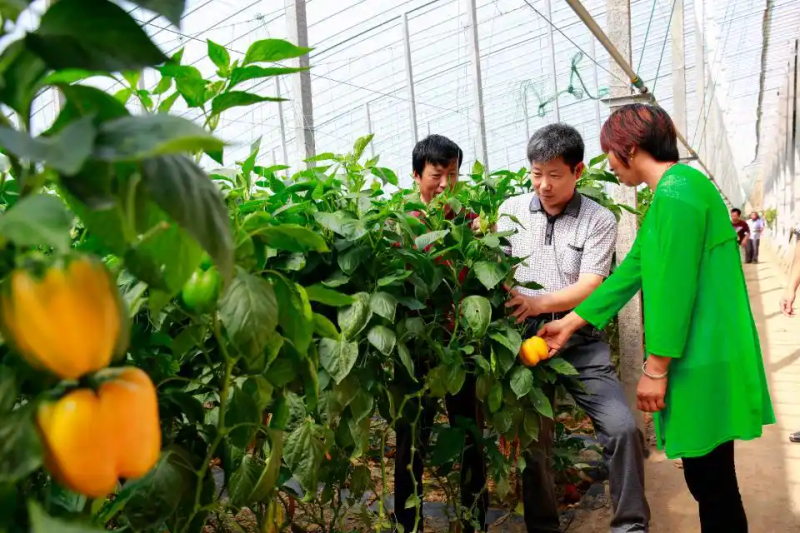
In sun's rejuvenation shed, 65-year-old zihuang is also a “manager” “technician”. The children had reached full age and zi wen had no plans to build a new shed and had come to work here for sun's rehabilitation at a salary of $5,000 a month. In addition to this full-time work, a number of professional teams have been formed locally for work that cannot be replaced by machines. Each team varies in size, with a dedicated lead or broker, who will be contacted for work。
"if you want to do it, you'll have it all year long." 60-year-old yoon hanfang is the leader of one of the teams. In the middle of the afternoon, she took three of her companions to the shed of sun's revitalization to make her chicken. "we're all professionals in chickens, planting, picking, covering the membranes." yoon hanfang said that their team, which initially consisted of three persons, had now grown to 16 persons, “pays are hourly. Roast chicken, $22 an hour for one man; pick, $28 an hour for one man..."
“sun revival, li yong and others are in fact the same as those in charge of the enterprise, and have focused more on new varieties, the use of new technologies and the development of new markets, also leading to the resolution of some of the surplus labour force.” in the village, li said, “new farmers” ran faster and farther than their parents' batons。



