While integrated management is the core competency of project management practitioners, it is a lack of systematic thinking, and it is simply management in the air。
Theory
Project integration management includes processes and activities to identify, define, group, harmonize and coordinate the processes and activities of the project management process groups. In project management, the combination of “integration” and the unified, consolidated, communication and integrated nature of the project is critical for controlled projects from implementation to completion, for successfully managing the expectations of the practitioners and for meeting project requirements. Project integration management includes the selection of resource allocation options, balancing competing objectives and programmes, and managing the dependency between areas of project management knowledge. While project management processes usually take the form of distinct and independent approaches, in practice they overlap and interact in a manner that cannot be comprehensively described in this guide. Systematic thinking refers to the way in which the forces and relationships that influence the behaviour of the system are considered. Simply put, it is a systematic, holistic, holistic, rather than detailed, one-sided, partial thinking approach to solving problems encountered in working life. One of the most popular of peter saint-girl's in the fifth refinery is that of “systemic thinking”. He advocated a holistic view of the problem, rather than merely a phenomenon of the problem, considering only the local aspects of the problem, but the whole system in which the problem lay, bringing together knowledge across all fields, exploring the enormous forces behind which the architecture operated and looking for the real causes. In his view, the solution to the problem was both “fundamental” and “symptomology”, which, while quickly eliminating the symptoms, was only temporary and often had the side effects of deepening the problem, making it more difficult to resolve it fundamentally. A “fundamental solution” can solve the problem once and for all. To find a fundamental solution, one must learn to use a systematic approach to thinking and look at the problem as a whole。

Pmi believes that integrated management is the core competency of project management practitioners. If project management practitioners cannot integrate management from a systematic, holistic, global perspective, then they can also see the image of the system without understanding its intrinsic nature and patterns. We can solve problems only in order to solve them, while ignoring the triggers hidden behind them, with the result that the root causes of the problems are not removed and similar problems are repeated. The most likely error to be made in the absence of systematic thinking is the “end-of-the-art” treatment of the problem in the form of a “head-and-legged” treatment, which produces a seemingly positive and dramatic effect in the short term. Sometimes, because of insufficient resources or time, project management practitioners tend to rely on “symptomatic solutions” to solve problems temporarily. It is likely that the search for a “fundamental solution” will be forgotten or abandoned for a long period of time, leading to greater reliance on “symptoms” and ultimately to greater damage。
Case analysis
An information systems project is almost online and system testing is carried out by a member who has been working longer in the project. System deficiencies remain high at the current stage, and the project manager, in an effort to increase user satisfaction, combined with the testing manager's study concluded that testing resources were inadequate. The project manager then applied to the company for several test engineers for two months. After two months, the number of deficiencies in the gap management system was significantly reduced and user satisfaction increased. After user use of the first phase of the system, it was found that the system was still more problematic and that the project manager had decided to continue using the test resources originally released and that the problem had been temporarily mitigated. Until the project manager moved out of the project, the system continued to experience the following cycles: user dissatisfaction - > increased testing resources - > decline in number of deficiencies - > increased user satisfaction - > increased usage of systems - > increased number of deficiencies - > increased testing resources。
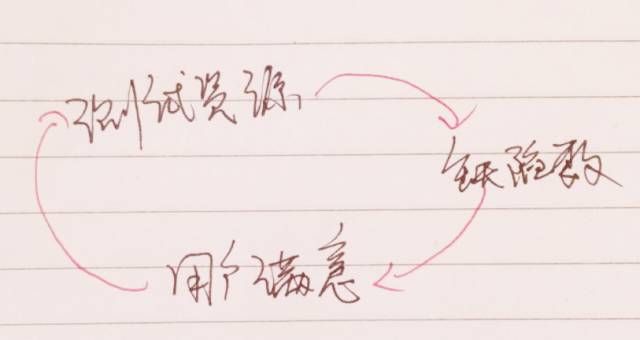
After the new project manager took over, it was decided to abandon the former test manager and to activate the new person, and after some time the problem was resolved. The new project manager learned that because the former test manager was not familiar with the system requirements and did not grasp the nature of the test, his entire testing team could not fully resolve the test problem. The original project manager was caught in a dead-end cycle of resources, and the tests were considered to be insufficient and did not jump out of the loop to think, and the original test manager was the source of the problem。
From the above cases, it is clear how terrible and wasteful integrated management without systematic thinking can be, and even if project management practitioners have a strong integration capacity, they find only “symptomatic solutions”。
Public id: womanixmgl
Everyone needs project management and everyone is the project manager。