Today's study:
Information systems project manager, release 4, chapter 8, integrated project management, p251-254。
Key knowledge points for this section of the course: output to guide and manage project work
I. Guidance and management of the project's work base
Definitions
Lead and implement the work identified in the project management plan to achieve project objectives and implement the approved change process。
Role
Integrated management of project work and deliverables to increase the likelihood of project success。
Ii. Inputs
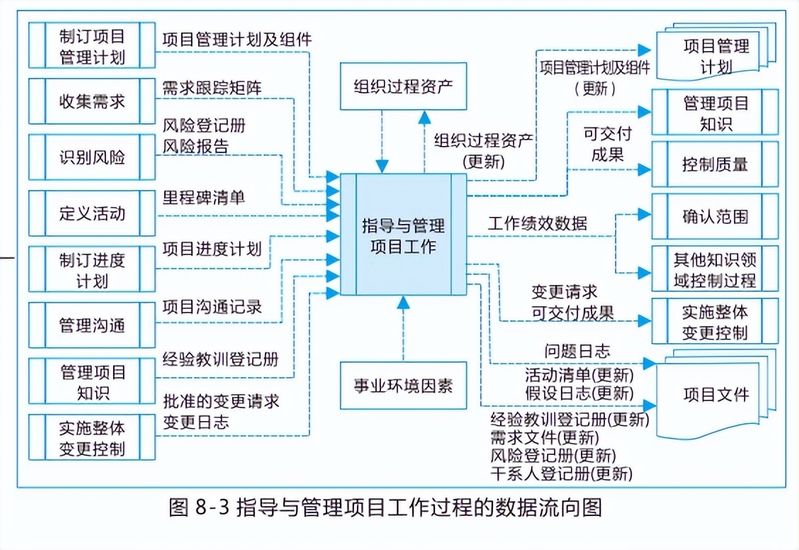
1. Project management plan
Any component of the project management plan can be used as input to guide and manage the work of the project。
Project documents
1 demand tracking matrix: linking product demand to corresponding deliverables helps project teams focus on the final results。
2 risk register: record information on threats and opportunities that may affect project implementation。
3 risk report: record information on the sources of overall project risks and summary information on identified individual project risks。
List of four milestones: a planned target date for the achievement of specific milestones。
Project progress plan: at least a list of work activities, duration, resources and planned start and completion dates。
6 project communication records: include performance reports, the status of deliverables and other information generated by the project。
7 lessons learned register: lessons learned are used to improve project performance to avoid duplication of mistakes. Registers help to identify areas for setting rules or guidelines to align team actions。
8 change log: record the status of all change requests。
3. Approved requests for change
Implementation of the output of the overall change control process, including requests for change reviewed and approved by the project manager, requiring review and approval by the ceb as necessary。
4. Environmental factors
Structure, culture, management practices and sustainability of the organization; infrastructure: human risk thresholds, etc。
Organizational process assets
Standard policies of the organization; processes and procedures; problem and deficiency management procedures; performance measurement database; change control and risk control procedures; project information on previous projects, etc。
Tools and technologies
Expert judgement
The expert advice related to tailoring the project management process to project needs, identifying the tools and techniques required for the process, and determining the level of resources and skills required for the project。
2. Project management information system
Provision of it software tools: progress plan software tools, work authorization systems, configuration management systems, etc。
Meetings
1. Discussion and resolution of matters relating to the project through meetings
2 type of meetings: start-up meetings, technical meetings, agile or iterative planning meetings, steering group meetings, etc。
Iv. Output
1. Deliverables
Any unique and verifiable product, outcome or service capacity that must be produced when a process, phase or project is completed. It is the result of the project, including components of the project management plan。
2. Performance data
Initial observations and measurements collected from each of the ongoing activities in the course of project implementation。
3. Issue log
A project document to document and follow up on all issues。
These include:
1 type of problem
2 questions raised and time raised
Description of the question
4. Priority of issues
5 responsible for problem solving
Target date 6
7 status of issues
8 final settlement, etc。
4. Requests for change
Formal proposal to modify any document, deliverables or benchmarks。
1 remedial measures; 2 preventive measures; 3 remedying defects; 4 updates。
Project management plan (update)
6. Project documents (updated)
List of activities
2 assumptions log
3. A register of lessons learned
4 request documents
5 risk registers
6 register of practitioners。
7. Organizational process assets (updates)