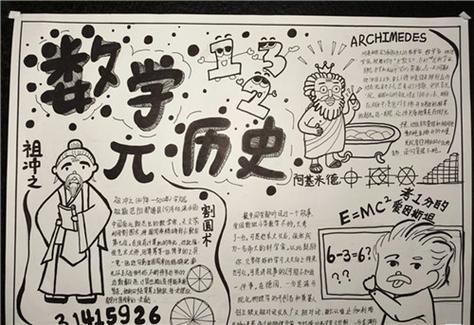
What is math like
Different people must have different descriptions. But there are students who go through math education, but math gives them pain — math is too abstract, too boring, too deep, too boring, too cold — it's an objective existence. Who destroyed the "man-made" of mathematics? As professor li tien said in the preamble of his new book, mathematics - math culture to touch the heart of the child: “we still lack a value picture in the math class, a downside, a free-interested and monocultural intestines!”
Professor dean li has been trying to change the stereotypes of mathematics. He has taken the lead in conducting theoretical and practical research in the country that combines the intellectual history of mathematics and mathematics education, promoting a mathematical education concept that highlights “cultural significance”, exploring the paradigm of “mathematical culture in the classroom” to lead and deepen the curriculum reform of mathematics in primary and secondary schools。
The book is the results of an action study he has been working with front-line teachers to improve the situation of children in mathematics learning and provide them with a high-quality learning life in mathematics. The gaussian calculations, china's nine palaces, how to use a circle and three straight lines, the mystery of the pentagon star, and so on, change the intrinsic face of mathematics and open the brainhole. And believe that even if you don't like math, reading this book will break your bias against math。
According to this book, mathematics culture encompasses both explicit mathematical knowledge patterns, such as mathematical concepts, justice, principles, theorems, formulas, methods and guesses, and implicit mathematical spiritual patterns, such as the idea of the universe, the sense of the subject, the noble beliefs, noble emotions, the pursuit of values, poetic wisdom, rational thinking, and mathematical thought, which are embedded in the creation of mathematics。
So math culture classes are about getting math education back home, giving a real “culture” form of mathematics, giving the magic of mathematics to stimulate children's curiosity, providing students with amazing, wonderful, charming, interesting, useful and powerful mathematics, and returning math classes to the original meaning of “generatives”。

Of course, an important context for a comprehensive understanding of mathematics and culture is the fact that for many years professor tianan lee has been advocating for classroom teaching to be humanistic and to shape a high-quality classroom of “high faith and strength and inspiration”. Highness is the first priority of a high-quality classroom, and it is the intrinsic logic of a high-quality classroom, the practice orientation of a high-quality classroom and the operational principles of a high-quality classroom. High-quality classrooms emphasize optimizing the structure of the teaching process, revitalizing the way students learn and watering down the teaching process。
It is on the basis of this philosophy that the classroom is the main position of the literian and that it is better achieved through the “high platform” design and “low structure” of the mathematics class. The 10 cases selected in the book fully reflect the “breedings of the ben-cultural lead — issues driven — thinking through life integration”. In such cases, mathematics is a resource that provides students with a good learning resource through the problematicization of the content of the curriculum; mathematics is a cultural presence that creates an excellent learning culture for students through the teaching staff culture; and mathematics is a fun presence that allows students to experience an excellent learning process through the learning and playing of students。
This kind of math learning is problematic, life-oriented, story-based, contextualized, and allows students to meet a wider world of mathematics; this kind of math culture class has a sugar coat on a very sweet math class that better stimulates students' interest in learning and achieves discipline. In the context of “two-declining” mathematics culture classes, which are more exemplary and guide teachers to curriculum awareness, curricula and pedagogic design, and inspire students to see their lives through the design of more fun and informative math culture classes, and to jump out of teaching materials and look to the wider world。
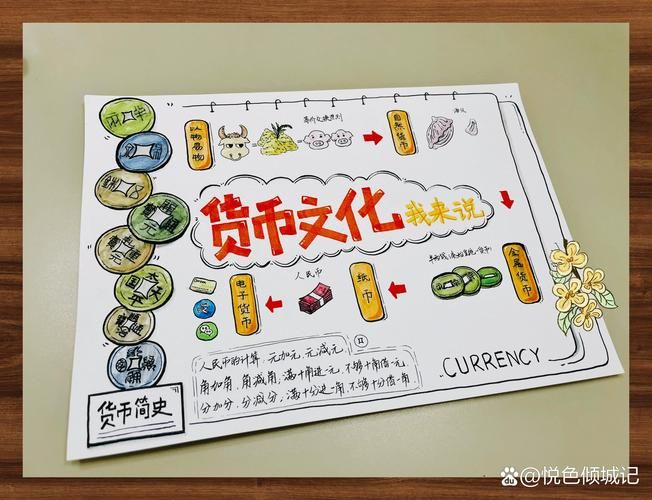
The book is the result of a collaborative study between researchers and practitioners and is well received in both the previous and the following articles. If it were merely a deep theoretical, abstract reading, the book could still be locked up. It is invaluable that the book has not only ideas but also specific lessons, but also vivid examples of experience, learning and migration。
After reading the book, not only did you discover the beauty of professor lee's ambitions as a mathematical researcher, the beauty of ideas, the beauty of words, but you also realized that if you were afraid of mathematics, it might be because you didn't meet funny math, because you didn't meet a math teacher with a cultural vision. In order for students to fall in love with mathematics and become conversant with mathematics, teachers need to move from “decenting” to “breeding”, to install a “bright mind” and to “open windows” for students。
Chinese teachers ' journal, 4th edition, 2022