In recent years, there has been an increase in the area of plastic sheeting of melons in the guangdong net, which is described below。
I. Selection of excellent varieties and rationalization of planting time
There are currently alternative types of coarse melons that are performing better in the sheds, such as chai, king trem, apollo, love god, etc. In order to improve economic efficiency, it would be useful to arrange for the planting of melons in february and august, and to adjust the melons to market them in may-june or mid-october, i. E. At times when the melons in xinjiang failed to enter the guangdong market or were largely out of market in guangdong, which would yield higher returns。
Ii. Cultivating seedlings
Large-plant planting is generally carried out in the form of laden seedlings, which are filled with seedlings in the holes of 50 or 72 dens, and then in which seedlings of melons are planted. The matrix is typically mixed with one river sand and one peat, and can be mixed equally with one pile of wooded grain and one river sand. Seeds should be sterilized and impregnated before seeding. Seeds are sowed when they are white. Seeds are distributed flat, sprout down and then cover about 1 cm thick. When seeded, a 1,000-fold dilution of methyl tobuzin or 500-fold bacterial solution is applied to prevent the occurrence of adhesive and sudden disease, requiring that the matrix be filtered. Once seedlings have been produced, the solution will be repeated once. When the first leaf comes out, the seedlings are fed with a diluted melon of nutrients, so that they can grow two or three leaves. Low temperatures and weak light during early spring seeding should be added to the nursery to increase light and temperature and to promote small seedling growth。
Forms of cultivation
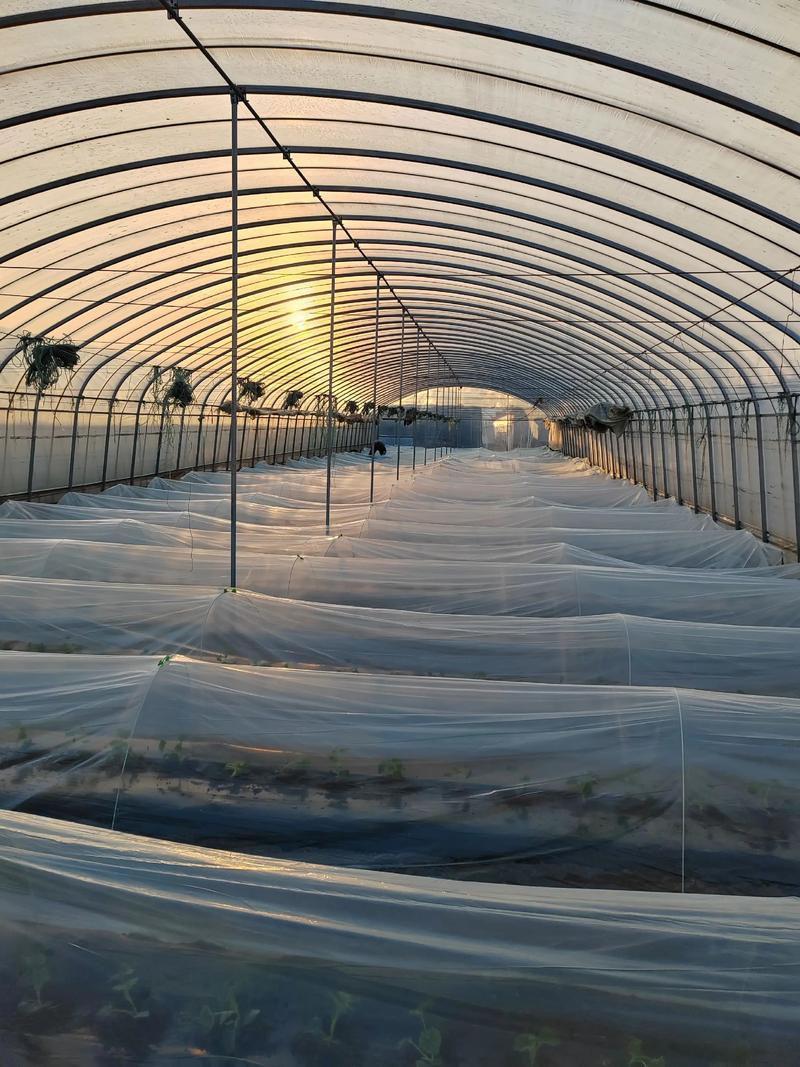
1 . Quality bags are primed in plastic bags, with face openings, and will be used as nutrients to plant crops with species dripping in the bags. The plastic bag is made of non-transparent, white or white-white, white-and-white-white-milk milk film filled with a flat square of 100 centimetres long, 25 centimetre wide and 10 centimetres thick. The matrix may be formed by stacking of aluminum and river sand for a period of more than three months, with two wood aluminum and one river sand being evenly mixed, or by a mixture of wood aluminum, grain shells and river sand, with a volume ratio of 1:1. When plastic bags are filled with matrices, three fixed holes with a diameter of 10 cm above them are used as planting crops and five small holes each on both sides of the bags to remove excess nutrients. The planting bags are arranged in two rows, with drip pipes between them, and drip pipes are connected to the planting bags so that nutrients can be dripped into the planting bags for crop absorption. The distance between the two bags is about 35 cm, so that each acre can grow around 1,600 melons。
2 . The cell cell culture is a non-terrestrial form of cultivation by dripping water and nutrients by filling the matrix in a small volume cell. The planting tanks are typically made of two layers of red brick, 10-12 cm deep and approximately 64 cm wide. Three troughs were set up at 6 metres and five troughs were set up at 10 metres. The bottom of each trough should be levelled to the horizontal level and then coated with a membrane, which would fall into the matrix. The entire tank shall be filled with a matrix, which is slightly higher than the one on both sides, and may be made of only river sand, or only of piled wood, or half of the piled wood, or half of the mixture of river sand. Two rows of melon per slot, 45 centimetres。
Iv. Cultivation management
1. The transplant is carried out in the middle of the day or in the middle of the morning when two or three leaves are grown. The day before the transplant, the seedlings were sprayed with a microbicide, and the drip irrigation system predulgent, wet-moisture bag or trough matrix was activated. As far as possible, seedlings should be removed from the seedlings without hurting their roots, and the seedlings should be extracted together to be transplanted into planting bags or slots. The transplant is followed by dripping of nutrients to ensure the viability of the seedlings with the moist contents of the bags or tanks。
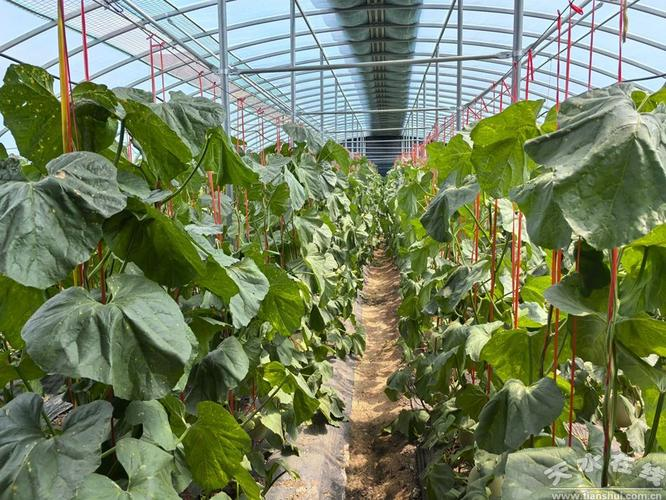
2. When the rope plant is long to five to six leafs, one end of the plastic line is tied to the stem of the plant with a button, the other end is tied to the pre-stretched wire on the roof of the shed, and the seedling is bound to the plastic rope. At a later stage, care is taken to bind the seedlings to plastic ropes。
3. When the whole body of fat water is abundant, the seedling grows and leaves are thick. In order to promote early ripening and improve quality, melons generally use the whole single-cranium branch method to wipe out the side buds in a timely manner and keep the chicken growing. Each of these species leaves a fruit, and it is appropriate to choose between the main chickens section 12-15, i. E., three of the chickens from the main chickens section 12-15, which produce a twig and leave them with the female. However, the result branches must be removed from the heart one or two days before the female opens up, and all of the chickens below the fruit node must be removed as soon as possible, as well as the breeches of the result. When the main chicken grows up to 26-28, it hits the top. The whole chicken requires the retention of 10 real leaves at the end of the outcome table, and all the organization of work takes place in the morning to heal the wounds and prevent infection. It would be preferable to spray a pesticide such as a polypsychia or enzyme after the whole branch and to pre-empt the disease。
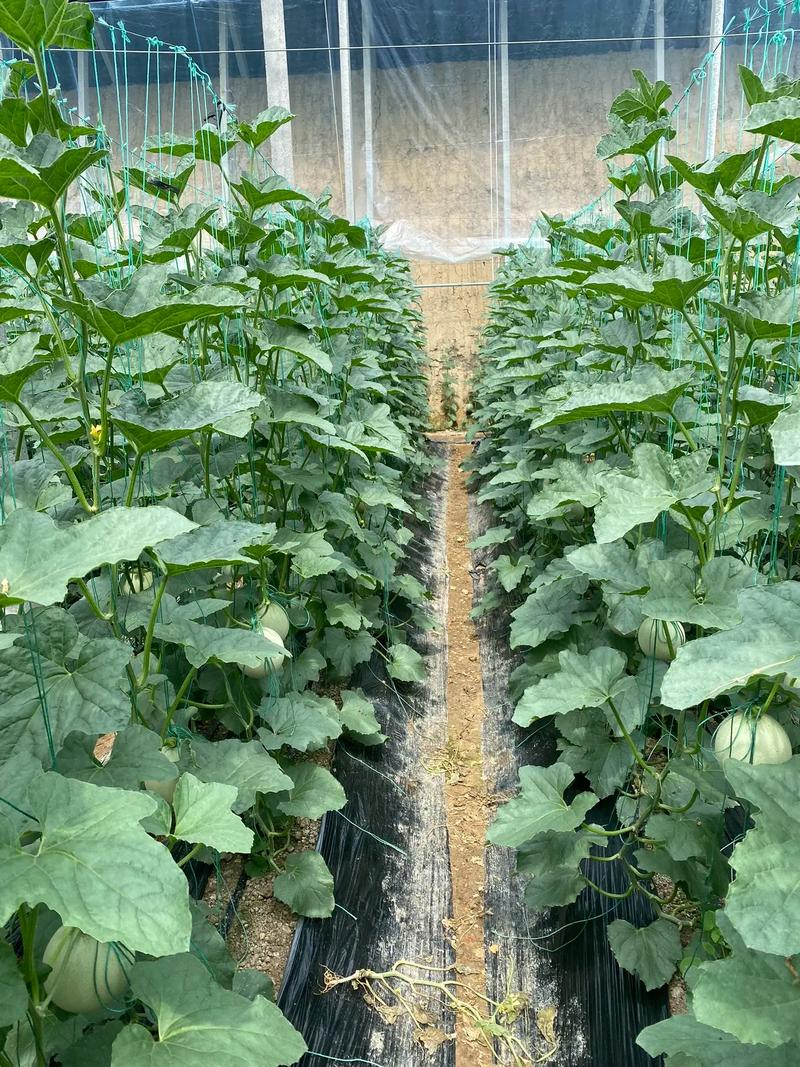
When pollination and sequins are opened up, artificial pollination must be carried out as a matter of urgency, with 8-10 a. M. Being the best time for pollination. The whole-house seedlings require that they be pollinated within 3-4 days, so that the whole-house seedlings can be properly purified, thus facilitating the uniform regulation and management of the water fertilizer supply during the critical period of melon net formation, so that the whole-caste melon matures and the net is clear and beautiful. When the fruit is grown as big as an egg, one of the most positive of the fruits is preserved and the rest removed. Once this work has been completed, the whole shed is sprayed with sterile pesticides. Some 15 days after the fruit, when the guacamole grows up to about a pound, the guacamole is to be carried out, otherwise the fruit will continue to fall heavy and the chicken will be pulled and broken. The melon can normally be carried around the barbed wire above the shed in a bag。
Nutritional fluid management
The amount of nutrient drip irrigation depends on the size, growth and weather conditions of the seedlings. The supply of fluid is generally low in the pre-growth period, and the volume of drip irrigation increases gradually with the rapid growth of seedlings, tubers and leaves. During the period between the beginning and the mid-term of the results, i. E. 20 days after pollination, the demand for water fattening from plants reached its highest level, with a daily dose of about 0. 5 - 1. 0 litres per drip. At the end of the outcome, the drip irrigation will be reduced appropriately in order to harden the bark, facilitate the formation of the web and heal the crack wounds. Further reductions in water fertilizer supply are needed in the period leading up to the harvest, in order to promote the maturity of the fruit and increase sugar content。
In the middle of the day, large-scale melons are usually dripped 2-3 times a day, each time they reach the chute base wet or form a thin trophic layer at the bottom of the chute, the planting bag drops to the point where the liquid seep; in the middle of the rain, the number and volume of drip irrigation are reduced appropriately. In order to reduce the brackish accumulation of the matrix, it is advisable to stop dripping of nutrients for one day every 10 days in the later stages of the growth of the seedling, and to replace it with fresh water, so that the seedling absorbs nutrients in the matrix, thus preventing salt。
The trophic concentration of drip irrigation also depends on the weather and growth of the seedlings. Concentrations of nutrient fluids have to be increased appropriately on rainy or low temperatures; concentrations of nutrients in high-temperature dry weather have to be reduced. Concentrations of trophic fluids are lower in the pre- and post-growth periods, and higher in the medium-to-growth periods. In general, it is desirable to maintain the ndec at 2. 5 - 3. 0 ms/cm, or 2. 0 ms/cm during long periods of high weather, or 1. 5 m/cm for small seedlings。
Vi. Pest management
The melons that grow in plastic sheds are chronically exposed to high temperatures and humidity and are prone to pests and diseases. In order to ensure high quality and high yield of melons, an integrated approach to disease and pest control and a “agricultural-based and coordinated chemical control” strategy are essential. Effective sterilization of planting facilities, matrices and appliances; improved ventilation in the sheds; choice of pest-resistant species for cultivation; seed disinfection; cultivation of strong seedlings; improved crop management and nutrient management; timely removal of old and sick leaves, promotion of ventilation and increased light; and timely and rational use of high-efficiency and low-toxic pesticides to curb the occurrence and timely eradication of pests。
Collection
The maturity of the melon is more difficult to determine depending on the species and climate, and can generally be judged in terms of: (1) the timing of the pollination of the fruit; (2) the characteristics of the fruit, such as the formation of the ionosphere, the special fragrance of the fruit, the colour of the fruit, the soft and hardness, etc.; and (3) the characteristics of the plant, such as the degree of drying of the result nodal roll, which results in a loss of green and yellow。
Zhou
Zou zhiyun of the institute of agricultural technology