On 10 august, the daily farmer's journal, “the mountains are rich in green and fragrance” — the town of six dishes of water in guizhou has made a significant contribution to the high quality development of the vegetable industry, focusing on the fact that the vegetable industry in the market has become an important feature that has led to a steady increase in the population's income and the activation of rural energy. Specific reports are as follows:
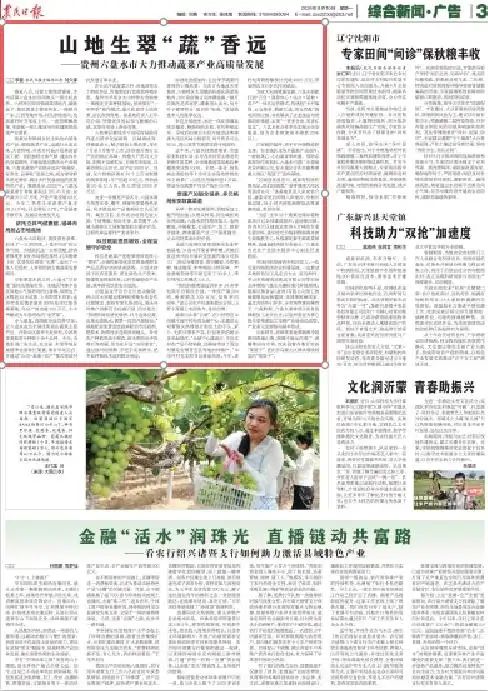
In the summer, in august, the land of oumon was green, and the fields of guizhou were full of six bowls of water. In the vegetable base of the town of luang dynasty, six special districts, trucks full of eggplants and cucumbers are ready for distribution, travelling all the way to the markets of guangdong and jiangxi; villagers travel through the rooms to pick up and collect them when they are clear. A basket of fresh vegetables and vegetables links up with a thriving vegetable industry in mountain cities。
Vegetables are the basic agricultural products that guarantee the livelihood of both urban and rural people, and are used as a strong vegetable industry. They are used as a source of wealth for farming, food and rural renewal. Based on a unique stereoclimatic climate, an internal and external network of transport, and an industry-wide chain that continues to grow, the six-packed vegetable industry is moving steadily towards “sizing, standardizing, branding” and becoming an important feature of crowd-stabilizing growth and activating rural energy. According to the data, in 2025, the cumulative area of six bowls of water and vegetables was 1,257. 6 million acres, with a total output of 210. 07 million tons, with industrial output exceeding $6 billion. In the second quarter of this year, the city-wide production of vegetables reached 99. 34 million tons, an increase of 3. 7 per cent over the same period, with a solid industrial base and growing growth。
By virtue of the climate, the market heights were seized by the wrong layout
The six-mountain rises and falls at very high altitudes, creating a three-way climate of “a mountain with four seasons and 10 days”. This natural endowment is based on the distribution of specialty foods according to the varying gradients of the sea, with two “aces” at the wrong peak for high-quality prices, moving out of the path of development of mountain vegetables without me and with me。
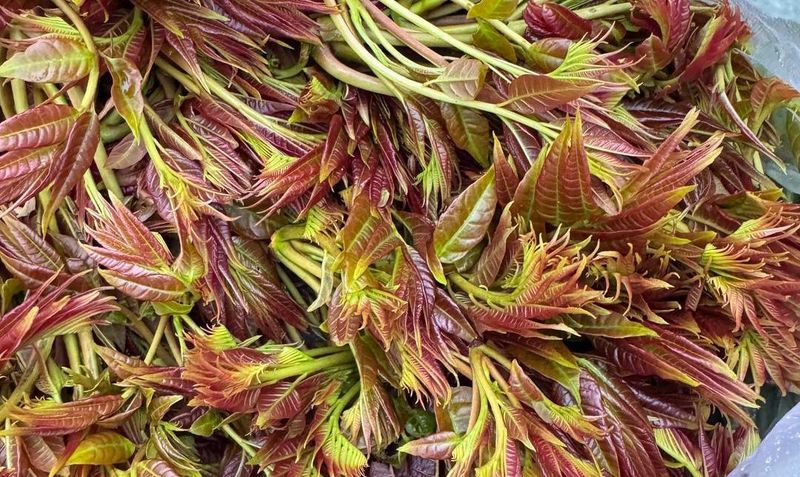
In the early springs, when it was cold, six bowls of water, the “early springs” , pre-empted the market. Red fragrance, cultivated by the small climate of the city, matures 45 days ahead of the surrounding production areas and is available on the market, and the 2000 acres of red oil fragrance base in the town of tshouzhou, with a gross annual product of more than $4 million, has become the “gold sprouts” of the early spring harvest。
In the middle of the summer, high-altitude cold and cold gains were demonstrated, making six water sets the main production area of high-quality high-mountain vegetables throughout the country. More than a dozen varieties are grown in cold and cold vegetable bases in the south of jongshan. This year, the guangdong enterprise was introduced to develop hot seasons of cabbage and cuisine, etc., to fill market gaps, and to encourage villagers to develop order farming through the “company + base + farmer” model。
In addition to large quantities of cold and cold vegetables, local niches are dug in to create efficient farming practices. As the only local base for the cultivation of carnivals on a local scale, dae-jung village in tsuzhou city has introduced a “two-quarter-a-year” rotational model that maximizes the living resources and supply cycles of land. The head of the base, mr. Shi hua xian, introduced that, thanks to a good taste of good taste and softness, cabbage was favoured in the market。
In the same vein, the six hong kong special administrative regions have launched a new development course in the wrong season. High regional elevations and high day and night temperatures, which give a high quality of dysentery, are concentrated on the market from july to august each year, just to stagger supply peaks in the main production areas of the south. According to sioux, a growing family not only tolerates storage, market demand is stable, but harvests take up to 100 days and produce nearly 3,000 pounds. Currently, there are 58 100 acre-sized vegetable bases in the six special administrative regions alone, with an annual value of over $2 billion, generating more than 300,000 jobs and more than $20 million for work。
For the purpose of further polishing industrial business cards, six disks of water concentrate on the development of niches such as ginger, taro and pepper, and simultaneously advance the development of agricultural geo-marking certification. To date, the city has been successful in developing a national geographical marker protection product with a specialty to improve industrial competitiveness, with a variety of features。
Science and technology enable efficiency gains, and oversee the safety and security of all
Science and technology are the core “keys” of efficiency gains in the vegetable industry, and process-based standardized regulation is a solid line of defence for the quality of agricultural products. The six-basket submersibles service, the spread of green production technologies, and the establishment of quality management systems, with a technology-enabled industry-wide chain, have been set up to secure the population's food safety floor。
The early summer was a critical period for dragon-tooth lily. At the base of the professional cooperative for farming in grande river chung, agrotechnical experts have taken root in the field to explain to growers the key points of identification and prevention of the disease: “consisting rains are prone to disease, leaves on the edge of the leaf are yellow and water spots are found, and first intervention is required.” the base provides free distribution of specialized medicines for the prevention and treatment of diseases, and the technology and materials are synchronized to the field. In response to problems such as the irregular use of medicines and poor methods of pest and disease control by farmers, a “field classroom” has been set up in order to bring professional farming techniques to the people through face-to-face lectures and hands-on instruction。
Standardized facilities are maintained to keep anti-season vegetables equally high. When the north is cold and snowy, more than 200 acres of peas are in the standard vegetable base of the six large-use towns of the special administrative region. “the peas are fertilized by farmers, irrigated with spring water, and each leaf meets the `scallop' standard.” the technical staff of the base has a strong say。
At the base, the integrated water fertilizer spraying system is fully covered, providing a precise supply of water fertilization and saving the cost of planting. Peas are harvested at high-end, fresh supermarkets in the bay of australasia through cold chains, at a price of $30 per pound, with a significant premium on high-season anti-season vegetables。
In recent years, six water dumps have been dedicated to agricultural science and technology at the provincial and municipal levels, leading to the renewal of high-quality vegetables by various business owners. More than a dozen eco-efficient planting techniques, such as water fertilizer integration and green pest prevention and control, have been fully promoted, with demonstration applications exceeding 40,000 acres, leading to an average increase of about 6 per cent in individual vegetable production throughout the city。
The chain of continuous production and marketing, with diversified patterns widening the channels of enrichment
From the single sale of fresh and raw materials to the advanced processing process to the higher value added; from the planting of headbreads to the global marketing of the entire web, six pots of water depend on deep processing, electric power generation, cold chain matching, the full chain of production, processing and marketing, and the promotion of the deep integration of the vegetable industry and the sale of good food in the mountains。
Arrival of 31 acres of celery is green and fresh. It is then picked and delivered directly to guizhou's sunflower agricultural development co. Ltd. Processing plant, which is sorted and cleaned, empty canisters, freezer locks, made of sour vegetables and locked in the wild. Industrial landings led to more than 30 permanent regular workers, with seasonal peaks of 120。
“our sour vegetables are sold throughout the country through a variety of electrical platforms, such as shivering, and produce 260 tons in a quarter, selling 2. 2 million yuan, with a repurchase rate of about 80 per cent.” the company's production manager, zhang jung-chul, introduced yamano to the electrician express, at a double price。
Vegetables come out of the mountains to “clouds”, and in the storage centre of the kimbaku village electrician in kimang town, six special administrative regions, the anchors are enthusiastically promoting the produce of fresh-earthed potatoes, radishs, and legless beans, with the sound of packing and delivering. “the construction of the storage centre led not only to the sale of agricultural products in the village, but also to the introduction of radiation to growers in the surrounding villages and in the districts of ansupud. According to huang kao, the secretary of the kimingo village branch, the village electrician's sales are expected to exceed $40 million this year, leading to the employment of more than 300 villagers around the village。
In order to enhance the efficiency of power suppliers, the six-pack water innovation has resulted in an integrated operating model, clouds + service centres + sites + bases + farmers, and in the construction of a supply chain for electricians, such as “rural collections, cloud manifests, data-sharing, integrated warehouse-sharing”, which has effectively addressed the challenges of enterprise selection and source organization and has resulted in “sale-to-sale” sales. Six bowls of water were at the forefront of the province's efforts to achieve full cloud cover and to reduce the logistics costs of supporting enterprises by more than 20 per cent。
The extension of industrial chains cannot be supported by cold chain logistics. In the rural vegetable estate of the city, there is a desire for cabbage and cabbage. With the collaboration of the east and west, six water sets were introduced to guangdong joon-shu agriculture co. Ltd., which worked together to build a direct base in the bay of hong kong, china。
“the region is characterized by a high temperature of day and night, a strong accumulation of vegetable organic matter, and our vegetables are widely recognized by consumers in the bay of australia.” the head of the base, zhang cheng jin, said that she would enter the market immediately after harvest and transport the entire cold chain, and that she would be able to arrive freshly in hong kong in 24 hours。
“at present, 42 cold chain logistics projects for vegetable storage have been fully implemented throughout the city, with the construction of 60,000 tons of professional ginger cold storage in the town of pernampoda and puda countryside, gradually growing into a ginger clearing centre in the irradiated provinces, which will address the root causes of the scarcity of fresh vegetables and high circulation losses.” the deputy director of the technical services centre for agricultural industries in six waters city, ryu phu。
Market openings insist on a two-way dynamic, both internally and externally, while bringing in high-quality firms in the field to build a common base while pushing local niches out of the mountains and overseas. The market owners, such as the food distribution company ltd. Of nakayama city, have set up a six-bed standard planting base; the chili products processed by chumachan hot food company ltd. Are sold to european countries such as germany and france. Through a combination of internal training, three provincial chili processing lead enterprises have been established throughout the city to produce chili chili in guizhou, six rolls of pepper and six bowls of water. The whole chain of ginger processing, with the chonryng industry at its core, has also been formed, and a diversified industrial development pattern has been developed。
From spring to winter, the cold and high-quality vegetables have crossed the mountain sea along cold chains and are being transported to two large, domestic markets, filled with “baskets” of people everywhere, which have become “bags of money” for the people of the umon mountains。