General knowledge analysis of scientific achievements
Scientific achievement is one of the most impressive chapters in the evolution of human civilization and one of the core points of consideration of the “common knowledge of natural sciences” section of the civil service examinations. Such topics not only examine candidates ' knowledge of basic scientific knowledge, but also require an interdisciplinary capacity for thinking integration. The following is a list of key knowledge points that will be combed through the multiple dimensions of the system and that will be adapted to the examination by the candidates。
I. Physics and astronomical fundamentals
Physics is the science of studying physical motion patterns and energy conversion, while astronomy is dedicated to exploring the origins and evolution of the universe. In the test, candidates need to be familiar with the four basic interactions and their proxies. Gravity theory, although not yet experimentally proven, is the core principle of the gravitational wave detector and an important tool for testing relativity in the broad sense. In quantum mechanics, the heisenberg uncertainty principle, which points to the impossibility of simultaneously accurately measuring the position and momentum of particles, has profoundly changed human perception of the microworld。
The big bang theory suggests that the universe originated about 13. 8 billion years ago at a strange point, then went through rapid expansion and cooling. Current mainstream cosmology models suggest that dark matter accounts for about 27 per cent of the total mass energy of the universe, while dark energy accounts for about 68 per cent, which together dominates the accelerated expansion of the universe. In the evolution of a star, the main sequencer transforms hydrogen into helium by fusion, releasing huge energy to maintain its gravitational balance. When core hydrogen is depleted, the star will enter the red giant stage, which may eventually end its life cycle in the form of a supernova eruption。
Electromagnetic radiation covers multiple bands such as visible light, radio waves and x-rays, with an inverse relationship between wavelength and frequency. Photoenergy is determined by planck formula $e=hnu$, of which $h is planck constant. Light years, as a unit of distance, are equal to the distance that light travels within one year in a vacuum, about 946 trillion km. Gravity waves are transmitted at the speed of light, usually at extremely low frequencies, but with very high energy density, and are suitable for detecting black hole consolidation events。
Chemical structure and substance properties
Chemistry is the science of studying the composition, structure, nature and patterns of change of substances. The periodic table of elements is organized according to atomic sequences, and the electron layout of the base state follows rules such as the principle of compatibility of bubbles, the minimum energy principle, etc. Rare gases such as helium, thorium and thorium are widely used for welding protective gases because of their very low chemical activity. The crystal structure determines the physical properties of the substance, such as the very high hardness of diamonds due to the covalent key network, while the graphite structure is lubricated。
In organic chemistry, hydrocarbons consist of hydrocarbons, which can be classified as alkanes, alkyl, acetylene and aromatic hydrocarbons by means of carbon atom connections. Ethylene is an important chemical material that generates polyethylene plastics through polymer reaction. Protein is connected by amino acid via aluminum and its primary structure determines the secondary and tertiary spatial structure, which directly affects biological activity. The nucleic acid consists of dna and rna, in which dna double-spiral structures consist of two parallel reverse polynucleic acid chains that maintain stability through base-complementarity pairs。
In biochemicals, enzymes are highly exclusive as biological catalysts whose activity is influenced by temperature, ph values and inhibitors. Atp is a direct source of cell energy that is synthesized on the cell membrane through the oxidation process. The enzyme-induced reaction follows the mig equation and the reaction rate is positively associated with the bottom concentration. Acid droplets are defined as the method of determining the alkali level of unknown solution using the standard solution at known concentrations, the endpoint of which can be judged by changes in the colour of the indicator。
Mathematical logic and statistical analysis
Mathematics is the science of studying quantitative relationships and spatial forms, often in the form of graphic reasoning and logical judgements. Angle calculations need to combine the parallel line nature with the inner angles and theorem of the triangle. The square diagonal line is divided vertically and equally long, and the diameter of the circle is twice the radius. Curve motion consists of a round motion at flat speed, with a trajectories in a circle, with acceleration always pointing to the centre of the circle。
In statistics, averages reflect the trend towards concentration of data, and differential measures the degree of fragmentation of data. The greater the standard deviation, the more dispersed the data distribution; the more concentrated the opposite. Normal distribution is an important model of probabilistic distribution with a bell-shaped function. The confidence interval is used to assess the reliability of statistical extrapolations, 95 per cent of which means that 100 repeat experiments are within 95 per cent of the available results. The regression analysis is used to describe the linear relationship between variables, and the greater the absolute value of the relevant coefficient $r。

In the analysis of the data, the averages and medians are appropriate scenarios. The normal distribution data are centred on the average, while the polar distribution data represent the centre position in the median. Line charts are used to show the degree of data dissegregation, with minimum, four-point and maximum values recorded simultaneously. The frequency distribution table groups the data by region to facilitate the observation of overall characteristics. The contour diagram is suitable to show the trend of variables over time, while the column chart is used to compare numerical differences between different categories。
Iv. Bioscience and medical commons
Biology is the science of studying life phenomena and patterns of life activity. Cells are the basic unit of life and breed through filamental fragmentation, while decreasing fragmentation produces reproductive cells. Genetic control expression, dna reproduction process requires an enzyme to decipher the double spiral structure. Protein synthesis involves two stages of transfer and translation, culminating in the formation of biomass molecules with specific functions。
In the field of medicine, bacteria are a single-cell, primitive nuclear organism. Although the virus has no cell structure, it must be born within the living cells in order to breed. The immune system includes body fluid and cell immunity, which are coordinated against pathogens. Oncological cells have infinity and often escape extinction by mutation. Cancer treatments cover surgical sterilization, chemotherapy, treatment and target-oriented treatment. Parkinson's disease is a neurodegenerative disease, the main characteristic of which is the loss of the black dopamine neurons。
In genetics, mendel law describes the separation and free combination of genes. Chromosomal group analysis can be used to determine the type of genetic disease. Single genetic diseases often manifest themselves in the presence or hidden nature of a common chromosome, such as albinism. Multigenetic diseases are disproportionately affected by environmental factors such as hypertension and diabetes. Chromosomal anomalies can cause genetic diseases, such as down syndrome, caused by c21。
V. Geographical environment and natural disasters
Geography studies the components of the earth's surface and their interrelationships. The earth rotates around the world day and night, leading to seasonal changes. High temperatures and abundant precipitation in the equatorial region form the tropical rainforest climate. The polar regions are chronically cold, mainly with tundra and ice caps. The monsoon climate zone is affected by warm and humid air currents from the sea during the summer, with a marked increase in precipitation。
Natural disasters are numerous and earthquakes are vibrations caused by the rapid release of energy from the earth's crust. Tsunamis are huge waves caused by volcanic eruptions or earthquakes on the sea floor that can spread as fast as 800 kilometres per hour. Typhoon or hurricane is one of the tropical cyclones that needs to be reduced to a certain intensity before landing. Volcanic eruptions, accompanied by magma surges and gas releases, could trigger large-scale landslides。
Warming climates lead to melting glaciers and rising sea levels threaten coastal cities. The el niño phenomenon is manifested in abnormally high sea temperatures in the eastern equatorial pacific ocean, which affect global climate patterns. The la niña phenomenon, on the other hand, is associated with climate fluctuations due to low sea temperatures in the eastern equatorial pacific ocean. The frequency of extreme weather events, such as storm floods and high-temperature heat waves, pose major challenges to human society。
Engineering technology and material science
Engineering is the science of applying knowledge of basic disciplines such as mathematics, physics and chemistry to practical problems. In material science, metals are renewable and conductive and can be used to manufacture conductors and bearings. Ceramics have high hardness and heat tolerance and are often used in the manufacture of tools and utensils. The polymer consists of long-chain molecules with good plasticity and ease。
In aerospace engineering, rocket propellants include oxidizers and fuel, which generate high-temperature, high-pressure gas spray propulsion through chemical reactions. The orbit calculation of spacecraft is subject to the kepler law and the public transit cycle is determined by the principle of $2 propto a^3. Satellite launches are subject to site selection, orbital design, orbital injection, etc。
In the area of information technology, computer hardware includes cpu, memory, hard drives and monitors. Software systems are divided into system software, which manages hardware resources, and application software, which provides specific functionality. Network communication relies on tcp/ip protocols to achieve cross-equipment data exchange. Artificial intelligence simulates human intelligence through algorithms and is applied to image recognition and natural language processing。
Vii. Advances in biotechnology and modern medicine
Biotechnology uses the function of living organisms or biological systems to address production, medicine, etc. Genetic engineering can be directed at modifying biogenetic material and developing disease-resistant crops. Cell culture technology is used in the mass production of biological products such as vaccines, antibodies, etc. The enzyme works are applied to industrial fermentation by improving the catalytic efficiency of the enzyme structure。
In modern medicine, microstart surgery reduces trauma and recovery time. Three-dimensional printing techniques can create individualized support frames and prostheses. Neural regulation technology achieves mind control of the external bones through brain interfaces. Genetic editing, such as crisp-cas9 techniques, can accurately repair the pathogenic genes. Precision medically integrated genomics and individualized treatment programmes。
In the area of public health, epidemiological methods are used to monitor patterns of disease transmission. Vaccination is the most effective means of preventing infectious diseases, such as polio vaccine, which has achieved global coverage. Infectious disease control needs to be combined with isolation measures, drug interventions and improved sanitation. The global climate conference emphasized the twin goals of emission reduction and adaptation to promote sustainable development。
Viii. Logical reasoning and statistical application of probability
The logical judgments in the line of reference often relate to the reasoning of cause and effect, assumptions, analogies, etc. Sufficiently necessary is the core concept of the logical proposition, which can be analysed through the true chart. If the necessary conditions are not available, they cannot be sufficient and vice versa。
In probability statistics, the expected value is the average of a random variable and the average of a variable subject to a normal distribution is the median. The smaller the standard difference, the smaller the data fluctuations, the higher the accuracy of the projections. The bayesian theorem is used to update prior's beliefs and obtain post-probability. The decision tree model shows the best choice path through the branch structure。
Statistical inferences include confidence interval estimates, hypothetical tests and regression analyses. T tests are used to compare the significant differences between the two groups of average values, and calibrations are used for the analysis of the relevance of classification variables. The relationship between linear regression predictable variables and multiple regressions takes into account multiple factors of impact. Time series analysis is used to predict long-term trends, such as GDP growth projections。
Ix. Earth system science and sustainable development
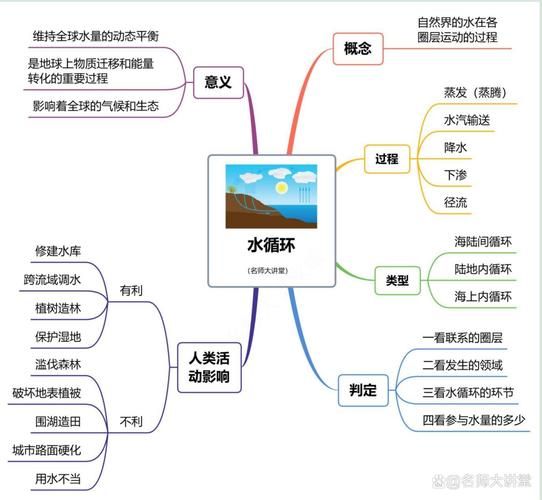
The earth system studies the interactions between the atmosphere, oceans, land and biosphere. In the carbon cycle, plant photosynthesis absorbs co2 and breathes and burns carbon. The nitrogen cycle involves processes such as nitrogen fixation, nitrification and anti-nitration, which affect ecosystem balance. The water cycle drives precipitation, runoff and evaporation to maintain water distribution。
Sustainable development emphasizes economic, social and environmental coherence for intergenerational equity. Green energy includes solar, wind, geothermal and biomass energy. Increased share of renewable energy contributes to the reduction of carbon emissions. The circular economy model reduces consumption through resource recovery and reuse。
Biodiversity conservation aims to maintain ecosystem stability. Nature reserves are established to monitor species distribution and habitat quality. Endangered species conservation requires stock management strategies, such as the grand panda national park. The ecological compensation mechanism provides financial compensation for contaminated areas and promotes regional balance。
X. Mathematical applications and probability combination

Mathematics often appear in the form of application questions, involving models such as process, engineering, concentration, etc. The process question formula is $s=vt, of which $s$s is for travel, $v$ is for speed, $t$ is for time. The total amount of work commonly used on engineering issues is divided by efficiency, for example, cooperation with acetate requires $15 hours。
For probability problems, the full probability formula is $p(a) = sum p(a|b)p(b). The bayesian formula $p(b|a)=p(a|b)p(b)/p(a)$ is used to calculate the probability of conditions. The probability of an independent event meets $p(ab)=p(a)p(b)。
Geometric questions often relate to size, volume and angle calculations. The cone size formula is $v=frac13pi r^2 h. The spherical surface size formula is $s=4pi r^2. Cylinder size is $v=pi r^2 h。
Xi. Front-line dynamics of the natural sciences
The current scientific frontier focuses on quantum computing, brain interface, genetic editing and climate change. Quantum calculations are processed in parallel using quantum bits and are expected to break the classic computer bottlenecks. Brain interfaces can interact with humans by decoded neural signals, potentially improving the lives of paralysis patients。
Genetic editing techniques, such as crisp, bring about genetic precision modifications that provide new avenues for the treatment of genetic diseases. Synthetic biology extends the boundaries of life through the assembly of artificial cell synthesis biological products. Climate change studies predict global warming and require a collaborative global response。
In space exploration, the location of mars bases needs to take into account radiation protection and resource sustainability. The moon base could serve as a transit station for near-earth orbits. Deep space detection equipment requires radiation resistance and autonomous navigation。
Consolidated case analysis
Comprehensive case issues often arise in test tests, requiring candidates to integrate multidisciplinary knowledge. For example, an analysis of the climatic characteristics of an area requires a combination of atmospheric circulation, topography and hydrological systems. Epidemiological models and geographic information systems are needed to assess the risk of a disease transmission。
The solution to such problems is based on the following methods: first extracting key information, identifying variables and parameters; secondly building mathematical models, creating equation groups for resolution; again testing the legitimacy of results, combining common sense judgement; and finally selecting the best strategy and proposing solutions。
Summary
Common knowledge of scientific achievements covers not only underlying theory but also dynamic frontier and integrated applications. Candidates should develop interdisciplinary knowledge systems, strengthen their capacity for logical reasoning and improve data analysis. Through systematic learning of four fundamental interactions, physical and chemical structures, mathematical statistical patterns, biomedical advances, geo-environmental characteristics, engineering techniques, advances in biotechnology, logical probabilities applications, geosystem science and mathematical synthesis, the core points can be fully captured in the examination。
The spirit of science pursues truth and progress, and humankind has always moved forward in exploration. Faced with challenges, we need to be rational and apply scientific solutions to real problems. Only then can we move towards a better future。