In the current age of information explosions, a cell phone would not be in a situation of information scarcity. However, if you do not manage knowledge and cannot digest it, it is useless to read as many articles as possible. How does knowledge management work? The author shares his experience. Let's take a look。

Much effort has been devoted to knowledge management over the last two years, and some care has been exercised over time. Recently, when i spoke to my friends, i found some recognition of my little skills, and then wrote an article hoping to support more people。
Knowledge management is a big topic and comes up with ideas, principles that can easily fall into ideological mud. So let's just talk about the way we started。
I. Methodology
I would like to share the knowledge management approach for articles. Summarizing:
Creates a synergetic document to paste article links to the body. Write your own current thoughts (really) and paste the original text into the body, read it over and organize and save it for the second time, and describe the content of the article in terms of words and insights
The moment of the information explosion, from the moment of awakening, all the apps were fighting to get the attention of the users. An individual with a cell phone would not be in a situation of lack of information. In order to remain competitive, it seems as if it is actively ingestion of information every hour of every day, but it still seems to be anxieties。
Personally, i think that the source of anxiety is not the quality and quantity of articles you read, but the fact that you did not。
To be honest, most of the time, we're in a grumpy information environment:
You did try hard to read 10 chatgpt articles today, 20 pages of navarre's monument, and seven xx videos about business in a tremor. But when you come back to reality, you have to face the child's incompetence, the daughter-in-law's dissatisfaction with you, the fact that you're being led to wear small shoes, the parents' medical results are not encouraging, relatives are borrowing money from you, the pressure to buy a house is high, they want to come out of the closet, but they don't know how to make their parents feel comfortable, and they are always polite to you。
Well, well, i didn't mean to put you in a jam。
What i'm trying to say is:
For the former, "see" is an action. This once happened, he learned nothing about you. You're just over your head. He's still information, not knowledge, not skill。
For the latter, the energy of man as a organism is limited, the more things consume you, the less surplus, and the less that can be spent on isolation and learning。
On this basis, my idea is that i need to add some deliberate exercise to myself to improve the quality of learning。
Iii. Practice
So i perfected the scene by reading the article。
1. Create a synergetic document to paste article links to the body. Write your current thoughts
I don't know if there's such a scene:
There must be a potential motivation to read in your brain. For example:
Let's start reading. However, reading is interrupted by other people/group messages and other apps. And then you might:
Add the collection to the micro-mail float window to close directly
Either of these three ways interrupts your reading at the factual level. When you came back, you almost forgot the information environment. Without the motivation to read, it is difficult to read the whole text in a complete and high-quality manner。
So my practical experience is:
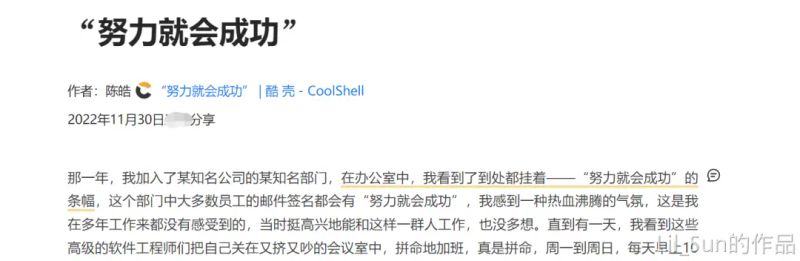
When you decide to read an article, you can create a sparrow document and post a link. Write down the motivation for your reading and choose a relatively complete time to start reading。
You can turn article reading into a mission if there's something you need to respond to while reading. You can tell them you're working/learning and you'll respond to them, but not now. Personally. It is very inappropriate to read and learn (so they develop float windows but have limited effectiveness)。
2. Paste the original article into the body of the text, read it out and collate the format
Copying the article into the text, you started reading it. You can edit articles according to your preferences. In this process, you can:
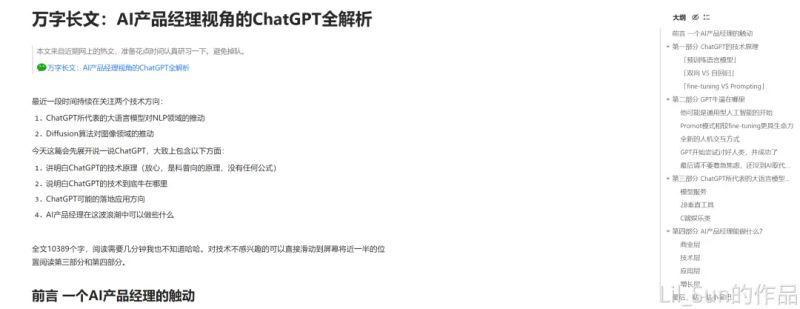
1) collating articles and setting titles
In my thin writing experience, every qualified article is very logical. There is a line that leads readers to read continuously. However, there are differences in style and style of writing, as well as differences in the hidden nature of the logical framework. And the title can help you search quickly and make learning and follow-up queries more efficient。
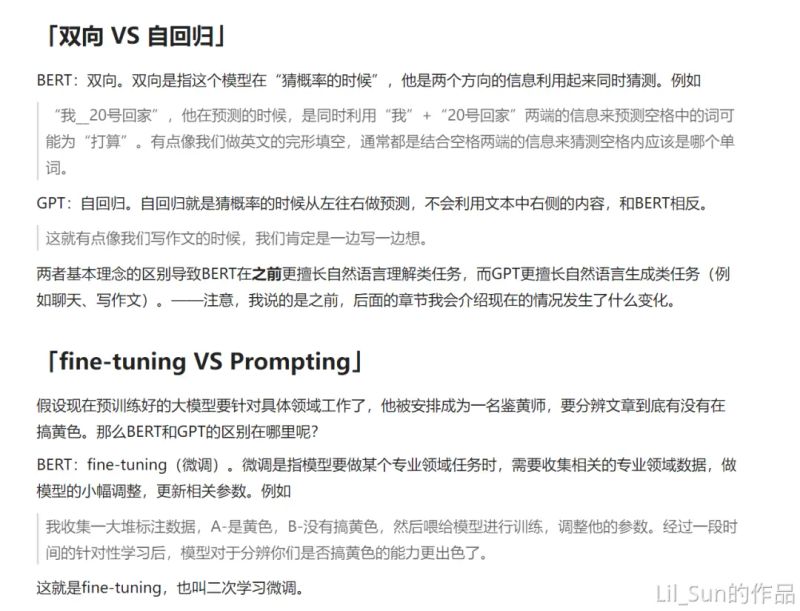
2) the ability to use an editor to refine the format to distinguish arguments and arguments
As stated earlier, it is important to think independently when reading articles. Many authors are excellent guides, and they have excellent logic and skills, which, by little, make you “self-convincing”. The marking of arguments and arguments in reading is an effective means of discerning hypocrisy。
I think since you've spent your time reading and learning, you don't want to take all the second-hand knowledge you've chewed。
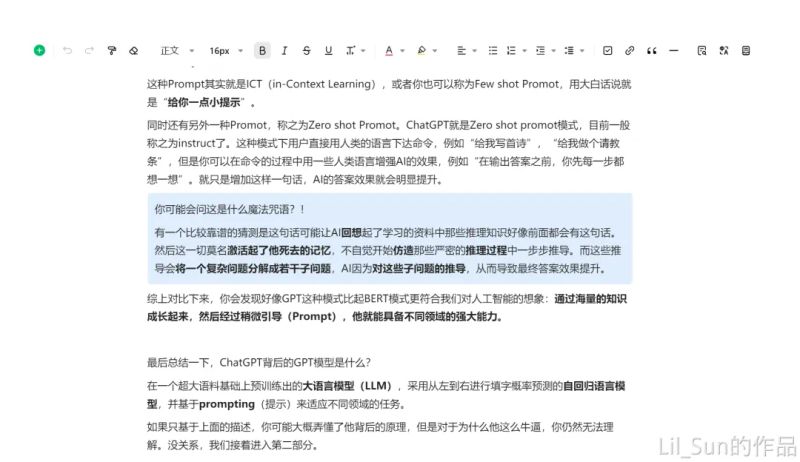
3) adjusting the font, numbering, spacing and even deleting some elements according to preferences
The longer the articles are read, the greater the pressure, and each individual has a specific personal preference。
In this way, the whole article produces a fine sense of beauty and satisfaction. All the contents are arranged according to your wishes, and the students who love to do housework and accept it will get to what i want to say. Anyway, you're in charge of your territory。
After the whole deal, your first formal reading will be finished。
4) preservation of articles, second reading and rewording of articles
Previously, i was doing synergetic document-type products, the important function of which was to have synergetic commentary. My definition of words is:
We're not only doing information input while reading, but also processing information (thinking about the content of the article) and output (thinking about the accompanying problem)
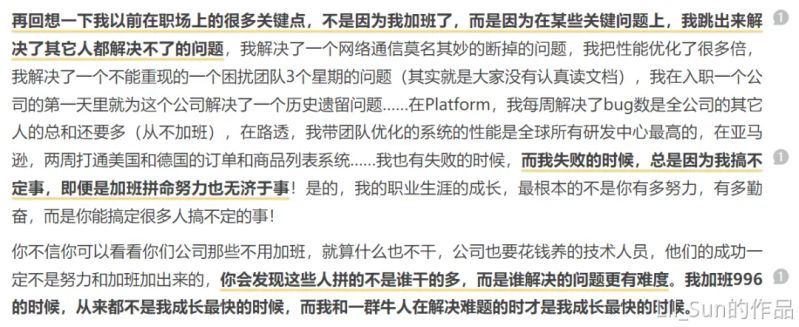
Some of the classmates had a habit of taking the gold sentence, which he would paste into a memo or a document. It's a good habit. I have 20,000 words in my ios memo. But they are indeed discrete and lacking in context. The message to be expressed in a sentence is ultimately limited, and there is always the risk of being taken out of context and context。
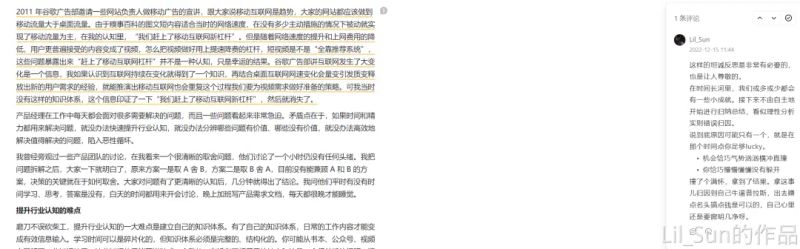
The subject of comments on previous articles is the whole article, and it is difficult for you to trace a specific paragraph or sentence. However, it would be a good solution. You can comment on a word, a word, a paragraph, more focused, more specific and easier to express. You should all remember the words that were written by the teacher when he went to school, and "cooking for parents" must be easier to write than "my parents"。
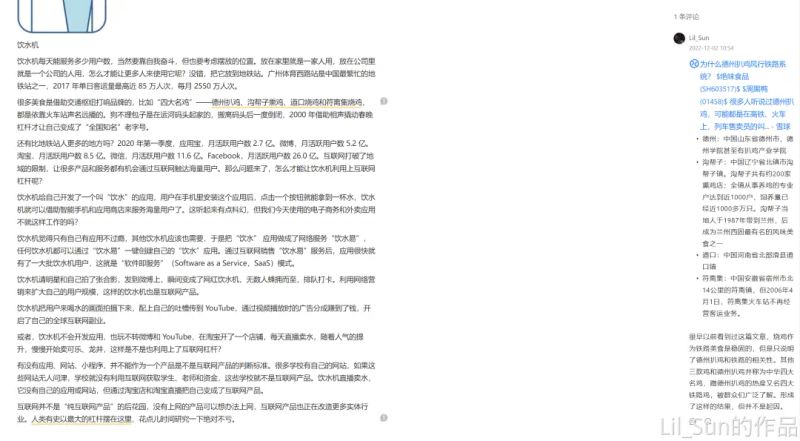
Comments can sometimes be a memo of their own, for example when reading articles that suddenly arouse their curiosity about a subject. Just a little comment, a memo, a new pit。
After the entire review, your second reading will be finished。
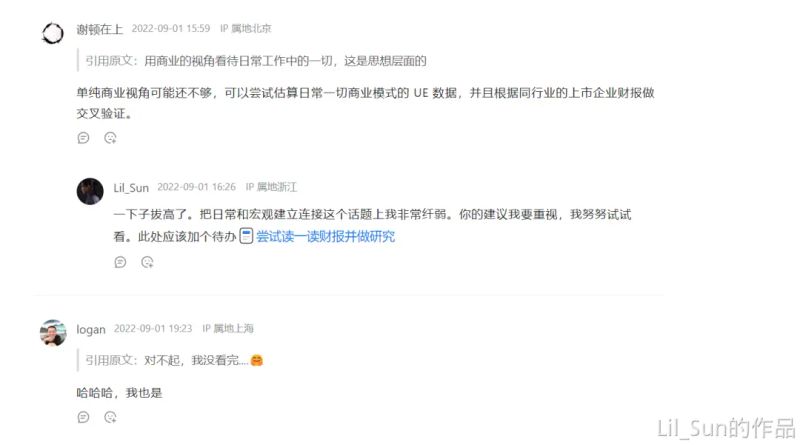
If you have a habit of communicating with others, you can share the links to your friends when you've read the articles. You can discuss it directly on the basis of specific topics. Commentaries are better at content deposition than in the micro-trust dialogue box。
The twitter public sign has also added verbs, but i have not yet reached the grey mark, and i do not seem to have supported the comment。
Iv. Ideas
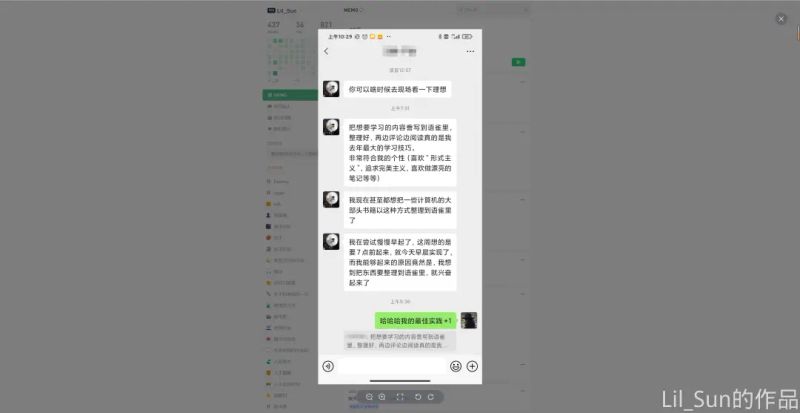
We talked about this last week when we talked to our friends, so it took us a little weekend to make a paper。
There should be some ideas. I've read a lot of notion-building articles shared by the great. Intuitively, everyone's attention is on the tool. It's hard to use without it. However, working people seem to have to use their talents in the production process to overcome difficulties and find solutions。
I wonder if we're used to being lean about tools as an excuse to avoid key issues, which i personally don't think is right。
Finally, we'll share three examples of my own practice
Https://www. Yuque. Com/lilsun/qe7xau/sb2vouc0xdn58ssp5
Https://www. Yuque. Com/lilsun/xxx375/qmif4q4q4gl5nli
Https://www. Yuque. Com/lilsun/qe7xau/unk6hy
I wish you every week a new harvest against anxiety with a real sense of certainty。
Columnist
Masai wei wei wei wei wei wei wei wei wei wei wei wei wei wei wei wei wei wei wei wei wei wei wei wei wei wei wei wei wei wei wei wei wei wei wei wei wei wei wei wei wei wei wei wei wei wei wei wei wei wei wei wei wei wei wei wei wei wei wei wei wei wei wei wei wei wei wei wei wei wei wei wei wei wei wei wei wei wei wei wei wei wei wei wei wei wei wei wei wei wei wei wei wei wei wei wei wei wei wei wei wei wei wei wei wei wei we business service track player, former podcast anchor, three knots lower heel up than leg。