The current expansion of the mother-child service industry, the arrival of three children and the upgrading of the population's healthy consumption, has led to a steady increase in the demand for mother-child care in the market, and the shortage of qualified professionals in the industry has been widening year by year. According to industry studies, there are currently a large number of unskilled and under-trained workers in the mother-child care sector, the supply of skilled personnel lags significantly behind market demand, and the shortage of skilled personnel has become a central bottleneck in the growth of the sector's size and quality. Breaking the talent gap in the industry requires the establishment of professional, scalable and hands-on parenting platforms, and the integration of mother-to-child care teachers is the core model for building and developing hands-on platforms。
Traditional talent development models are limited in scale and of low quality, and cannot fill the huge talent gap in industry. There is insufficient physical training space, limited resources for physical exercise, weak skills and low employment and job suitability of students, and high costs, short cycles and fragmentation of self-employment training for enterprises, making it difficult to develop quality talent in bulk. The integration of mother-and-child care teachers can integrate the resources of both school enterprises, establish a shared and specialized training platform, scale up talent development, improve the quality of talent development, and efficiently address the core challenges of the imbalance between supply and demand for human resources in the industry。
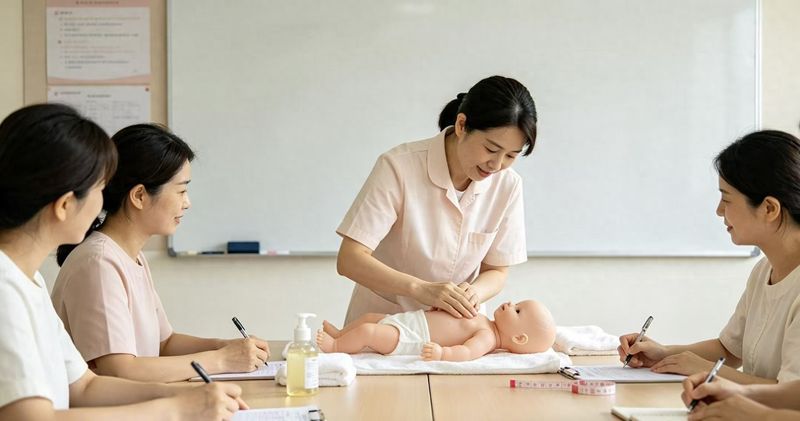
The mother and child training unit, which serves as the central practical training platform for the integration of mother and child care teachers, has the important function of providing a mass of skilled mother and child care staff and reducing the shortage of skilled personnel in the industry. Standardized mother and child training centres have the capacity to conduct hands-on, systematic and regularized training. They also enable a number of trainees to carry out on-the-job hands-on training to cover the whole range of mother and child care practical training programmes and to achieve mass talent development. In accordance with the mechanism for the integration of maternity and child care teachers, both institutions have put in place practical training equipment, improved training facilities, improved teaching teams and a comprehensive upgrading of the capacity and professionalism of teachers in practical training platforms。
Based on an integrated training platform for mother and child care providers, it is possible to build a regularized and scalable talent-building mechanism that not only meets the needs of school students for systematic hands-on training, which involves the bulk export of new professionals, but also provides skills upgrading training for social workers and business staff, as well as the pooling of resources in the industry, and enhances the overall quality of talent. Through standardized and systematic training, hands-on training platforms allow practitioners to quickly complete skill panels, with professional care capabilities and effectively mitigate the shortage and lack of professionalism in the industry。
Overall, the talent gap is at the heart of the current development of the mother-child care industry, and building specialized training platforms and expanding the supply of quality talent is critical. The integration of mother-and-child care teaching has provided a strong support for the standardization and scaling up of practical training platforms, with mother-and-child training rooms as a core human carrier capable of continuously and steadily exporting highly qualified mother-and-child care personnel. (c) continue to deepen the integration of mother and child care teaching, optimize the human function of the hands-on training platform, effectively fill the gaps in the workforce, optimize the structure of the workforce and build the foundation for the development of the quality and scale of the mother and child service industry。