How to deal with the key technology of cutting flowers and lilies and rejuvenation
At this stage, lily production is mainly produced and organized through squirms, which have lower coefficients and are prone to deterioration in quality in production. At the same time, more than 85% of cut-off lilies depend on western imports, which not only increase prices but also increase the production costs of cut-off flowers. More often than not, lily tissues have developed fast-growing systems, mainly using lilies, florists, florists, bouquets, poles, stalks, blades, etc. As extra implants, which can further increase the productivity of lily balls and generate significant economic benefits. There are higher requirements for lilies, for flowers, for twigs, etc., and conventional seedlings, for high current quality, beautiful cut flowers, for efficient use of lilies for pure rejuvenation, can help to enhance the mass effects of cut flowers, increase the economic value of cut flowers, and thus solve the real problems of production at this stage。
I. The lily ball generation re-empowerment technology
(i) combination treatment techniques for group training of small saps
The growth of the lilies, though spherical in form, is at the stage of physical hibernation, which, if planted, not only does it not germinate, but also does it at low temperatures, thereby breaking the hibernation period. The method of breaking the hibernation of the lilies consists mainly of the following:
Multi-temperature treatment. (b) under the conditions of temperature 4°c, the small tubers are trained in dark and the time is controlled from 60 to 70 d, so that the hibernation is removed。
2. One-time cryogenic treatment. Be careful to remove the grouping saps from the group bottle, wash them again and again with fresh water, until they wash them clean, etc., and put them on paper, dry them in the air, in the cold, and then put them in plastic bags, 100 in each bag, in the plastic swing box, for cryogenic cooling, with cold storage at 3-5°c and storage time of 70 d, thereby breaking the hibernation period. According to studies, both approaches can break down the lilies, which have a growth rate of over 98 per cent, while the application of a low temperature treatment is relatively simple compared to multiple temperature change treatments。
(ii) reasonable selection of varieties
With regard to cut-flower lilies, siberian varieties and perfume lilies are common in the market, where siberian varieties are of a white colour, have a taller hair, have a good growth, and the fragrance of the fragrance lias are larger and very fragrances are very popular。
(iii) selection and processing methods for the base
Because lily likes to grow in cool, dry, sun-rich environments, does not like damp, has a high demand for soil and drainage, it's suitable for growing in fertile, well-drained microtalc sandy soils. For this reason, the best growing environment for the lilies is the mountain area above 800 m above sea level. Cleans up nearby garbage by selecting dry plots with more abundant light, deep-sliding soil in excess of 30 cm, spraying with 50-fold formaldehyde fluids (at 40% concentration), after mixing, using plastic membrane for sealing of 5 d, and volatilizing the fluids in excess of 7 d。
Once the soil has been treated, it is possible to make a dosage, and if the dosage is used, the dosage is maintained at a width of 120 to 150 cm, 3 rows of planting, and on-demand. In the process, each 667 m2 is sowing 3 kg of furan, 50 kg of raw lime, 1,500 kg of organic fertilizer, which is mixed with the soil and then poached, covered with straw, so as to keep the sun wet. The application of the accelerator method should ensure that it is wide, has a surface width greater than 30 cm, has 2 lily balls on the acre, has a drip belt, has to be planted in a ditch, has to be more than 6 cm in size and 10 cm in size, and has to be kept at 8 cm in depth for a spherical ball. After treatment, the bottom of the ditch is applied to the bottom, and each ditch is applied to a compound of 50 g of potassium nitrogen phosphorus, with a higher phosphorus content selected as much as possible. The application process should be evenly concentrated, undispersed, and the application of demersion should cover 2 cm of thin ground, followed by a planting ball with a range of more than 6 cm, with a range of 10 cm and a range of less than 6 cm, and a range of around 7 cm, after the seeding is scheduled inside the ditch, with a range of 1 to 2 cm on the root line, in order to protect the root line, followed by the application of fattening, i. E., lavendering at a distance of 1. 5 cm, thereby reducing the area of exposure to fertilizer and soil. Fertilizers are applied according to the standard of 1 g per ball of high-purity potassium phosphorus acid, and 2 g fertilizer is applied if conventional phosphorus fertilizer is applied; and 2 g is applied when a combination of nitrogen phosphorus with higher phosphorus content is applied. And when it's fertilized, it's made of a bump, and it's light pressure, and it's made to make sure the roots and the soil are solid。
(iv) cultivation methods
The classification will be developed by low-temperature treatment to break down the hibernation saps, which are divided into two levels, 0. 5 to 1. 0 cm and > 1. 0 cm, with a marked difference in planting methods. Prior to planting, it is necessary to decontaminate the spasms by placing them at 1,500 times the liquid octophos-methyl (at 50% concentration) and indulging them in the cavity (at 50% concentration)/500 times the enzyme solution, which is controlled at 30 min and which is removed for drying in the cold。
If the temperature is 9-18°c, the lily ball can be planted, and for the central and downstream parts of the yangtze, the planting time is usually 2-3 months, the underlying reason being that the moderate temperature at this stage helps to promote new root growth. If you have advanced equipment to control the temperature and hide the shade, you can break the seasonal limits of planting even further, and you can grow it every four seasons a year。
Before planting 1 d, a perforation needs to be implemented in the bed so as to promote the growth of the root. Smaller-sized plumes can be planted in a ditch, with a depth of 5 cm in the bed, 30 cm in length, with a small plume maintained in the gutter, covering 2 to 3 cm of thin ground, with planting density at 60 to 70 grains per square metre; if the particle size is larger, 50 grains per square metre can be planted in density, covering 3 to 4 cm. When planted, you can water it, and you can strengthen it。
(v) shrimp management interventions
1. Control of light and water. After planting, 15 d focus on temperature control, and keep the temperature at no more than 18°c, 15°d, and then grow a new root, adjust the temperature to 15 to 25°c, because the sun is better than noon, and in the summer it needs to be covered with sunnets, and in the summer, 10:00-15:00, when the weather is clear, the shades need to be implemented, and the water should be supplemented by spraying, drip irrigation, ditch irrigation, etc., to create suitable growth environments for lily balls. Notably, water accumulation should be avoided and field drainage management strengthened. When the sprouts come out of the ground, we need to protect the rodents, clean the weeds on a regular basis, and avoid slabs. As the seedlings grow, the moisture should be managed rationally, and it should be managed in accordance with the basic principle of "no wetness, no wetness, no watering" to avoid the soil being wet enough to rot。
Fertilizer treatment. After the saping, fertilizer needs to be added to promote growth, so that 1 compound fertilizer is sprayed per month (at 1 per cent) and can also be applied by applying artificially matched wastewater, which is used to add 10 kg of calcium nitrate, 2 kg of urea, 0. 5 kg of potassium sulfate per 667 m2 and, when appropriate, magnesium, in combination with actual growth. The study found that the desired growth effect could be achieved by spraying 1/8 ms multiple fluids every 20 d spraying times。
3. Scientific pest control. Due to the high incidence of lycée pests, common diseases include anthrax, root, asphyxia, adhesion, etc., of which anthrax requires the application of 800 graft enzymes (at 75 per cent) plus 500 graft anthrax humid powders (at 50 per cent) every 10 d and continuous spraying of 2 to 3 times; as a result of halosis, it requires the cleaning of leaves and the use of an equivalent volume of horrid fluids (at 1 per cent) at the beginning of the disease, adding 800 to 1,000 to 1,000 (75 per cent) and a continuous spraying of 2 to 3 to 3 to 4 times at one interval of 10 d to 10 d at one time. Precinct carcinogens need to be treated with quintozene (at 0. 5%) to avoid the occurrence of the disease, and in the early stages of the disease, good disease prevention can be achieved by filling 300 to 500 times the fluid or spraying the dyson ammonium (at 50%). For pests such as aphids, spraying can be carried out using 1,000 times liquid dichlorvos cream (at 50% concentration)。
4. Other controls. During growth, lilies need to be weeded, to avoid soil slabs, to avoid damage to lily during weed removal. If the lilies are to form flowers, they need to be removed in time to avoid excessive nutrient consumption, which has an impact on the growth of the subterranean mast。
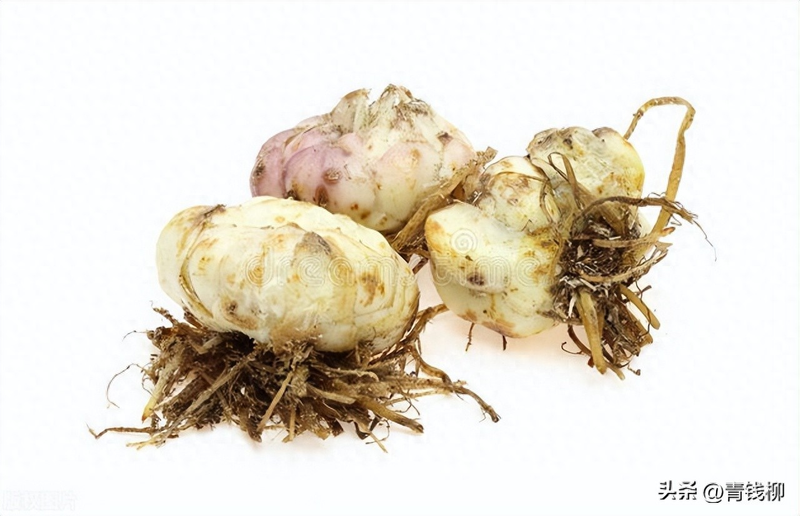
(vi) harvesting and treatment methods for runners
1. The harvesting and sorting methods of runners. In mid-october or so, the lily-planted leaves were yellow, but not dead, and the ball could be picked up gradually by the gills, avoiding damage to the ball as much as possible, 15 d before digging, ensuring that the soil was dry, so that the ball could harvest. In the process of collecting the balls, the signs should be classified according to the type and avoid mixing. Put the excavated seed ball in a chilly ventilated position, and clean up the remaining leaves。
2. Sterilization of runners. Washing of water from seeding, cleaning of soil, rotting tablets, rotting roots, using 100 times liquid methyl tobuzini (at a concentration of 70 per cent) or 600 times liquid polybacterium (at a concentration of 50 per cent), 700 times liquid dissonant manganese zinc (at a concentration of 70 per cent), combining 1,000 times liquid thion phosphorus cream (at a concentration of 50 per cent) for insecticidal treatment, impregnation of 30 to 40 min, and drying out of ventilation。
3. Tuber analysis and boxing methods. Depending on the size of the stem radius, divide it into two types < 6 cm and > 6 cm, and package it separately. During the boxing process, the lilies are separated from each other by the use of the charcoal, and the bags are labelled accordingly, indicating the type of lily, the size of the specification, the quantity, etc., to avoid mixing. Put the packaged lilies in the freezer, make them freeze。
Ii. Summary of the technical highlights of the multi-generational recovery of the lilies
(i) plantation of the first flower
In the case of eastern lily balls, for example, seeding in greenhouses from mid-july to mid-september, using soil-free planting methods, the matrix formulations of which include peat, river sand, cow dung, and foot drying, with reasonable control of temperature, humidity, light, water, fertilizer, etc., at the rate of 6:1. 5:1. 5:1. 1, will be collected by cutting flowers in late october and late january。
(ii) cultivation of the first flower and the second flower
During the first flower cut, 15-25 cm long straws were left with 10-12 foliages, which, after processing, were to be treated with fungus fluids mixed with methyl phosphorus, which were to be treated with a matrix sterilised, and water fertilised, and 30 d of the ball raised to ensure that the ball was strengthened; then, cold treatment was done on the ground to the balls, gradually lowering the temperature of the greenhouses, after 7-10 d, lowering the temperature of the greenhouse to -4°c, with a planting cell temperature at a depth of 3-4°c, with a temperature of -1. 5. 2°c in the vicinity of the ball and a temperature of -1. 5°c, with a humidity of 60% to 70% and a time of 1-2 months. Through the above treatment, the second bouquet of flowers is gradually preheated in the following year, from early january to late february, with a gradual warming of 7 to 10 d to keep room temperature at 20 to 25 °c during the day, at night at 15 to 18 °c, after the matrix has been completely frozen, at 15 °c in the vicinity of the ball, into routine management of cut flowers production, and at the second cut flower harvest between early may and early july。
(iii) cultivation of the second flower and the third flower
After the second cut-off harvest has been completed, perform 30 d of larvae growth, and then dig the balls out between mid-june and late august; refrigerator temperature maintained -1. 5 ± 0. 5 °c, processed 28-42 d, then further extended freeze time under -1. 5 °c to 70-84 d. The third bouquet was planted from mid-september to late november, in the same manner as the first one. It is worth noting that, by adding 33. 33% of the matrix that was not applied, fresh cut flowers were harvested in mid-december to mid-march。
(b) the management of the fourth flower is largely consistent with that of the second one, and it is grown from mid-march to mid-april, and from june to late august. The effective application of the lilies multi-generational recovery technology ensures that different cut flowers match the quality of the first flower, enhances their economic efficiency and promotes the development of multi-generational recovery technologies。
Iii. Conclusion
In conclusion, the development of liviculture, which is a partnership for economic crops, not only meets the development needs of the market, but also improves the ecological environment, creates a good space for local tourism development and generates income for farmers. The economic and ecological benefits of the lilies are significant, and it is therefore necessary to strengthen the techniques of cultivation that focus on the lilies, to guarantee the quality of the lilies, to actively promote their development and to improve their economic construction。