In recent days, local meteorological offices have jointly conducted training for priority meteorological disaster defence units, meteorological information workers, town-town disaster prevention and mitigation managers, town-town (village) disaster informers and landscape staff to advance disaster prevention and mitigation at the grass-roots level. At the same time, local meteorological offices have developed training appraisal platforms to enhance operational training and enhance operational service capacity。
Guangdong zhongqinghongqing: training in safe production for disaster defence priority units
On 16 december, the zhangqing regional high-range meteorological department of guangdong province organized a training course on the safe production of information officers for 2020 for priority meteorological disaster defence units, which was attended by specialists from the zhangqing city meteorological department. The meteorological safety management scheme (hereinafter referred to as " the scheme " ) was distributed at the training site. Meteorological experts read the approach in detail, focusing on the importance of meteorological disaster defence and the role of meteorological informers, in conjunction with the analysis of accident cases, as well as detailing relevant aspects of pre-positioning, emergency response exercises, etc. The training has enhanced the sense of mission of meteorological information workers and the capacity of priority units in meteorological disaster prevention and mitigation. Zheng si-gi
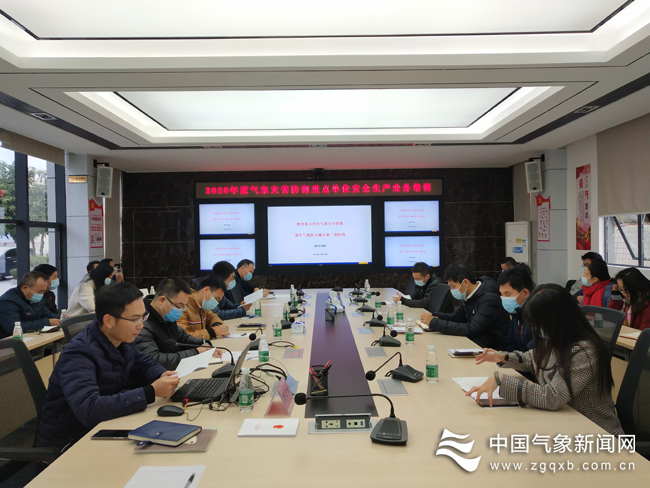
This is illustrated by the training site. Zheng ski
Hebei shih house: meteorological equipment vr training appraisal platform online
On 14 december, the vr training examination platform for meteorological equipment at ishikoshi city, hebei province, was officially launched, and trainees were able to quickly master the operating processes and maintenance methods in accordance with the code of practice and evaluation reports, which allow them to repeat their practice in the system. Using virtual reality techniques, the platform has integrated all operational steps such as installation, maintenance and failure repair of dzz4 automatic weather station equipment into the immersion training appraisal process through virtual reality helmets and vr gloves. The platform correctly identifies the trainees ' operational gestures and displays the correct vision and produces evaluation reports. The platform virtual displays a high level of retrofitting of equipment and spare parts models and a real operational experience, which can reduce the wear and tear of instruments and the costs involved in teaching and evaluation. At the same time, the platform requires a low level of use for installation, ease of transplantation, a larger range of trainers and more flexible appraisal mechanisms. ♪ i'll be back ♪
Anhui district: training of informers to promote disaster prevention and mitigation at the grass-roots level
On 16 december, the department of meteorological services of huangshan city, anhui province, conducted training for town meteorological informants, which was attended by 76 meteorological informants from eight townships throughout the county. The operational staff conduct detailed presentations on district climate profiles, disaster prevention and rescue knowledge, meteorological early warning knowledge, and the functions of meteorological information workers, as well as on-site recommendations for the installation of meteorological information workers platform and the installation of a hydro-meteorological app. The training will help improve the operational capacity of meteorological information workers for disaster prevention and mitigation, improve rural meteorological disaster preparedness and promote disaster prevention and mitigation at the grass-roots level. (author: jove, liu liqin)
Anhui shu city: joint knowledge talks to enhance disaster prevention and mitigation capacity in the scene area
On 16 december, the shu city county meteorological department of anhui province, in conjunction with the county earthquake bureau and the county fire brigade, conducted a lecture and fire evacuation exercise on disaster prevention and mitigation, including severe weather and earthquakes, to the huamford landscape management committee. Meteorological science and technology personnel have made extensive presentations on the general knowledge of the disaster prevention and mitigation section and have focused on mine safety and the production of weather forecasts, bringing in a large number of practical cases and work experience. At the same time, meteorological technologists described the main functions of the eunom app. Ccamlr staff said that the lecture had enriched knowledge of disaster prevention and mitigation and enhanced risk awareness and disaster preparedness. (by yuan dong)
Inner mongolia: training on the integrated data service platform
On 15 december, the hang jingang meteorological agency of the autonomous region of inner mongolia invited experts from the meteorological department of the city of ordos to conduct training for operational personnel. Experts spoke about the ordos integrated service platform for meteorological data, knowledge of medium- and long-term weather forecasting, and the installation, recording, demonstration and personalization of the ordos smart services system for disaster prevention and mitigation, and provided guidance on how to move forward with applications. As a result of this training, operational staff gained a better understanding of operational knowledge, such as the latest autonomous meteorological service systems and medium- and long-term forecasts, and provided a good basis for the development of forecasting services. (by zhang liyong)
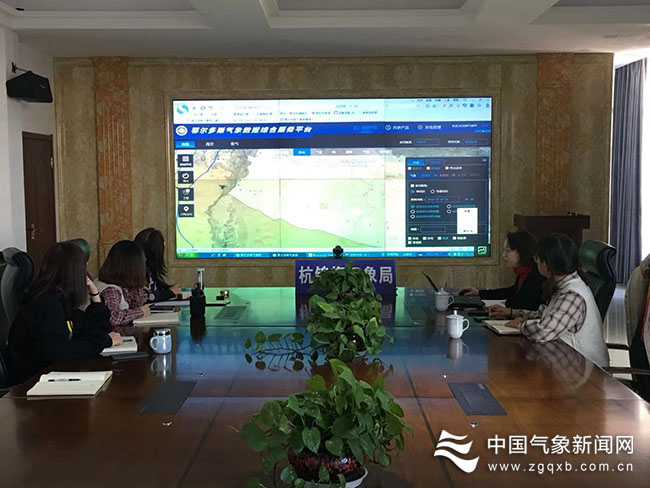
This is illustrated by the training site. Zhang liyong's photography
Zhejiang hangzhou yu hang: joint departmental training to upgrade the disaster preparedness capabilities of information workers
On 9 december, at the invitation of the district emergency management authority, the meteorological department of hangzhou city, zhejiang province, conducted a training programme on meteorological disaster prevention and mitigation for more than 100 people, including relevant members of the regional disaster reduction commission, the head of disaster prevention and mitigation in the town streets and the disaster information officer in the town streets (village). The staff provided detailed information on the overall requirements for disaster prevention and mitigation, the climate profile of the yuhang region and knowledge of meteorological hazards, weather forecasting and manual weather impacts, practical techniques, which contributed to the further enhancement of meteorological disaster defence capabilities at the grass-roots level. In recent years, the district meteorological service has been working to improve the integrated disaster risk reduction capacity of townships (villages) by firmly promoting safety awareness, gradually completing the integrated disaster prevention and mitigation training of 20 town neighbourhood facilitators, 369 village informers and more than 1,500 networkers, with 100 per cent coverage, through “on-line plus below-line” training, and effectively establishing the first line of defence for meteorological disaster prevention and mitigation. Lee wen-mei
Liaoninge state: training for town meteorological information workers on disaster prevention and mitigation
On 11 december, the meteorology department of the city of gue state, liaoning province, organized training for meteorological informers, with the participation of small stone sheds, liangdong, manfou, shilling street, mine ditches, quilang spring, seven sub-prefects of weather management and meteorological informers in yangtze town. The training included presentations on knowledge of meteorological disaster prevention and mitigation and the characteristics of disaster weather, such as heavy rains, droughts and thunderstorms, as well as on the importance of meteorological disaster defence for agricultural production, for example, with regard to the impact of this year's heavy rains. At the same time, in the context of rural meteorological disaster defence needs, the experts provided detailed information on the type, level, defence measures, methods of reception and dissemination and channels for reporting on weather hazards。