


On november 22, the china economics news, china development network news, a journalist, pizawa hong, reported on the successful conclusion of the general knowledge competition for primary and secondary school students in guangzhou city in 2020 at the guangdong science centre. Eight hundred young students from all over the city competed for general knowledge and for two days in an intense intellectual battle。
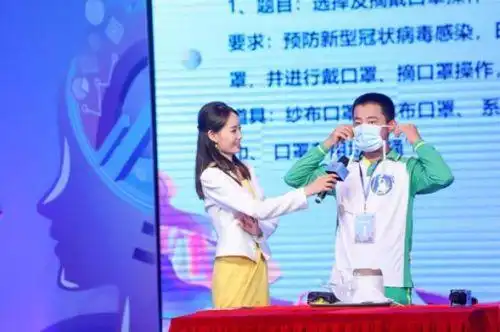
Practical application of students
The pupil science competition is a well-known generic science brand activity in guangzhou. It aims to develop good habits for primary and secondary school students in science, to explore science, to promote scientific literacy among students, and to create a strong culture of “science, love, science, science” and lay the foundation for innovative talent. The competitions are organized by the guangzhou city education bureau, co-sponsored by the guangdong science centre, the guangzhou city association for the education of young people in science and technology, and the guangzhou union of science and technology, and co-sponsored by the guangzhou city education bureaus and various small schools。
The competition was organized into three groups: primary, lower secondary and upper secondary. It was divided into network selection and two selection mechanisms recommended by the district and district education offices. According to the organizers, a total of 35,000 students from all over the city participated in the selection competition this year, culminating in the selection of 800 pupils and students for the finals of the guangdong science centre. The finals were held in two days and the 21st in semi-finals, with 100 contestants selected from 800 contestants to enter the 22nd finals. The competition culminated in 20 first prizes, 30 second prizes and 50 third prizes. After intense competition, students such as cao chou, sun zeiga and lee kane received first prizes for high school, junior middle school and primary school, respectively, with outstanding performance and rich academic knowledge。
The competition consisted of three sections, on-line testing of basic scientific knowledge, on-site written tests of scientific literacy skills and live live responses, focusing on the scientific knowledge accumulation and synthesis of science literacy among students around scientific understanding and application, scientific thinking and practice, and scientific attitudes and responsibilities. It is understood that the theme of the competition is very broad, encompassing the topics of mathematical logic, physical sciences, life sciences, earth and the universe, technology and engineering, interdisciplinary knowledge, science and technology development and green environment, intellectual property protection, policy hot spots and guangdong geography。
On-site responses to the finals invited kim dae-young, professor at the faculty of applied mathematics at guangdong industrial university and vice-president of the guangdong mathistics society, jiang shizumi, a senior worker at the level of professor of chinese botanical gardens, and wang xian, a leading science writer and assistant professor at nakayama university, as guests of the competition judges, to provide students with a live reading of the subjects of the competition and general knowledge of science, which brought to the audience an excellent gathering of scientific knowledge. In the new form of on-site response links, practical applications have been set up to examine the hands-on abilities of students, to guide young people's societies to use scientific methods and theories to think and solve problems and to promote the overall development of students'scientific qualities。
The jury, professor kim dae-yeon, stated that the competition was an excellent demonstration of the high level of scientific literacy and good spirituality of primary and secondary school students in guangzhou. Through the internet + science and technology education, innovative science education tools, universal access to scientific knowledge, improved science literacy for primary and secondary school students, and the promotion of guangzhou as a core engine for regional development in the bay of hong kong。



