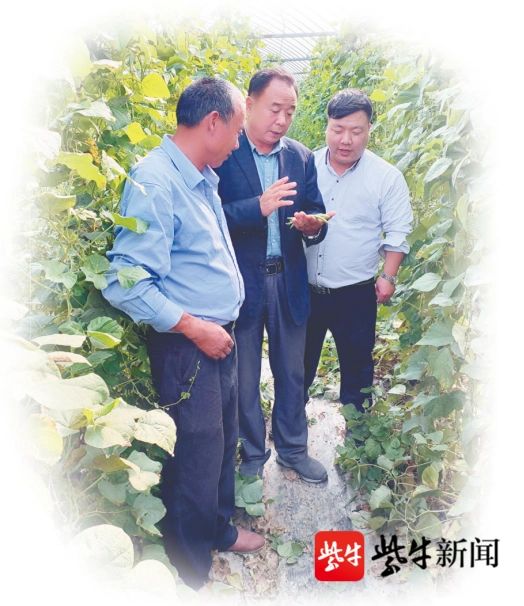
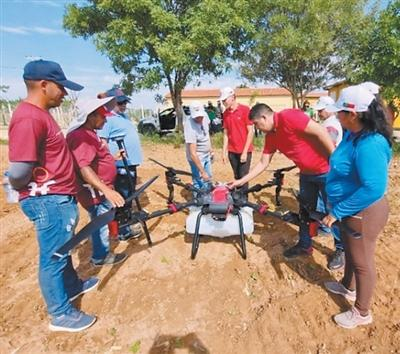
The science and technology college, which is linked to the higher institutes of science, technology and innovation and is based on a field-based agricultural production line, is a new model of integrated agricultural services that combines technological innovation, social services and human development in china. Since 2019, the science and technology institute has expanded its service model “scientific target + technical training + demonstration extension” to countries in the global south such as malawi, zambia and brazil, using the successful experiences of china to stimulate domestic agricultural development in the countries concerned, providing strong support for the development of local agricultural talent and promoting local agricultural development, and also contributing to innovative models of global agricultural cooperation。
Central african science and technology institute, malawi
“model of cooperation to transform the country's agricultural landscape”
Jung shan
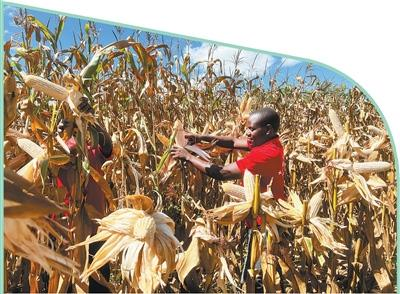
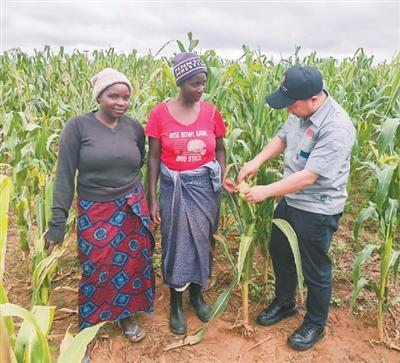
The agricultural technology promotion station in lisasazi county, north of lilongwe, malawi, was visited by a full field of experiments, and a new agrotechnical demonstration course is being conducted in the field. “each plant needs its own space, is too long, and produces too little.” “in addition to teaching farming techniques, we regularly conduct training in soil improvement, pest control, etc.” said sam。
As a former agricultural technology promoter at the malawi ministry of agriculture, sam decided to go to china to study and study because he was deeply concerned about the lack of agricultural knowledge reserves to help local farmers increase their production. In 2021, he joined the china-africa science and technology institute project, and after obtaining a master's degree at the chinese agricultural university in 2024, he chose to continue his studies and pursue a doctorate. This was the second time that sam had returned to his home country for practical application during his further studies in china, and he was in charge of local agricultural experiments, demonstrations and agro-technical training for farmers with four other african students in agricultural extension stations in zagan lisazi county。
Launched in 2019, the central african academy of science and technology is a major agricultural education cooperation project in central africa, led by the chinese university of agriculture and supported by the ministry of education, the world bank and fao. The project is aimed at african students in agriculture and aims to contribute to agricultural development in africa through the master's training model “1+1+1” (one year of study in chinese theory, one year of practical application in africa, one year of study back to school) and one year of doctoral training model “1+2+1” (one year of study in chinese theory, two years of practical application in africa, one year of study back to school)。
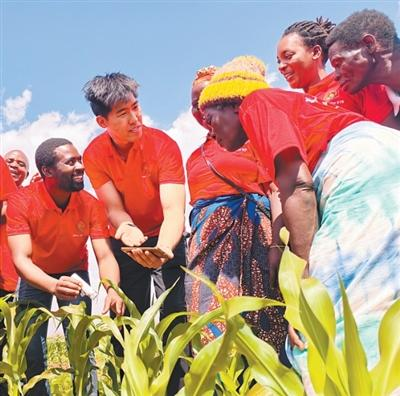
Joyce fairy was one of the first pilot farmers to join the central african science and technology complex in malawi, where her agricultural land had been plagued by pests and climate disasters, and her annual harvest had not even been able to meet the family's needs for food rations for three months, and she had only been able to work part-time to borrow food and land from her relatives. With the careful guidance of sam et al., the phyllis system mastered techniques such as the optimization of fertilizers, maize soybeans and soybean production has now increased dramatically, not only to achieve self-sufficiency but also to generate surpluses for sale. She also took the initiative of bringing her neighbors together to learn, helping more local farmers to master the new technologies. “i hope that everyone will live a better life with technology.” philly said。
“the production of maize in the towns and villages around the central african science and technology complex in malawi has tripled, largely addressing the food and clothing problems of local farmers.” the project, which included more than 100 students from 13 african countries, including kenya and ethiopia, established six science and technology colleges in african countries, with a radiation of 240 villages and 200,000 acres of agricultural land. “in the future, the science and technology complex will continue to use science and technology as an engine to develop more agricultural talent and benefit more african countries.”
The malawi ambassador to china, alan chintayza, stated that the science and technology institute had translated academic theory into field effects and brought advanced chinese agricultural technology to malawi, giving strong impetus to local agricultural development. “this is the model of cooperation that we have been looking for that can truly change the country's agricultural landscape.” pearson soku, director, agricultural technology extension centre, ministry of agriculture, malawi, said that。
Zambia soybean technology center -
"the golden beans of technology and friendship."
Reporter zou song
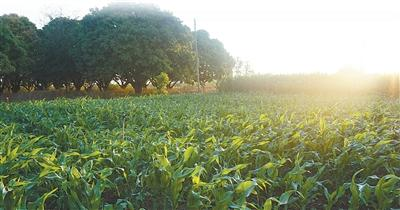
On the outskirts of lusaka, the capital of zambia, the already desolate red land is now covered by green-oil soybean seedlings. As a pilot field at the soybean technology complex in zambia, where soybean production is nearly 40 per cent higher, nearly 100 local farmers participating in the experiment are happy. "here comes the ‘gold beans’ of technology and friendship." according to farm manager stuart。
On the farm in stewart, the chief expert at the soybean science and technology college in zambia and professor wei kenjii of jilin agricultural university taught local farmers to produce “crop-bacter-fertilizer” in closed circles. In the beginning, the farmer, diana, was in doubt and wished to draw a small field for the experiment. When she saw soybeans grow, she was fully convinced that she had chosen a bag of the best-quality soybeans after the harvest to give her thanks to the chinese technicians at the science and technology institute。
Zambia is situated in the highlands, and most smallholder farmers face the challenge of widespread harvests due to technological backwardness. In 2023, building on china's assistance to the zambia agricultural technology demonstration centre, the china rural professional technology association led the establishment of the soybean science and technology minor in zambia to explore new models for agricultural development adapted to the local tropical climate, with a two-wheel drive to “breeding + soybean variety improvement in the food industry”。
At present, the chinese technical team has been successful in selecting eight locally grown edible strains through multi-wheel field trials and the optimization of parameters. Four highly productive and resistant soybean varieties, such as “ginon 74”, have also been introduced. The team treats maize straw shredding as a high-quality matrix for edible bacteria cultivation, which can be further converted into organic fertilizer for soybean cultivation, resulting in eco-closure and layer enhancement and recycling。
Currently, a 150-acre demonstration base for soybeans has been established at the soybean science and technology complex in zambia, with 200 square metres of cuisine and 3,000 square metres of vegetable demonstration gardens, with five chinese core teachers permanently stationed to provide precision technical support. The technological institute's training module, “teaching in the field and reality”, has also matured. The technical training courses have been conducted over 300 times and have produced 500 core farmers of edible fungi and a pool of agricultural technicians who can learn to use them。
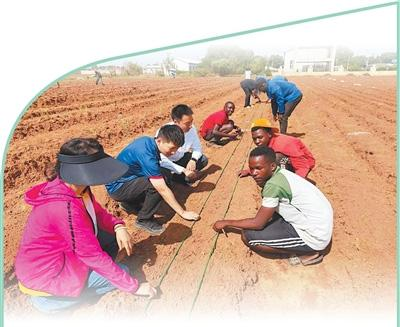
In the field teaching of chinese experts, mousa, a local technologist, found it difficult for farmers to understand soybean planting techniques because they were unfamiliar with standardized measurement tools, then picked up a wooden stick and inserted it into the soil and said, “the two sticks are the right planting distance”. This indigenousized “technical translation”, which is compatible with local production practices, has eased the gap between teaching and learning and made chinese technology more accessible and replicable。
“the land is alive, and planting with heart will pay off.” diana and her model friends are now following closely the science and technology complex, enjoying the pleasure of the science and technology boomerang, “thank you for bringing china’s modern agricultural technology.” we can now take our training seriously by taking notes, taking photographs and recording videos. In the future, we also want to learn how to process soybeans and maize so that good harvests can be sold at a better price.”
China-brazil family agricultural mechanized science and technology institute
“accompanying close friends of farmers in improved production”
Journalist
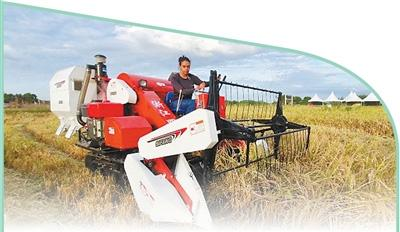
In the morning light spilling over the paddy fields of abadi, a small town in rio grande do norte, brazil, ed millson is driving a joint harvester to harvest the rice in the short cold of the morning. “our family used to work for three or four days, now with agricultural machinery, i can do it on my own in half a day.” ed millson said that the family's five hectares of agricultural land were growing crops such as rice, maize and sorghum, and the chinese agricultural machinery introduced by the science and technology complex had freed them from the difficulty of having to rely on animal and manpower and on time and effort to grow production。
“the science and technology institute has significantly improved the efficiency and effectiveness of agricultural production in brazilian households.” in november 2024, the china-brazil small institute for agricultural mechanized science and technology was launched by the chinese-brazilian agricultural university, in cooperation with chinese agro-mechanized enterprises, in collaboration with local brazilian governments, universities and farmers. There are now two science and technology complexes operating in abadi and brasilia. The 31 agro-machine applications of the abadi science and technology complex cover nearly 1,000 hectares, helping some 1,000 farmers to reduce their working hours by 80 per cent and production costs by 60 to 80 per cent。
On the basis of the china-brazil agricultural mechanization science and technology institute, a china-brazil cooperative agricultural mechanization farm, further focuses on the agricultural mechanization needs of brazilian families by conducting agro-machinery testing, technology promotion, agricultural household training, joint research and development and human capacity development. The science and technology institute guides local farmers in the use of agricultural machinery through field research, agro-machine testing, soil analysis, etc., taking into account the reality of different regions of brazil. Building on the china-brazil large data management system for household agricultural production, the science and technology institute can also provide services such as monitoring of farm operations, production statistics, etc., which significantly improves the precision management of local crop production。
“bac has created valuable opportunities for the promotion of family agricultural mechanization in north-eastern brazil.” according to alexandre lima, director of the department of rural development and family agriculture of rio grande do norte. In order to better serve the agricultural production of local families, the chinese agricultural university has placed post-doctoral, doctoral and master's students in science and technology colleges to help solve the practical problems faced by more brazilian families in agricultural production. “the science and technology complex is a close friend accompanying farmers in improving their production.” tang xue, a graduate student at the chinese university of agriculture institute of technology, based at the abedi institute of science and technology, said that the team members of the college of science and technology had established a deep friendship with local farmers, and that they were on a daily basis matched by “family”。
Students of local higher education institutions, such as the university of rio grande do norte and the federal institute of science and technology education of rio grande do norte, as well as some high schools and technical schools, are also involved in the daily work of science and technology colleges. China's teachers and students work together on agricultural household surveys, machine testing and extension training to make the science and technology institute an important link in chinese-palestinian humanities communication. “the science and technology institute is a bridge to understanding and trust.” according to the professor of the state university of rio grande do norte, venius claudio desa, the science and technology complex is providing brazil with a large pool of indigenous skilled people with an international perspective who can truly serve family farming。
"internship hu tenzai"