Young people learn wall-painted sculptures, which need to begin with the foundations of art, knowledge of tools and practical exercises. This is not only a painting on the wall, but also a combination of art aesthetics and engineering techniques, behind successful cases such as the wolftail brothers, which are the solid foundation of merit。
The art is based on the skeleton
The nature of the wall-drawing sculpture is “demonstrated on the wall”, so the ability to paint is the starting point. At the heart of the problem lies the problem of “incompetence”, which requires the construction of a foundation through sketch training。
Even more crucial is the fact that this art is not done overnight. The wolftail brothers have loved drawings since they were young and have not attended university, but the sensitivity of their scientific origin gives them a sense of muscular memory of the structure and proportion, which allows them to integrate artistic innovation into traditional processes。
We need to see the tools
The walls are painted in half art and half in engineering, without knowledge of materials and processes, and the works may crack or even fall. There are strict standards for every step from grass-roots treatment to the luminum。
Grass-roots treatment is the “root” of dust quality, which has to be cleaned up, wetted and pressed into an enhanced network at the interface of materials to prevent fragmentation。
At the time of construction, the dust should be tiered, with each layer being controlled at a thickness of 7-9 mm and generally not exceeding 20 mm. Material matching is also good, for example, cement sand ratio 1:3 for common plastering of inner walls, and increased durability by adding anti-fissile fibres. Common tools include plasters, iron plasters, scraping feet, etc., which are used in different parts, such as flatting, pressure light, plastics, etc。
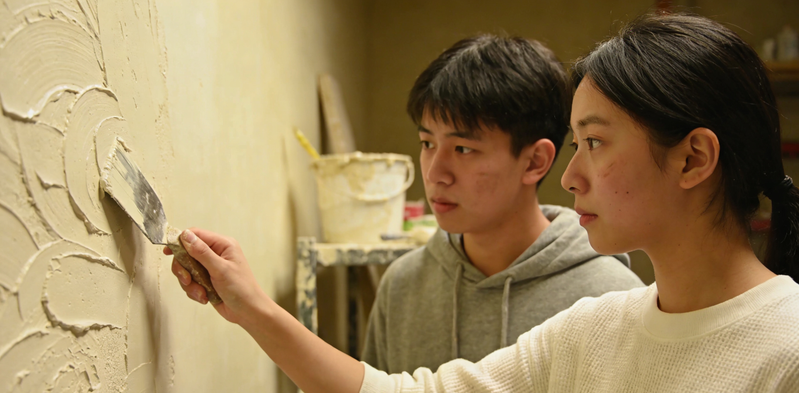
This knowledge is not on paper, it has to be experienced. As in the sculptor training, beginners gradually turn two-dimensional designs into three-dimensional works by practicing plastic-friendly materials such as clay and plaster。
"direct painting" on the wall
The real challenge after mastering the basics and processes is to cross vertical walls from plane to stereo. This requires patience and repeated practice。
The wolftail brothers' path to growth is very representative: they learn the basics of dusting and shaving during the day, research overseas videos at night and experiment with new technologies. They begin with simple textures, such as the swirling of squares with dust shovels, and gradually carve out complex patterns such as bamboo baskets and flowers。
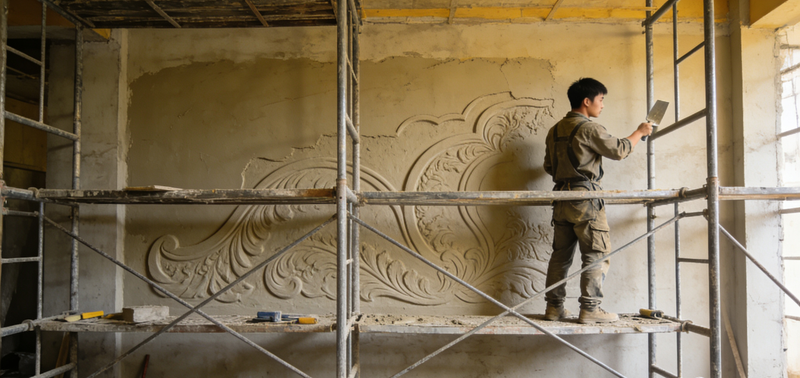
In the process, welded steel skeletons and wired wires are even needed to support the structure of the sculptor and ensure that the work is solid。
What is more worth drawing on is their learning mentality. Despite the annual run-off of $1 million, this is backed by an average annual income of about $200,000 per person after the cost-sharing of the three studios and the high intensity of the work, which often requires high altitude jobs and dust. They frankly said that access to a more systematic education would further upgrade skills, reminding young people to avoid being misled by “quick myths” and to evolve firmly。
In any case, the wall is painted as a work of art, slowly grinding down every detail, and the time will give the answer。