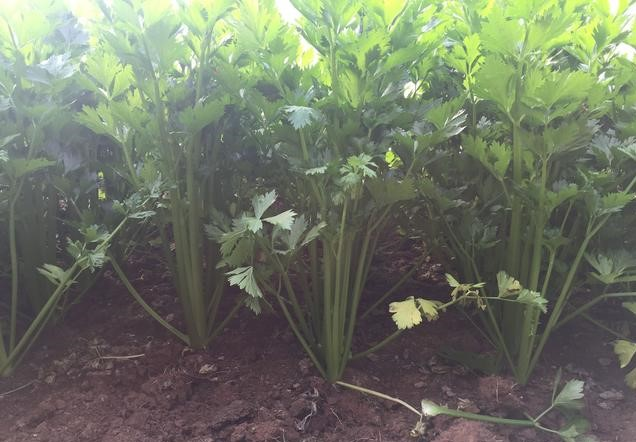
The celery, although it's a leafy dish, is a long-lived vegetable that takes about three or four months from planting to harvesting. The growth cycle of celery, although long, is relatively simple, with very few pests and pests, and spares the trouble of spraying. The biggest difficulty in planting celery is probably at this time of planting, which is not very good, especially during the summer season. Celery is cold, but it is during the high-temperature season, and if it is not treated, it is very slow to grow, or it does not produce, or it does not. So how do we manage this
The planting of celery took place in early june-july in the north, planting seedlings, in early august-september, and harvesting in october-november. The yangtze basin seeded between early july and early september, with harvests in october and december, and late in the following year, before the withdrawals。
Cultivation
The planting period for celery must be appropriate, staggered by hot weather and not too late to affect its growth. Seeding is generally done in the shade or after noon to prevent excessive temperature burning of young sprouts. Before seeding, water should be poured in a prepared bed, then the seed should be spread evenly on the surface, covering the soil of the seedbed, generally about 0. 5 centimetres thick, with care not to overlay it too thick and evenly。
2. Rationalization
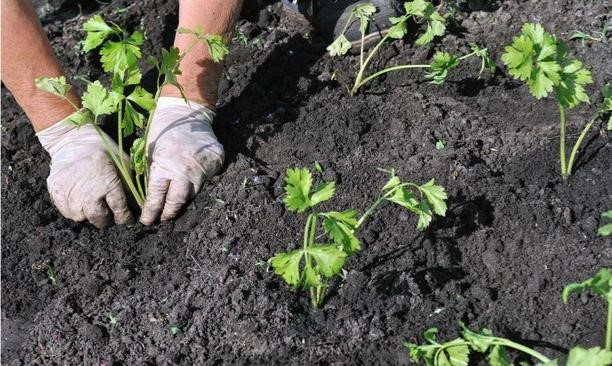
After the age of 50 days of celery, the height of the seedling can be established at about 14 cm. Precipice with 4. 5% efficient chlorocypermethrin 1500 times the fluid, with insecticidal pills sprayed and water poured over three to four hours before the seedling, so that the nursery is fully humid. The line is set at 16-26 centimetres and the bush is set at about 1 centimetres, with 3-4 trees per series, while the line is set at the edges so that the water is pumped。
3. Field management
The celery is suitable for organically rich areas, so it needs more fertile sand soil on the plots where it is grown, generally with extra potassium fertilizer, guaranteed nitrogen fertilizer, less phosphorus fertilizer and increased organic fertilizer, as nitrogen fertilizer helps grow plants and prevents celery from becoming old and empty, so as to ensure the use of nitrogen fat and to supplement calcium with trace elements to avoid cracking. Celery needs about 2,600 kg of farm fertilizer per acre, 15 kg of nitrogen fat, 5 kg of phosphorus fat, 5 kg of potassium fat, division of nitrogen and potassium fat into base fats and post-root fats, while phosphorus fertilizer is used exclusively for base fats。
Since celery has shallow roots, usually at altitudes of about 12-18 cm, celery does not like dry soil, it is usually necessary to keep the soil moist and to keep sufficient moisture for it during its boom, in order to ensure that it grows stronger. The water is usually given one or two days before the harvest, mainly for small water, in order to keep the leaf handles on the market in a tender state after planting sufficient water intake. It cannot be immediately watered after harvesting, but rather watered after a week, when the wounds are largely healed, to help control the disease。
Scientific collection
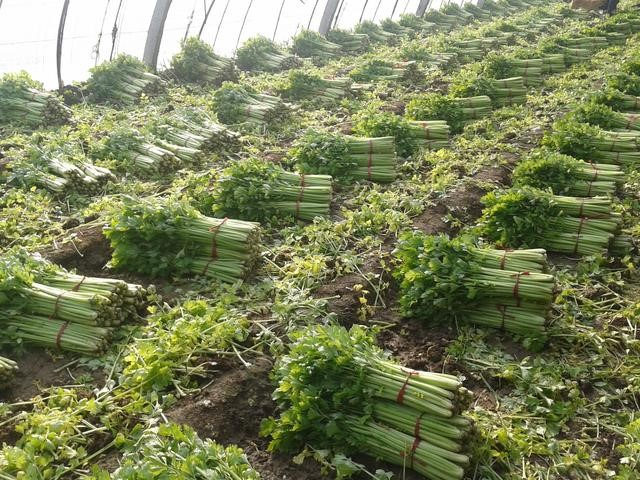
The celery harvest consists of two methods: a harvest. This method of harvesting can be used in the cultivation of pelicans and prunes. Two to three pieces of each of these plants are of a commercial nature. The other is harvesting. It's mainly the pelicans that harvest this way. When market prices are higher, one-off harvests occur at the right time. In either way, celery is distributed after harvest in such a way as to keep the product at as low a temperature as it can be wet, but not subject to freezing, reducing respiratory and evaporation effects, reducing nutrients, water consumption and keeping fresh。