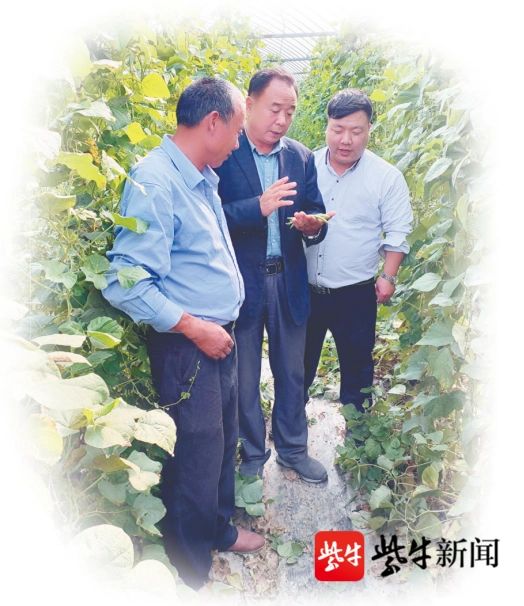
The melon can be cultivated in spring and autumn with facilities. Cultivation in the spring usually takes place between early january and mid-march, with harvest starting in early june, and planting in the fall generally takes place between late july and early august, with harvest beginning in late october。
Seed treatment and seedling
Seeds are dried up one or two days before seeding takes place. The seeds will be immersed in hot water at 55°c for another 3-4 hours in 10-15 minutes, then the seeds will be rinsed with slime on the skin, the seeds will be purified with water and wrapped in clean cloths, and will be sprouted at 30°c under constant temperature and can be sowed in white in 24 hours。
Ii. Substrate dens or nutritional seedlings
Early spring cultivation uses electro-thermal hotbeds for seedlings, with a mixture of garden land, decomposed organic fertilizers, and herbal charcoal at a ratio of 4. 3 and 3 per cent, and a commercial matrix may also be used to fill the nutrient earth or matrix with a plastic chassis (specify 10 x 5) or a nutrient condensation (8 cm in diameter). Choose to sow in the clear sky, sowing 1 seed per den (or nutrition scavenger), level the seeds, sow at a depth of 0. 5 to 1. 0 cm, and then cover 0. 5 cm thick enough to be sifted the nutrient soil or the commercial matrix of 1. 0 cm, the cavity of the seedbed (or the trophic mosaic) emissions are closely, consistently, covering the membranes, the small arch sheds in winter and the sunnets in summer. If there is a cap on the acreage, it can be removed manually in the morning, so that the leaves are not injured。
Iii. Slimbed management
In the area of temperature management, the temperature is kept humid until seeding occurs, at 30°c ~ 32°c during the day and at 15°c ~ 20°c at night; when 50% of seed arches are removed, the temperature is kept at around 22°c, the temperature rises to 25°c after seeding, and the temperature remains at 25°c ~ 28°c after seeding, 15°c at night ~ 20°c during the day, so as to prevent the formation of high-foot seeding seedlings too quickly by the extension of the lower axle; the sunnet cooling needs to be added to the seed shed during the high summer。
In the field of water management, proper control of the water in the event of seedlings to prevent the growth of the water, the principle of non-drying, the gradual increase in the water supply after two to three days, the selection of which should take place in the morning of the sun, each time the water is poured out of the nursery and is uniform, avoiding leakage and uneven water distribution。
In the area of ventilation management, seedlings are released in a timely manner, ensuring temperature, to reduce the humidity of their beds and to prevent the growth of young seedlings. The increase in the number of wind and light exposures will be gradually followed in order to foster growth。
The moderate pre-plant seedlings, with the second leaf appearing seven days before the planting, are properly ventilated, the temperature of the bed is reduced and the seedlings gradually adapt to the environmental conditions in daejeon. Water is poured three to four days prior to planting, and water is then properly managed, windlight is gradually increased and seedlings are refined, so that the nursery environment is similar to that of daejeon, so as to enhance the adaptive capacity of the seedlings and increase the rate of survival。
The criteria for saplings, two to three centimetres, large and luminous leaves, dark green leaves, thick hairs of 0. 3 centimetres ~ 0. 5 centimetres, lengths of 0. 6 centimetres ~ 1 centimetres, lengths of 12 centimetres ~ 15 centimetres, roots of well-developed, white and thick, insect-free, and all-sapling。
Iv. Planting
In the spring, the melon is 30 to 35 days old, and the seedlings can be planted (i. E., shifting) when they grow 2 to 3 leaves; in the autumn, the seedlings are grown about 10 days old and one leaf is grown. The seedbed should be watered once before planting, so that the seedling can be established with fewer injuries and that the plant can slow down as soon as possible。
One-time application of base fattening is selected for fields with high-lying, deep-dwelled soil, better fertility conditions and no melon crops for more than three years. Fifteen00 kg of corroded organic fertilizer per acre, 40 kg of compound fertilizer and 40 kg of calcium perphosphate. It is built on the ground as a whole, with a hut measuring 8 metres in length and 5 cm in height. In the spring, a whole week before it was planted, covering the membranes and closing the huts in order to increase the temperature of the sheds. When the temperature in the shed reached 12°c, it was chosen to plant it in the clear weather, with approximately 1,100 to 1,200 acres per acre。
After planting, the water is filled with live water, and the small arch sheds are covered in a timely manner and in the morning. The summer season was followed by the construction of a black membrane to reduce the temperature of the ground and prevent weed growth, which was usually established in early august。
(continued)
Tung yu-guk