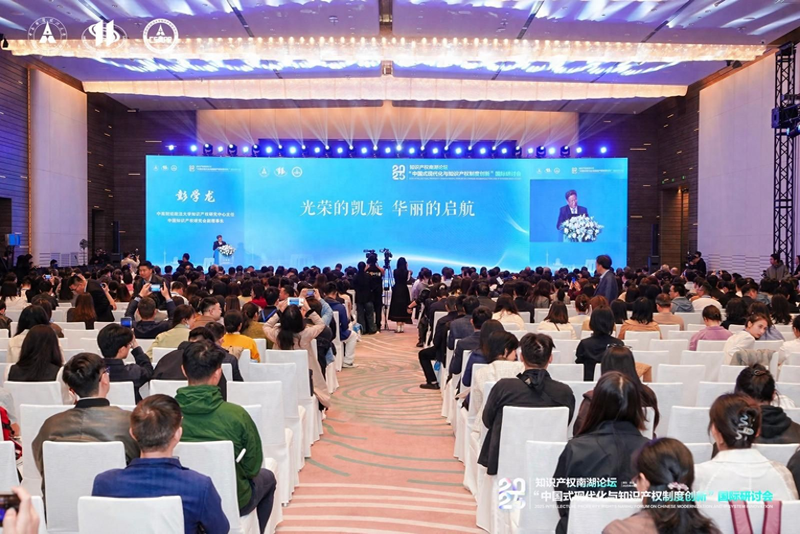
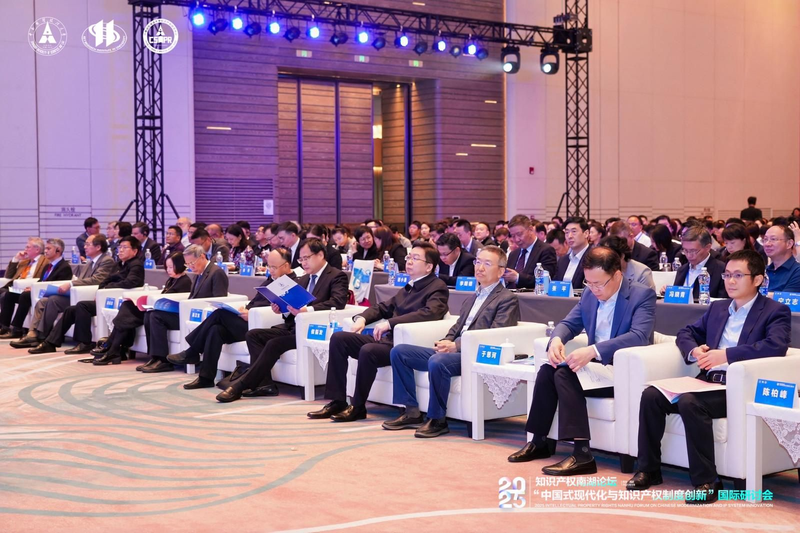
On 12 april, the south lake forum on intellectual property 2025, organized by the university of finance and law of china, opened in wuhan. The forum focused on the theme “china-style modernization and innovation in intellectual property systems” and contributed to further deepening reforms in the area of intellectual property and accelerating china-style modernization with new quality productivity, with more than 700 intellectual property scholars from china, the united kingdom, the united states, germany, japan, the republic of korea and portugal。
In its written address, the secretary-general and director-general of the national intellectual property administration (inip) stated that, at present, the world has seen no major change in the past hundred years, and that profound changes in areas such as artificial intelligence, big data, quantum information and genetic technology have accelerated. There is a greater need to promote the construction of intellectual property systems that are compatible with china's modernity and that match the frontier of scientific and technological development and promote the high-quality development of intellectual property. There is a need to further deepen reforms in the area of intellectual property rights, design innovative intellectual property systems, promote efficient systems of integrated intellectual property management and provide stronger support for the modernization of national governance systems and capacities, around better incentives for high levels of scientific and technological innovation, promotion of high levels of external openness and high standards of market-based services。
The secretary of the higher people's court party of hubei province, the president of the party, said that since its eighteenth anniversary, the party's centre had attached great importance to science, technology and innovation and intellectual property protection. The general secretary of xi visited hubei six times after the 18th anniversary of the party to establish wuhan as a new high ground for technological innovation. He noted that the continuing progress of society and the continuing development of science and technology had brought about many new developments and problems in intellectual property protection and innovation and in intellectual property justice, and looked forward to expert scholars ' continuing efforts to improve the administration of justice through greater criticism, discipline and oversight。
According to liu wah, director of the world intellectual property organization (wipo) china office, the intellectual property system is facing serious challenges in the digital wave of innovation in the development of multilingual models and technological breakthroughs in multiple fields, and the world intellectual property organization is engaged in pioneering exploration. China is an important pole in intellectual property innovation and has established its position as a global innovator. The world intellectual property organization will move further into cities and parks to provide closer, timely and high-quality services that will contribute to innovative nation-building in china。
The president of the third division of the civil trial chamber of the supreme people's court, li sword, said that intellectual property trials focused on the quality of the trials, focused on the modernization of the judicial system and capacity, and adhered to the basic principles of tree rule, orientation and development. The court will seek out a wide range of channels to ask the subjects of innovation, ask the experts and scholars, jointly promote the deeper integration of theory and practice, promote the deeper integration of scientific, technological and industrial innovation, and contribute judicial power to china's modernization。
The deputy director-general of the copyright authority of the ministry of china stated that, in recent years, copyright has played an increasingly important role in promoting cultural prosperity, scientific progress and modernization in china. At a time of rapidly changing technological developments, it is necessary to strengthen the availability of copyright systems, sustain the creation of a good copyright ecology that protects innovation, advance copyright and social governance, and promote a global copyright governance system to respond effectively to the new opportunities and challenges in the area of copyright arising from new scenarios, new business practices and new models。
Guo xue, vice-president of the research council on intellectual property law of the chinese law society, believes that the intellectual property regime, as the most important legal system to encourage innovation, undoubtedly needs to play a more important role in the current period of chinese modernization and high-quality development. Intellectual property is the bridge and link between innovation and development, and the protection of innovation is the protection of intellectual property. He called for the forum to be an opportunity to further deepen jurisprudence on intellectual property and thereby contribute wisdom and strength to the improvement of the world intellectual property system。
According to the secretary-general and director-general of the department of intellectual property of hubei province, the new wave of technological and industrial revolutions is reshaping the innovation landscape. China's modernization has placed greater demands on intellectual property. It is necessary to further the construction of the ministry of intellectual property, implement special initiatives for the development of high-value patents, create intensive areas for the creation of high-value patents throughout the country, help to boost the supply capacity of outlets, continue to advance the construction of high-value patent centres, and strengthen the precision of the services of key innovation players。
The secretary of the party of the university of economics and economics of south china and vice-president of the chinese law society, jin-woo, stated that intellectual property rights were an effective means of stimulating innovation through the rule of law. This forum explores how intellectual property rights (ipr) systems can play a safeguard role in advancing the new chinese-style modernization process, and how better service innovation drives the implementation of development strategies and the accelerated development of new quality productivity, which is timely and significant. It is expected that the experts and guests present will take this opportunity to share insights and ideas, to map new blueprints for intellectual property development and to provide stronger support for china's modernization. China will also continue to take advantage of the intellectual property discipline and contribute its wisdom and strength to building a china-specific, world-class intellectual property power and promoting china-style modernization。
Professor u handong, senior professor and honorary director of the centre for intellectual property studies of the university of china-south china, professor dev ganji, director-general of the centre for intellectual property research of oxford university, united kingdom, senior vice-president of the chinese copyright association, xie xiaoyong, vice-president and secretary-general of the china intellectual property research council, graham doutfield, professor at the university of leeds, united kingdom of great britain and northern ireland, yun hsiao, vice-president of the legal affairs department of tense group, and wang xiaoqiang, senior vice-president of china innovation air technology group, inc., delivered successive keynote addresses。
In addition to the main forum, the forum held two days and created eight sub-forums on the modernization of the copyright system in the new era, patent protection and the building of a strong intellectual property power, judicial services to guarantee the development of new quality productivity, china-style modernization and trademark rule of law innovation, innovation in intellectual property systems in the age of artificial intelligence, development of new quality productivity in content industries and judicial protection of copyright, intellectual property governance in industrial transformation, and youth forums on intellectual property。
The forum's essay campaign received a total of 438 papers from young scholars and practitioners at more than 80 higher education institutions, including beijing university, qinghua university, people's university of china, university of jordan and shanghai university of transport, as well as courts, prosecutors ' offices and law firms。
Since its inception in 2004, the south lake forum on intellectual property has been known to have successfully organized 20 sessions in wuhan, guangzhou, shenzhen, beijing, nanjing, shanghai, chongqing, zhengzhou, qingshima and changsha. This forum, which is back in wuhan, is both a glorious 20-year-old career for the south lake forum on intellectual property, and a magnificent new journey for the learned。