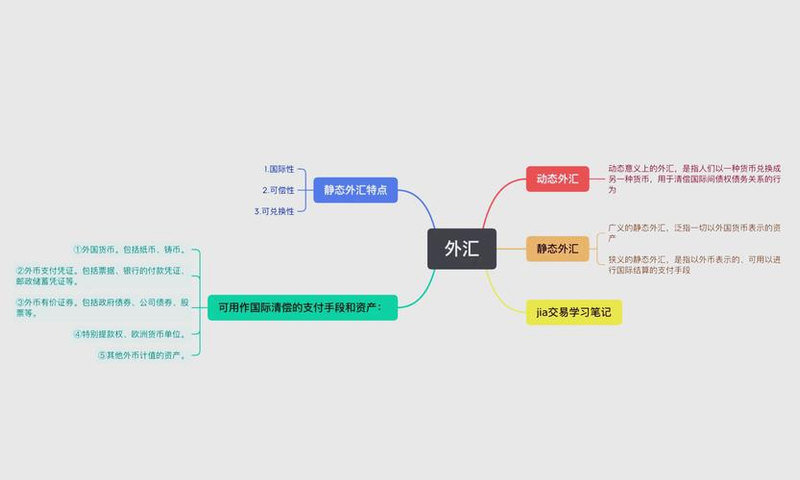
1. What is a real-life foreign exchange trade
A person's real exchange transactions are transactions between a person's customer in a bank that are freely convertible in foreign currency (or foreign currency). Individual foreign exchange transactions generally have a difference between real and false. At present, under the relevant state policy, foreign exchange transactions can only take place in real terms, but not in the form of fraudulent foreign exchange transactions (individual foreign exchange transactions, i. E. Transactions carried out by an individual after a certain amount of security has been paid by the bank, which can be increased several times between foreign currency (or foreign currency)。
Are foreign currency cash the same as cash
Different. Cash usually refers to money and coins in foreign currency or deposits in banknotes and coins. Cash flows are mainly bank deposits obtained and generated by means of international settlements such as cheques, remittances, collections, etc。
3. Why do foreign exchange transactions have a difference between cash and current prices
Foreign currency banknotes can only be paid for if they are shipped abroad, while the bank that transports them bears the costs of freight, premiums, interest, etc., so that banks generally make a difference in the price of personal foreign exchange。
4. What is the immediate foreign exchange trade

This refers to the foreign exchange transaction in which the foreign exchange transaction is delivered on the second working day of the bank after the conclusion of the transaction. The date of delivery is the day of death. The interest day is extended when it is not a bank business day or a holiday. The exchange rate for the immediate foreign exchange sale is referred to as the spot rate。
5. What is the forward foreign exchange trade
This refers to foreign exchange transactions that are delivered on a pre-agreed date and at an agreed exchange rate after the parties have entered into a transaction. Forward foreign exchange transactions can last up to one year, and transactions of more than one year are referred to as foreign exchange transactions exceeding one year. It is the most common international method of avoiding foreign exchange risk and fixing foreign exchange costs。
What do you mean, a foreign exchange deal
It is a special form of forward foreign exchange, with no prior fixed date for the date of interest. The client and the bank agreed that they would be ready to pay for a certain period of time and that the date of interest could be any working day during that period. The right to choose the starting day is in the hands of the client. As a result, alternative foreign exchange transactions provide greater flexibility for clients to move funds。
What do you mean, direct pricing
The direct pricing method is one of two methods of expressing the foreign exchange rate, also known as price pricing. The method is expressed in national currency as the foreign currency of a given unit. It is generally the unit or 100 unit in which the foreign currency corresponds to the national currency. The greater the value of the national currency, the smaller the value of the national currency, the smaller the value of the exchange rate, the greater the value of the national currency, and the greater the value of the national currency. Under the direct pricing method, the rise or fall in the exchange rate and the value of the national currency are inversely related: the currency appreciated, the exchange rate declined, the currency depreciated and the exchange rate rose. Most countries adopt direct pricing. Most of the exchange rates on the market are also those under the direct pricing method. For example, the united states dollar to the japanese yen, the united states dollar to the hong kong dollar, the united states dollar to the renminbi, etc。
8. What is indirect pricing
Indirect pricing is one of two methods of representation of foreign exchange rates, also known as quantitative pricing. The method is expressed in foreign currency as the exchange rate of the national currency in a given unit. It is usually the amount of foreign currency that a unit or 100 units can equivalent to. The greater the value of the national currency, the greater the foreign currency, the greater the value of the national currency; and, conversely, the less the national currency is worth, the smaller the foreign currency is. Under the direct pricing method, the exchange rate rises or falls in foreign exchange and changes in the value of the national currency in a positive proportion: the currency appreciated and the exchange rate rose; the currency depreciated and the exchange rate declined. The former commonwealth countries used indirect pricing methods, such as the united kingdom, australia, new zealand, etc. Indirect pricing rates in the market are mainly the pound sterling to the united states dollar, the australian dollar to the united states dollar, etc。
What is the cross-exchange rate
In the international market, almost all currencies have an exchange rate against the united states dollar. The exchange rate of one non-united states dollar currency against another non-united states dollar currency will often need to be hedged through these two exchange rates against the united states dollar, which are referred to as cross-cutting rates. A notable feature of the cross-exchange rate is that it involves an exchange rate between two non-united states dollar currencies。
Why is the bank buying price lower than the selling price in foreign exchange transactions
The purchase price of the bank is the price quoted by the bank for the base currency, and the price quoted by the bank for the base currency. The difference between the purchase price and the sale price represents the bank's risk pay. There are relatively small trade differentials in the currencies in which the transactions are frequent, while the differences in some trades are relatively high。
What are the types of floating exchange rates
The floating rates are divided into “free floating rates” and “managing floating rates” depending on whether the government intervenes or not. In real life, the government does not intervene in the exchange rate of its own currency, and there are few countries that have fully adopted free floating exchange rates. Because exchange rates have a significant impact on the balance of payments of countries and the balance of their economies, most governments control the course of exchange rates by adjusting interest rates, trading in foreign exchange markets and controlling capital movements。
12. What are the underlying reasons for determining the direction of foreign exchange rates
Foreign exchange rate fluctuations, albeit highly variable, are similar to those of other commodities. Ultimately, it is the supply-demand relationship. In the international foreign exchange market, when there are more buyers than sellers of some currency, the buyer competes for more power than the seller; the seller can live in strange goods and the price increases. On the other hand, when sellers find themselves in a poor market and compete for the sale of some currency, market sellers take the upper hand, the exchange price will inevitably fall。