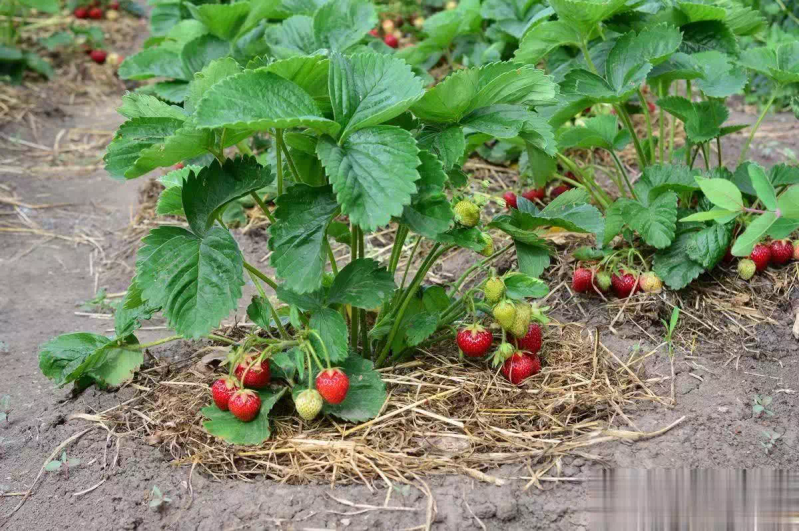
Strawberry sprouts, also known as adrenaline diseases, are the result of fungi infestation in the semi-accumulator, amonas, which mainly endangers strawberry sprouts, runners, ears and juvenile fruit, leading to the death of young sprouts, troughs and troughs in the early stages of the onset of the disease, and later to the death of lumbers and lumbers, and, in severe cases, to the death of ploughs, significantly reducing the production and quality of strawberry and fruit and causing significant economic losses to growers. In order to effectively prevent and control the spread of strawberry berries, ensure the quality and high-yielding cultivation of strawberries, and combine strawberry growth characteristics with patterns of disease, the four dimensions of agricultural, physical, chemical and biological control are now described in a systematic manner, providing scientific and practical technical guidance to agricultural growers and technology promoters。
I. Agriculture prevention and control: building the foundation for disease prevention and control and reducing the risk of morbidity from sources
Agricultural control, by optimizing crop management measures, improving strawberry growth environments, enhancing the self-resilient resistance of plants and reducing the transmission of pathogens, is a fundamental means of preventing and controlling strawberries with the advantage of being green and sustainable, requiring a full cycle of strawberry cultivation。
(i) optimum selection of disease-resistant varieties and healthy seedlings to control the sources of cultivation off
The resistance of varieties is a central prerequisite for resistance to disease and needs to reduce the probability of disease at the plant level by prioritizing the use of well-established, adaptable and comprehensive strawberry varieties, such as red-coloured, zang jie and sweet charlie, which are proven to be resistant to disease, taking into account local climatic conditions, tree cultivation patterns and market demand. At the same time, the quality of seedlings has a direct impact on the pre-plant growth and resistance, which requires rigorous screening of seedlings prior to planting, the elimination of the selection of low-quality seedlings with disease spots, sprouts and damaged roots, and the prioritization of healthy, fully plethorad and well-developed seedlings. In the case of seedlings, the prevention and control of disease in the field is required to avoid the transmission of pathogens through seedlings, to increase the resistance of seedlings in the post-plant period through the application of leaf-face fertilizer, to treat seedlings prior to planting, and to further cut the route of seedling transmission。
(ii) scientific planning for the sterilization of plots and sheds and the purification of the culture environment
The selection and disinfection of large-scale plots can effectively reduce the pathogen base in the soil and create a clean environment for strawberry growth. One is the selection of plots, with priority given to the construction of large huts with high-lying, well-drained, soil perfunct and organic-rich plots, and avoiding the selection of low-lying, soil-heavy, front-loading plots of eggplant and melon crops to reduce the risk of cross-infestation of pathogens; in the case of associated cultivation, soil improvement and disinfection are required to mitigate the high incidence of disease associated with the barrier. Second, the shed was fully disinfected, with strawberries being removed 15-20 days before the plant was removed, the shed was thoroughly cleaned and sterilized, the remaining crop straws, weeds and diseased residues were removed from the shed, concentrations were brought out for burning or deep burying, and the pathogen was reduced by winter and summer vectors; physical disinfection followed by a combination of physical disinfection and chemical disinfection, which could be used in high-temperature shelters, closed up large huts, raised temperature in the shed to 55°c and maintained for 5-7 days through solar light exposure, using high-temperature treatment of the soil surface layer and disease in the shed facilities; chemical sterilization allowed the use of low-temperature agents such as polybs, bacterial wetners, bacterial wetners, screasing and other facilities such as ground, wall and stubbles in the sheds to be applied proportionately, and soil surfaces were sprayed, air was replaced by high-temperated soil for 7-10 days, and medical residues were removed。
(iii) rational planting and field management to optimize the growth environment
Rational planting density and precision field management can improve ventilation within the shed, regulate the temperature and humidity within the shed, increase the resistance of strawberries to strains and reduce the incidence of pathogens. The first is a rational and dense planting, based on the nature of the strawberry varieties and the conditions of the large sheds, which are generally kept at a distance of 25-30 cm and 15-20 cm, each acre at a density of between 1. 2 and 15,000, avoiding the planting of which results in poor ventilation, increased humidity and conditions for the growth of pathogens; and maintaining a shallow and suitable plant during planting, which avoids the geronture of deep or bare ground and increases the rate of plant transfer to life. Secondly, during the growth of strawberries, the temperature of the sheds is precisely regulated according to the needs of different stages of growth, the gusts and vagrants are high, and the focus is on the temperature of the sheds at 20-25°c during the day, and at 8-12°c during the night, so as not to cause draught in the sheds; the humidity is controlled at 60-70%, if the sheds are wet, the vents can be opened in a timely manner for air exchange, and the humidity can be reduced by the placement of lime within the sheds and the installation of dehumidifiers, etc. Third is the management of water fertilizers, which are based on soil fertilisation formulas, supported by organic fertilizers, which are applied with a combination of decomposed farm and pie fats, which improves soil organic content, enhances soil fertility protection and fosters the growth of plants; the demand for fertilizers is applied on a demand basis, avoiding the excessive application of nitrogen fertilizers that lead to long, less resistance, the use of phosphate potassium and amino acid fertilizers during cycling periods, supplementing plant nutrients and enhancing disease resistance; water irrigation is used in water-saving irrigation methods, such as drip irrigation, microspray irrigation, avoiding increased soil accumulation, indoor moisture in the sheds, and the selection of water-watering times to allow the timely dissemination of internal humidity in the sheds during the morning. Four are the cleaning of the fields, during which strawberries are grown and regularly patrol the fields to remove weeds from the shed in a timely manner and to avoid the competition for nutrients between weeds and strawberries, while reducing the number of places where pathogens hide; the immediate removal or removal of strains, lumbers, sprouts and fruit from the pathogens by means of disinfection, burning outside the shed in sealed containers, avoiding the spread of pathogens, the timely application of microbicides to the soil surrounding the strains after removal and preventing the spread of pathogens。
Physical control: green efficient control to reduce chemical dependence
Physical control is the use of physical means to disrupt the transmission and extinction of pathogens, which have no pesticide residues and are environmentally friendly, and can be used as an aid to the prevention and control of strawberries, synergy with agricultural prevention and control to enhance control effectiveness。
(i) soil deep-drying to kill soil pathogens
Before or after the harvest of strawberries, deep tillage of the soil in the shed is managed at depths of 25-30 cm, breaking the slabs of the soil and increasing soil aerobicity; deep tillage is followed by soil drying up for 10-15 days, using solar light and dry and wet soil interchange, to kill parts of the fungus and eggs in the soil, to reduce the base number of soil pathogens and to improve soil physicochemicals and to provide good soil conditions for strawberry growth。
(ii) covered membranes, inhibiting pathogen transmission and weed growth
When strawberries are moved into action, black or silver grey membranes are covered in the field in a timely manner, which, on the one hand, inhibits the growth of weeds in the soil, reduces the competition for nutrients between weed and strawberries and reduces the hideover of pathogens; on the other hand, reduces soil moisture evaporation, avoids the high spread of soil moisture into the sheds after draught, effectively regulates the internal humidity of the sheds, while at the same time disrupting the path of pathogen infestation through rain, irrigated water to strawberry buds, sprouts and troughs; and, on the other hand, black membranes absorbs solar heat, improves soil temperature, promotes the growth of strawberries root and enhances the resistance of the plant。
(iii) artificial clean-up of disease sources and cutting off transmission routes
During the growth of strawberries, the field patrols are intensified, especially during the sprouts, and are conducted on a regular basis on a daily basis, as soon as a plant suspected of gerontological symptoms is discovered, the strains are removed manually, the germs, the lumbers and the fruits of the disease are removed from the field to avoid the spread of the fungus; during the inspections, leaves, flowers and weeds in the sheds are also removed and destroyed centrally, the nutrient sources of the fungus are reduced, the field environment is further cleansed and the risk of transmission is reduced。
Chemical control: accurate and efficient disease control, scientifically rational use of drugs
Chemical control has the advantage of being effective and control-oriented and is a key means of rapidly controlling the spread of disease during the onset of strawberry berries, provided that the principles of scientifically sound use are adhered to and the types of controlled agents, doses used, periods of use and methods of use are strictly applied, and pesticide residues are not exceeded and pathogen resistance is avoided。
(i) drug selection: preference for low-toxic, efficient and low-residual microbicides
Following the concept of green control, priority is given to low-toxic, efficient and low-residual microbicides that meet national pesticide use standards, prohibiting the use of highly toxic, highly residual and high-risk pesticides. In the case of strawberry sprouts, active agents commonly used include: americidal agents, such as acetylene emulsifiable cream, etheral acetylene emulsion cream, which has a strong inhibitive effect on the fungi of the fungi and is effective in preventing sprouts; antibiotic fungicides, such as chronicin wettable powder, agrococin soluble powder, high bioactivity and safety, which have a significant effect on the eradication of pathogens; and other microbicides, such as polybactrinic humidizers, bacillus humid powders, and moistifiable powders of dysenterin, which have broad spectrum fungicide effects that can be used in the prevention and initial control of breath. Depending on the occurrence of the disease, a single agent or a different mechanism of action is selected for alternate use, avoiding the long-term single use of the same agent leading to resistance。
(ii) periods of use: critical periods of prevention and initial use of drugs
Chemical control needs to highlight the principle of “prevent and prevent combinations” and focus on two critical periods: first, a period of prevention of disease, one application of a precautionary agent each after strawberries have been removed, before a bud has developed and before a flowering period, early formation of protective film on the face of a strawberry strain, inhibition of pathogen infestation and reduction of the probability of occurrence; and, second, an initial period of disease, where a small number of strains and sprouts have been found in the field, immediate application of a therapeutic agent, timely control of the spread of the disease, one application every 7 to 10 days at peak levels, and two to three consecutive sprayings until the disease is effectively controlled and the disease is prevented from spreading。
(iii) drug use methods: standard operating practices to enhance the control effects of pharmaceutical agents
The application of medicines is carried out in strict compliance with the requirements of the pharmacological instructions, in order to ensure that the exact level of the formulation is consistent with the requirements of the statement of the pharmacist, avoids the harmful effects of the implantation, or is too low in terms of the effects of the control; uses sprayers with a high aerosol effect, in the application of the application agent, to smooth the application of strawberries in the bud, in the tub, in the ear and on the right side of the leaf, while also spraying the surrounding soil surface of the plant to ensure that the agent covers the areas of potential infestation of the pathogens; selects the application time at 9-11 a. M. Or 4-6 p. M. To avoid spraying during periods of high-temperature light, to prevent the rapid volatilization of the agent and to prevent the diversion of the agent in the rain, and to prevent the loss of the agent by rain; and, in addition, the application of the pharmacing agent is followed in a timely manner to reduce the residual of the plant and to ensure the safety of the product。
Biological prevention and control: eco-friendly prevention and control to enhance sustainable control
Biological control, which inhibits the growth and reproduction of pathogens using useful micro-organisms, biological agents, etc., has environmentally friendly, pesticide-free and sustainable control features and is consistent with the concept of modern agricultural green development, which can be progressively promoted for use in the prevention of strawberry dysentery, reducing the use of chemical agents and raising ecological control levels。
(i) use of beneficial micro-organisms to improve soil and inhibit the reproduction of pathogens
By applying beneficial microbacterial agents in soil, improving the structure of soil micro-organisms, increasing the number of beneficial micro-organisms in the soil, using useful micro-organisms to compete with pathogens for nutrients, endocrine anti-bacterial substances, etc., inhibiting the growth and reproduction of pathogens and reducing the base number of pathogens in the soil. Commonly used microbial fungicides, including bacterium morbid formulations, mucus microbacterizers, nematode microbacterial agents, etc., can be mixed with base fertilizers before strawberry planting, or can be transferred to water for rooting, leaf spraying, both to inhibit sprouts and to promote strawberry root system growth, to increase the resistance of the plant itself and to achieve the dual effects of disease prevention and strain growth。
(ii) use of biological pesticides to combat diseases and reduce chemical pollution
The use of biopesticides to combat strawberry sprouts effectively controls the occurrence of diseases while avoiding chemical pesticide residues and environmental damage. Common biopesticides include: first, fungal biopesticides, such as hatz mucus wettable powders, which can inhibit the growth of pathogens through parasitic and competitive effects, with better control of lycinosis; second, bacterial biopesticides, such as moisturizers of bacterium bacterium sprouts, fluorescent filamentary monocrosis water formulations, substances such as antigens, enzymes, killing or inhibiting pathogens, and increasing the resistance of strains to disease; and third, plant-based biopesticides, such as bitter alkaline water agents, imprinted milk, which have broad-spectivation effects, high safety and non-residence, which can be used in the prevention and control of lycosis. Biopesticides are used strictly in accordance with product specifications, during the time of use and at the dose of the drug, generally during the preventive period or at the beginning of the onset of the disease, after which the temperature and humidity appropriate in the shed will be maintained to enhance the control effects of the biological pesticide。