Tao wen-chul
“two combinations”, i. E. Combining marxist fundamentals with china's specific practicals and with china's superior traditional culture, “marxist fundamentals” are dominant in the “two combinations”, precisely grasping the “two combinations” and, above all, understanding the “marxist fundamentals”. It was noted that, in the current discussion on the “two combinations”, the focus on “marxist fundamentals” was a relatively weak or even neglected issue。
"marxist fundamentals" is the expression of an age of historical exploration
The term “two combinations” is the normative expression of today, and “marxist rationale” is the standard usage in this normative expression. However, the chinese communist party's theoretical innovation was not instantaneous, and the concept had been expressed in many ways since the introduction of the “first union”。
On “marxism”, the term “marx leninism” is sometimes used. “marketism”, which can be abbreviated by “marx leninism”, is generally used in informal settings and in spoken languages. In the history of the communist party of china, the use of both was different. Overall, before the establishment of the new china, we used “marxism” as much as “marx leninism”. For example, in the mao zedong syndication, the use of both was almost equal. Since the establishment of the new china, “marxism” has been used more frequently than “marx leninism”, as is evident from volumes 6, 7 and 8 of the mao zedong collection of post-china writings, which are five or six times more frequent than “marx leninism”. After reform and opening up, marxism is a more dominant use。
With regard to the “fundamentals”, reference is sometimes made to “general principles” of “universal truth”, as well as to “fundamental principles”. In general, the “universal truth” was almost entirely used before the establishment of the new china. For example, the mao zedong syndicate has hardly ever used “fundamental principles”. After the establishment of the new china, both began to be used together, but there were more “universal truths”. The use of “fundamentals” became widespread after the reform and opening up. “universal truth” is largely not used in the party's 18-year-old literature。
Attention should also be paid to special uses. One is the absence of the word “the” in the sentence. In the past, the words “the universal truth of marxism” were added to the word “the”, and now there is a general absence of “the basic principles” between marxism and “the basic principles”. Whether to add the word “the” does not differ substantially in chinese, but there is a distinction between precise or condensed expressions. Second, there is a situation where “marxism” is used alone without the word “fundamentals”. As deng xiaoping said, “our principle is to combine marxism with chinese practice and to follow china's own path, we call building socialism with a chinese character”. Moreover, “marxism” has a number of alternative, special and ceremonial expressions, such as the experience of the international communist movement, dialectical materialism, and historical materialism。
In general, “marx leninism's universal truth” was used in the past, and today the criterion is “marxist fundamentals”. These expressions, although they are essentially the same, represent a deeper and more precise expression of our understanding。
Broad and narrow understanding of marxism
There is a broad and narrow understanding of “marxism”. Marxism in its broad sense refers to the ideas of marx engles and those of his successors, and is a vast system and one of open development. The narrow marxism refers to the ideas of the founders of marxism. When we talk about the “two combinations”, do the dominant marxism mean the marxism of classic writers, or the marxism that includes the outcome of the marxist chineseization
Semantically, the “two combinations” of marxism are aimed at “china's concrete reality” and “china's excellent traditional culture” and both have the word “china.” the “marxism” does not include chinese elements, but should be classic marxism, that is, marxism outside china. If the “china” marxism were included, it would appear that it would be difficult to go back to actual integration with “china”。
Theoretically, the “two combination” is not a one-off task that can be fully accomplished, and it needs to move forward. The emergence of the marxist chineseization doctrine is both a gradual outcome of the “two combination” and a further development through the “two combination”. As deng xiaoping said in 1956, “the question of how to integrate marx leninism with the specific circumstances of each period, whether during a period of revolution or construction, is an ongoing one”. The communist party of china (cpc) has continued to advance the era of marxist chinaization “in the course of one search, one setback and one pioneer。
Historically, mao was referring to classic marxism when it came to “the first union”, and apparently did not include “the mao zedong idea”. In the later formulation of the “consolidation”, however, if marxism were to be viewed more appropriately and favourably, it would be desirable to include the emerging chineseization of marxism, in particular the mao zedong idea. According to deng xiaoping, “the mao zedong idea upholds the universal truth of marx leninism and adds much new elements to the treasure of marx leninism”。
The meaning of "fundamental principles"
It is also very interesting to replace the “universal truth” of the past with the “fundamental principles”. On the one hand, “fundamentals” are the same as “universal truth” and are used interchangeably over a long period of time, referring to the long-term and constant understanding of truth in marxism. Turning to “universal truth”, mao said that “marx leninism is the culmination of the most correct and revolutionary scientific ideas of the world's proletarian class and a universal truth that is universal and universal”. Mao also noted that “the fundamentals of marxism have not changed so far and individual conclusions can be changed”. According to general secretary xi, “eras are changing and societies are developing, but the marxist rationale remains scientific truth”. On the other hand, the use of “fundamentals” is more rigorous and time-sensitive。
Using the term “marxist fundamentals”, the general, piecemeal view of marxism was removed. Distinguishing the rationale from the general view would help to prevent dogmaticism and copying. Mao said that what we want to learn is something of universal truth, and that “if everything, including marx, is to be replicated, it is too much”. Deng xiaoping stated: “we must adhere to the principles of marxism, but the specific views and specific programmes of action of marxist classic writers in response to the specific circumstances, conditions, specific struggles of the time cannot be replicated without regard to historical conditions and real changes in reality”. According to secretary-general xi, “if, despite historical conditions and changes in reality, the marxist classic writers make certain individual statements and specific programmes of action that are tailored to specific historical conditions, we will be unable to move forward smoothly, even if we fail to do so, because of a lack of thought”。
The use of the term “marxist rationale” would also help to avoid additional and erroneous views. A piecemeal view tends to focus only on one aspect or specific issue of marxist theory, ignoring its holistic and systemic nature; misinterpretation may result from a one-sided understanding or misinterpretation of marxist fundamentals. Deng xiaoping once said, “it was also discussed yesterday with chairman mao, and he shares the view that, first, the main problem now is to use mao's ideas in a vulgar way and to describe everything as mao's thinking. For example, a shop with a higher turnover is said to have developed mao's mind and to have used mao's idea to play ping-pong”. In the course of marxism's development, “it is necessary to set aside individual assertions that historical conditions still carry an illusory element and to break down the dogmatic understanding of marxism and the erroneous views attached to it in the name of marxism”. The use of the “marxist rationale” facilitates the cutting of “additional misperceptions” with the “separate doctrine”。
The content of the marxist rationale points to
Marxist rationales, first and foremost worldview methodology. General secretary xi stated that “it is essential to adhere to marxism and, above all, to marxism's rationale and the positions, perspectives and approaches that permeate it. This is the essence of marxism and the living soul.” “read the original, learn the original, understand the rationale, and in particular understand the marxist positions, views, methods that it contains.” here, the marxist approach to the world approach is highlighted, which contains the “feasibility” of this marxist approach。
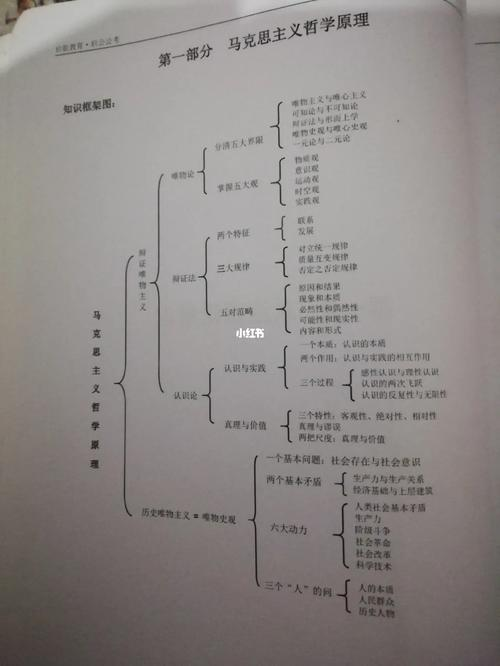
There are some major basic assertions about the marxist rationale. Marxist philosophy includes the fact that the world is material and that matter is in constant motion and change. Productivity determines production relations, which are counterproductive to productivity; the economic base determines upper buildings, which are counterproductive to the economic base. The principles of political economics include that labour is the only source of value and that the value of goods is determined by the amount of time spent on the production of goods as a social necessity. The theory of residual value reveals the secret of capitalist exploitation, where capital accumulates and adds value through the free possession of the residual value created by workers. The principles of scientific socialism include the inevitable demise of capitalism, the historical tendency of socialism to triumph, the historic mission of the proletarians to overthrow the capitalist system and to establish a socialist society, and the free and full development of every person in future societies. These marxist rationales are interlinked and mutually supportive, and together form the edifice of marxist theory。
Of course, the understanding of marxist fundamentals is also deepening and changing. No specific enumeration of the marxist rationale can be exhaustive or fixed. Marxist fundamentals need to be seen from a development perspective。
(by professor, marxist institute, people's university of china, and director, centre for marxist studies, china, 21st century)