Watermelons are used for the efficient cultivation of critical technologies for dwarf beans
Li fanghua
The city is located at the western end of the western corridor of the river, with abundant light and heat resources, with an average of 3,033 ~ 3,316 h per year, an effective temperature of 1,755. 0 ~ 3,811. 3 °c, a frostfree period of 130 ~ 159 d, an annual rainfall of 36. 8 ~ 153. 8 mm and a number of ~ 320 d, suitable for various vegetables. With a view to increasing the rate of land use and boosting productivity, production practices have led to the identification of high-yield and efficient cultivation models for watermelon plants, and their main cultivation techniques are described below。
1 land block ready
In the past five years, it has been chosen to grow sandy plots that have not grown guacamole, soil thickness, easy drainage, and fertilized soil, with crops such as wheat and maize being used as an example. In mid-april, a combination of 5 000 ~ 6,000 kg, 40 ~ 50 kg, 20 ~ 25 kg of potassium sulphate, 5 kg of urea as base fertilizer, full application of organic fertilizer and concentration of chemical fertilizer in ditches was applied. Soil disinfection is done with a mixture of more than 50% fungus and 50% hm2 (equivalent mixture) prior to recovery. The first 10 d of the seeding, with a width of 1. 5 ~ 1. 6 m, a ditch width of 0. 5 m and a ditch depth of 30 ~ 35 cm, are then filled with water to cover the surface of the lumber, which is 70 cm wide on both sides。
2. Varieties selection
The watermelon selects varieties that are premature and resistant to disease, high-quality, high-yielding, high-results, and durable, such as sinnon 8, early-cannon, etc., and dwarf beans select varieties that are medium-growth, premature and resistant to disease, of good quality and of good results, such as winners, suppliers, new zealand 3, early farm friends, zamrano 79-88, etc。
3 seeding
3. 1 watermelon
Early in may, seeds were immersed with 70 °c hot water, mixed by pouring water, continued to be impregnated with 6 h when temperature reached 25 °c, then impregnated with 10 % sodium phosphate sodium 20 min to extract seeds from water-purified slime and wrap them in wet sheeting, which was sprung at 25 ~ 30 °c and washed with water one ~ two times a day. At around 4 d, seeds are treated at 5 ~ 8 °c at low temperatures of 24 h, and when most seeds are exposed, the membranes are released. The seed plant is 35 cm, with 2 grains per den at 1. 5 cm depth, and 1,800 plants per 667 m2 with 150-200 g seedage。
3. 2 dwarf beans
Late in mid-april, seeds were tanned with ~1-2 d and then impregnated with 1% of the ff solution to 20 min, before they could be sowed with clean water. After broadcast, 10~12 d will yield seedlings, which will be replenished or sapled in time for the seedling to grow。
4 field management
4. 1 watermelon
4. 1. 1 the whole chicken and the heart
When seeded, 3 to 4 d will produce a seed, which will sow in time; when the chicken is 20 cm in length, the chicken will attract it in time to stretch it to the inside of the guacamole, where it will be grounded on the back of the chicken in order to fix the chicken and prevent the wind; when the chicken is 30 cm, the whole branch will be taken away from all the chickens and the main chicken will be kept, and the chicken will be pressed once every 4 to 6 knots and the chicken will be pressed straight into the soil; and when the guacam is put on, 15 to 18 leaves the heart of the leaf。
4. 1. 2 fertilizer management
Water melon periods usually do not require water for fatting; cyanide periods do not require water for fatting; earthly areas do so in appropriate quantities; fruit expansion periods 15 kg urea per 667 m 2 per urea; 20 kg potassium sulphate for fattening; then every 10 d per day, or 0. 3% per d leaf for fattening leaves such as potassium phosphate 2-3 times; before harvest 7d, water is stopped。
4. 1. 3 artificially assisted pollination
The watermelon is the same flower plant as the male and female, and artificially assisted pollination is required to increase the sitting rate. By 8 a. M., the day-opened males will be taken and then placed in a dry ventilated area, so that they will be pollinated naturally, usually at 8-12 a. M。
4. 2 dwarf beans
4. 2. 1 cultivation land
Short-breed beans grow in time for root growth. The roots are so shallow that they can be cultivated deeper between the lines, while the soil is ploughed to the base of the tuber so as to allow the side branches to occur。
4. 2. 2 watering
The watering principle for dwarf beans is not to water flowers in case they fall. Short-breed bean seedlings are more drought-resistant and do not generally water during the seeding season; before flowering, proper seedlings control the moisture, while dry water is used to prevent the growing of plants. When the 1st bouquet reaches out, it ends the cucumbering and watering of the head, then the amount of water is gradually increased (not immersed in the planting of the guillotine), usually with a watering of around 10 d, followed by ventilation and moisture。
4. 2. 3 fertilization
Fertilizers control the principles of low-prevalence, chicken control, and condensation. Short-breed bean tumours are small and can be followed up with urea by 15 kg per 2 per slow-growing seedling, promoting root system growth and expansion of leaf area; pre-growth water with watermelon water; post-harvest short-breeding beans into soybeans that are no longer tall, bean bean is growing rapidly and can enter a fertilized peak, combining urea by 667 m 2 with urea by 10 kg and diammonium phosphate by 15 kg; and subsequent combined water draughts with one fertilizer by 1 application of 15-20 kg ammonium nitrate per year。
4. 2. 4 detoxification protection
Dwarf bean is in severe condition, with very low rates of falconing, with only 20-30 per cent of the open flowers available. Management should be strengthened and collected in a timely manner, with the use of 5-25 mg/l萘amate spray sequences to protect the herb。
5 pest management
5. 1 diseases
Watermelons suffer mainly from atrophysics, bacterial horns and frosts, and dwarf beans suffer mainly from anthrax, root decay, rusty, as well as greyy diseases. The use of high-efficiency, low-toxic and non-residual pesticides should be strictly prohibited。
5. 2 pests
Watermelon pests are mainly aphids, red spiders, etc., and midget bean pests are mainly lace flies, aphids, soybeans, etc. Red spiders and aphids can be treated with 10% aphids and 1,000 times the wettable powder; mites can be treated with 2,000 times the net mites or 1. 8% with avm 2,000 times the fluid; tectonic flies in the americas can be treated with 40% aluminum cream by 1,000 times or 90% trichlorfon crystals by an equal application of 1,000 times to the soybean strain, 7-10 d and 2-3 times; and soybeans can be treated with 20% acetate permethrin milk with 3,000 times the fluid or 90% a trichlorfon crystal 1,000 times。
6 harvest
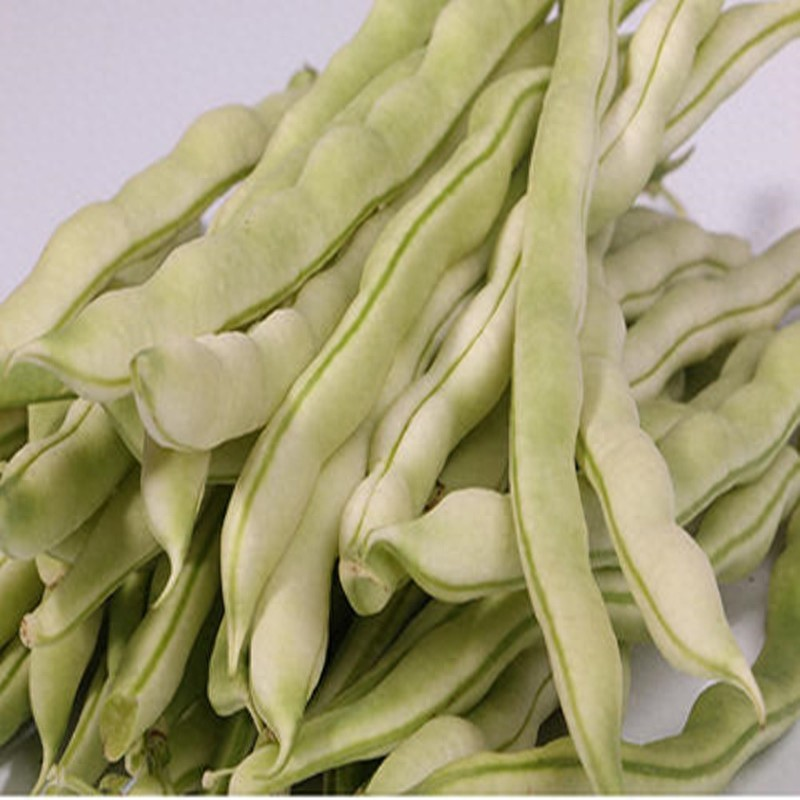
The watermelon was harvested in late july and removed in time for the harvest. Vegetable bean harvest standards are 10-15 d after flowering, soybeans are coarsed, large and green, and soybean grains are slightly visible, and the soybean harvest period is 2-3 d. Care is taken to protect bouquets and calves at 1,500 to 2,000 kg per 667 m 2。