


Beans are also called bean beans, which are growing fast, yield stable, resistant and resilient and can be grown as an inter-cropping crop. It is the spring season when everything recovers, and it is the best time for farmers to grow beans。
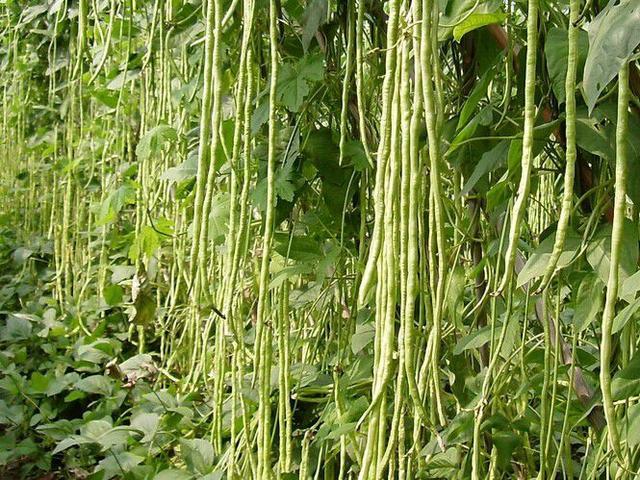
Therefore, the cultivation of high-quality bean bean is critical because of the overall economic income. How do you expect to grow bean horns to boost production? If only the following measures were in place, there would be no fear that production would not increase。
Bean horn cultivation method:
I. Selection of suitable varieties of excellence. Appropriate varieties are selected according to the planting season and daylight conditions. The varieties are pre- and mid- and late-literate, and the types are chicken, half-cranium and dwarf. In order to grow high yields, it is common to choose the species of crawling mats of vines and vines, which are less productive for dwarfs。
Select appropriate methods of cultivation. The soybeans seeding method is broadcast live and seedlings are planted. The method is to be chosen or broadcast or given birth according to local climatic conditions. When live broadcasts are used, the roots are more deep, the leaves are well grown and require careful management, which, if not managed carefully, can easily lead to the growing of the plant and affect the rise of the flowers and reduce production。
Cultivation practices can inhibit their nutritional growth and promote flowering. So it's best to have a high birth rate and grow. It would be preferable to use flat plastic caps to cover nursery plants for 20 to 25 days and to strengthen nursery management. It is also possible to raise the age of the child by means of nutrition, paper bags, seedbeds, etc。
The method of seeding is 10 cm x 10 cm on the soil of the nursery bed, which is better served by neutral sandy soil, with three to four seeds per sap or bag, covering 2 to 3 cm thick soil. It's covered in plastic. The temperature is 34°c during the day and 25°c during the night, and the seeding results in seedlings 7-10 days. Cultivated seedlings can be established when the seedlings extend through the 2-3 leaf。
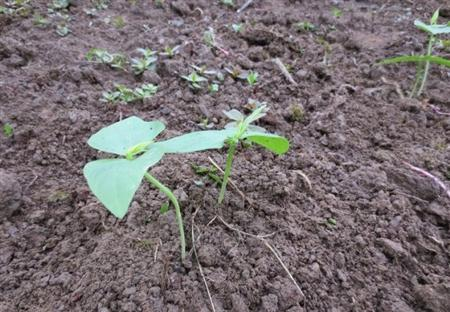
Iii. Preparation for field planting. The field is set up in a finely fine manner and is applied to base fat. It would be preferable to opt for well-drained land containing a high level of corruption, which should not be associated. Before and after seeding, spray herbicides to prevent monoleasing。
Iv. Locally adapted to make and apply base fat. In the north, the cultivation is generally flat, while in the south it is generally high in the trenches. Rational use of fertilizers and avoidance of nitrogen fertilization。
In the spring, 5,000 kg of organic fertilizer per acre, 25 - 50 kg of calcium per phosphate and 25 kg of potassium fat. (b) a 1. 3 metre wide luminium, which is designed to open a ditch at a distance of 50 to 60 centimetres within the luminum, with seedlings at a distance of 20 centimetres, low regenerative capacity of the bean horns and maximum protection of the root system during planting. Water is poured in the ditch, and when the water leaks, it is sealed, and the water is planted in darkness。
V. Watering in due course。
1 premium: due to the weakness of the seedlings, it is not possible to overwater them, otherwise they are prone to death. From the seedlings, water is established and the seedlings are given water, so that the seedlings are grown and warm. After setting the values, it usually takes 5-7 days to dig in the middle and water the seedlings。
2 mt.: the beans are more drought-resistant and, if they are over-drinked, nourished, prone to empty chickens, affecting the corset. In the event of high temperatures and drought, it is necessary to be diligent in the prevention of drought and the promotion of growth and growth. In-service farming, combined with the cultivation of land, which is 10 to 15 centimetres high, avoids excessive rain-fed seasons and affects plant growth。
A flower season: when a bud appears, it can be ploughed with small water, without water during the first flower. When the penis grows to about a metre after the first bouquet, it should be watered again in the event of a drought to boost the growth of the leaf and the growth of the mast。
4 term: entering the term, the growth of the herd and the growth of the leaf are strong. This is a time when water requirements are high and the number of waters to be poured is increased and the ground is kept wet. Care should be taken not to overwater the soil in order to dry and wet the water, if it should be drained in time for a rainy day。
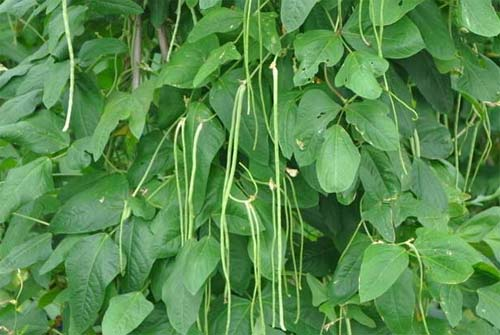
Vi. Improved management in the timely pursuit of fertilizers。
In the early stages of urea 1 , water was re-fed with 10 to 15 kg of urea per acre at about 15 cm in the first layer of the plant. Or ammonium nitrate 20-30 kg, calcium perphosphate 30-50 kg。
2 at the beginning of the harvest, 100 kg per acre of pie fattening. Or watered with human urine and watered it down one or two times。
In the later stages of the acupuncture, the acupuncture of the acupuncture and the absorption of nutrients are strong. In order to prevent the early decay of the plant, and to increase the long-term weight and maggot rate, quick-effect fertilizer is to be applied every four to five days, followed by three to four consecutive times, supported by the spraying of noodles。
Caution: in the event of high temperatures, the soybean seedlings suffer from a halt to flowering, and the drought loses its weight faster. It is time to refuel and fatten. The growth of the sprouts can lead to the continuation of the sprouts of the original bouquet, and an additional one kg of soybeans per acre。
The whole branch shall be inserted in due course。
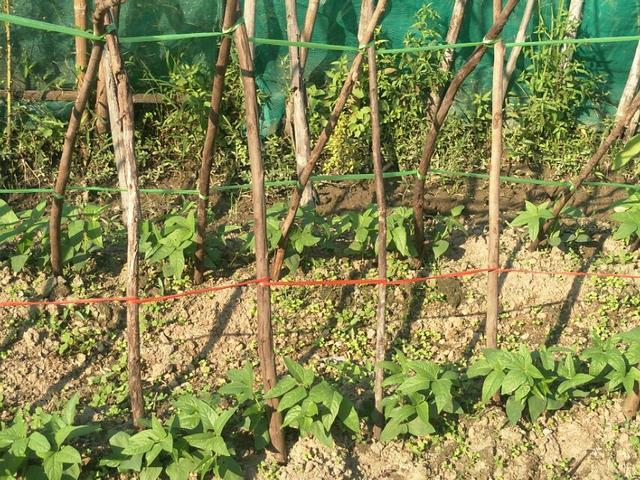
1 plug-in: when the plant is five to six leaves of 30 cm long, a “human” font frame is required to improve light for ventilation and higher yield。
2 roast chickens: a pedestal, followed by chickens that are artificially drawn in the direction of a counter-clockwise, with a four-to-five-day hilt, entangled by some soy seedlings who are unable to climb the rope or the pole themselves。
Attention is drawn to the fact that, because of the small and thin, easily broken chickens, it is preferable to choose between noon and afternoon on a sunny day. Don't be in the dark or in the morning。
3 whole branches: 1. The species of the brocade; when the sprouts below the first line grow to around 3 cm, they shall be removed at an early stage. The side branches that appear above the first bouquet also leave a graft of 1-3 centipede, preserve the grafts on the side branches, increase the part of the corset and promote the growth of the grafts between the side branches。
2. The species of side branches; the heart of 13 to 3 leaves in the side branches above the first bouquet, with the main chicken growing to 15 to 20 knots, and the top of the heart when it reaches about 2 metres in order to promote the emergence and early ripening of the side branches. After the first peak in production, the side branches that grow between the leaves should also be heart-cooked, commonly known as the tip of the pack. During the boom, the next leaves can be cut in parts。
The whole branch's function is to control the height of the plant and its growth, so that the nutrients can provide a concentrated supply of sequenced development. If the vine is too high, it tends to entangle each other, and the branches are too dense to affect the light, resulting in poor ventilation and increased pest and disease production. And it's too high to pick。
8. Precautionary measures should be put in place for the flowering season。
Inducing causes:
1 the early onset of the growth of seedlings is characterized by low temperatures, which affect the foundational division of the sequence. 2 affected by weather: wetting of soil during the first flowering seasons over three plant long: in the pre-flowering period, there was no good incubation, or poor fertilization, and the plant had four diseases at risk: the plant was endangered by insects, causing poor management of the flowering season: lack of fat, low or excessive temperatures, drought after the soil was wet, weak light, etc
Preventive measures:
(1) selection of suitable planting periods and varieties. Strengthen management of shrunk periods and values。
(2) obesity recovery. During the harvest period, 1500 kg of manure per acre, or 15 kg of urea, and 15 kg of potassium sulphate, were used to extract bean horns ~2-3 times and fatten once。
(3) spray plant growth regulator. Increased stairwelling rate by spraying 5-25 mg/kg acetic acid solution or 2 mg/kg depressive solution during flowering。
(4) combat pests and diseases. The main focus is on the prevention of pyrotechnics, soybeans, aphids, etc. Getting to the principle of "doing or not" and the spray treatment is best before the bean horn closes (about 10 hours ago)
Ix. Major pest control of bean beans:
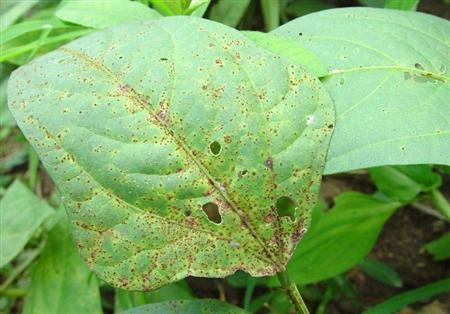
The main diseases of the beans are viral and rusty。
65% of the sulfur powder can be sprayed with 500 times the dose, or 0. 1% of the ethylene ester, 800 to 1,000 times the dose, or 1. 5 kg of sulfur powder per acre. Care should be taken to avoid watering before the rains and not to grow in series。
The main pests are bean aphids and bean acupunctures。
Control of aphids: method 1 cedar traps 2 with 10% aphids of humid powder 1,500 to 2,000 times the fluid, 25% akta water dispersants 5000 to 6,000 times the fluid, and 2. 5% kung fu cream 2500 times the fluid spray。
Prevention and treatment of soybeans: choosing dichlorfon with dichlorfon dichlorfon dichlorfon dichlorfon dichlorfon dichlorfon dichlorfon dichlorfon dichlorfon dichlorfon dichlorfon dichloride dichlorfon dichlorfon dichlorfon dichlorfon dichlorfon dichlorfon dichlorfon dichlorfon dichlorfon dichlorfon dichlorfon dichlorfon dichlorfon dichlorfon dichlorfon dichloride dichlorfon dichlorfon dichlorfon dichlorfon dichlorfon dichlorchlorfon dichlorchlorfon dichlorfon dichlorfon dichlorfon dichlorfon dichlorfon dichloride dichloride dichloride dichloride dichlorine dichlorine dichlorine dichlorine dichloride dichlorine dichlorfon dichlorfon: 24%3000 times ~3,000 times 。
Pre- and post-plant preventive measures:
1 seed sterilisation; 3% water mixing of 10 seeds with 2. 5% of 0. 2% of the seed volume. Effective control of root causes of decomposition, sudden fallout, atrophy。
2 chemical weeding; 3,000 ml of glycerine milk per acre of 3000 ml of water and 900 l of closed soil surfaces to protect against one year of grass and some broad grass。
3 soil disinfection; 1125 kg of ammonium carbonate per acre of farmed land; soil drying with water covered with plastic sheeting sealed for a period of 3 to 7 days to sow. The killing of underground pests, native fax pathogens and weed seeds can be effectively eliminated。
Later: all in all, i want to grow high-quality, high-yield beans. As long as adequate and rational management of water fertilizers is carried out during seeding and quenching, together with appropriate side-breeding and heart-picking measures, attention is paid to the prevention of aphids and to the prevention of soybean and rusty diseases and asympathosis during growth. Increased efforts to combat rusty and soybeans are needed to grow high-yield, high-quality beans and increase economic income。



