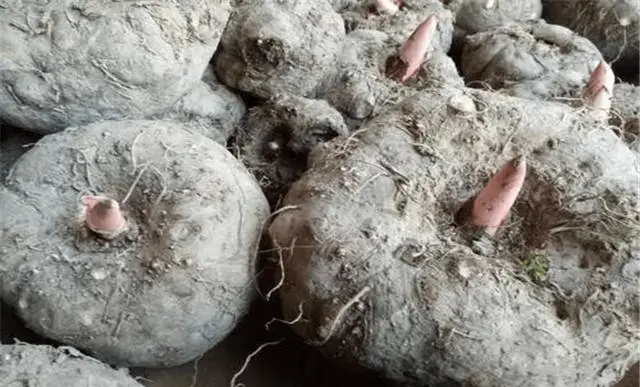
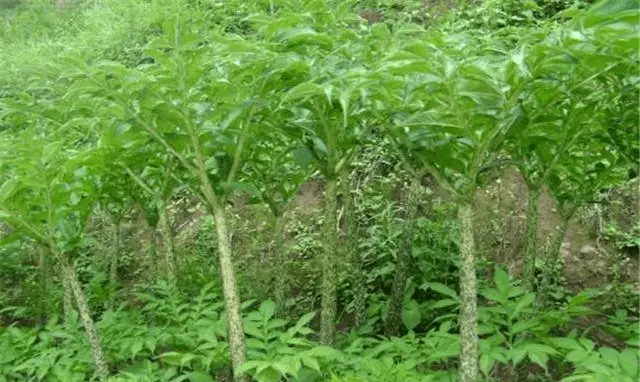
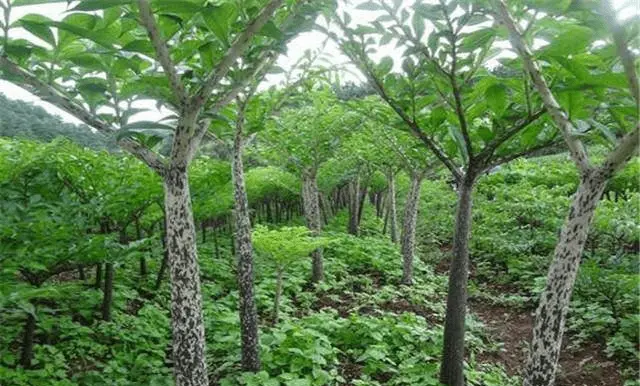
The taro is a multi-year grassland plant that is widely grown in china, japan and south-east asia and used as a source of food and traditional medicine. Potato glycerine is a natural large molecule of sugar extracted from the trachea and used extensively in areas such as medicine, chemicals, agriculture and drilling, with high development value. In recent years, the increasing demand for taro and its processed products in domestic and foreign markets, as well as the inadequate supply of raw materials for the taro, have led to a rise in the price of the taro, which is increasingly being used as one of the leading industries in the fight against poverty. For a long time, the cultivation of taro has been small in scale, with irregularities in planting techniques and serious diseases, resulting in low yields and low efficiency. With the rapid expansion of the area under cultivation, problems such as planting management and the lag in pest control techniques have been highlighted, seriously hampering the further development of the potato industry. In order to address the current management of cultivation, to increase the production and variety of seedlings, the following measures are proposed for the integrated management of disease-resistant cultivation, including the selection of areas for seeding, pre-plant processing, seeding and processing, scientific seeding and field management. Details are as follows:
I. Selection of cultivation areas
The selection and creation of a magic tart suitable for planting can reduce the incidence of pests and diseases. The taro is a semi-negative plant, dispersing light and weak light. In the low and hilly areas, the effective accumulation of sufficient temperature, the long-term high temperature and adequate sunlight of the tara, can be combined with high-drive crops such as maize and fruit trees to avoid sunburn. In semi-hidden areas, such as mountains, where effective heat is not enough, tara life is short for a long time, and it can be planted in the form of coverless membranes to increase soil temperature, prolong its life and increase production。
Ii. Pre-diffusion treatment of soils
High organic content, perfunct fertility, alkalinity micro- acid or micro-alkalinity (ph values 5. 5-7) sandy soil, palmy soil, are selected as a plot of seedlings. When soil acidity is high, the choice is made to sow plaster 750-1500 kg/hm2 or 85% of trichlorfon isocyanate 15kg/hm2 in the clear day, then the tilling soil can kill most of the pathogens in the soil and improve soil acidity; when the soil is more alkaline, improvements can be made by increasing organic fertilizer, sulfate calcium or sulphate. Soil disinfection not only kills pathogens but also reduces the number of beneficial microorganisms, which should be supplemented with organic matter or microbacterizers in a timely manner, on the basis of which some inorganic fertilizers are applied and their application balanced. According to the topography and the water table, the formation of gavages, trenches and girdles prevent the accumulation of water in the fields. Crop rotations such as potatoes, tomatoes, tobacco and so forth are not carried out and are avoided as much as possible. Fields with a large number of underground pests can be vertebrated before winter, at depths of around 30 cm, with 3% of the thiophos-methyl granule agent 45 - 75 g/hm2 being applied evenly to the ground to combat the ground pest。
Iii. Too transfer and treatment
The potato industry has to be developed. In the case of alien seedlings, the purchaser should check the reserve base before digging for the taro, focusing on whether the seed comes from a disease-free area or from a field where the tubers are free of disease, injury-free, luminous and round. The weight of a single tuber should be around 200 g for the taro and 50 g for the white taro. Commence transportation after warmth, select hard baskets as packaging transport containers, protect the seeding of potatoes from squeeze and fill other buffers, such as straw, between seeding plants to avoid damage to the friction between seedlings and ensure that the seeding is intact。
The seeding should be preceded by the selection of potato and disinfection blends to reduce the probability of seeding tara. Decontamination, removal of the injured tissue and tan on the mud (non-cement floor), use of sunlight to kill parts of the fungus and accelerate the conversion of seeding nutrients and increase the gerontization rate. Sterilization can be carried out in combination with drying, with 40% formaldehyde 2 ml/kg+ potassium permanganate closed fumigation of 24h, or 46% of copper oxide water dispersors 1,500 times the impregnated 30min or 25% of polyglycerine humid powder 500 times the impregnated 2-6h and leaching dryly with grasswood ash. The taro skin is thin and should be lightened during disinfection to avoid scratching the skin。
Potato seedlings can promote the growth of seeding, prolong fertility and increase production. Before seeding, 15-20d seeding is treated in greenhouses, hotbeds or plastic sheds, with wet sand mats, a layer of tara laid and then separated by sand or earth, usually with three layers of tara, and finally with straw. The temperature of 10d before sprouts is maintained at 20-25°c, followed by 10d at 15°c, with a relative humidity of about 75%, in order to promote the growth of embryos. When the bud begins to stretch, the root is ready to sow. Through seedlings, the seed can be further selected and the poor seed can be eliminated。

Scientific seedling
4. 1 cultivation due
The most incubating period of the taro should be suitable for the average temperature of 12-14°c and the minimum temperature of 10°c after the break of the taro. The temperature is too low and the buds and roots are prone to freezing. The seeding season is influenced by the variety of tara, which are released from sleep faster than the white tara, and the temperature required for their growth is slightly lower than that of the white taro, so that the same area is given priority for the planting of the taro. It would be appropriate to sow in the spring period from 4 to may, with the average temperature rising to above 15°c, slightly later in the high altitude and earlier in the low altitude。
4. 2 fulfilling bottom fertilizer
Potato is growing faster, is afraid of fertilizers and has a greater absorption capacity to produce long-term fertilizers, with the greatest demand for nitrogen fertilizer, the second highest for potassium and the lowest for phosphorus. The seedling season is dominated by the absorption of nitrogen fertilizer and the rotation and expansion periods by the absorption of potassium and phosphorus, thus ensuring the nutritional supply through the application of bottom fertilizer and the availability of high-yield, high-quality tubers. A combination of 450 kg of potassium sulphate and 300kg of potassium sulphate as bottom fertilizer was used as phosphorous fertilizer 375 kg/hm2, n-p-k for 15-15, mixed with bottom fertilizer, soil avoidance of seeding and fertilizer exposure resulting in burning seedlings and loss of seedlings, application of decomposed organic fertilizer 15,000 to 30,000 kg/hm2 and planting of potatoes。
4. 3 reasonable secrets
The density of potato cultivation is associated with the size of the seed, the larger the seed, the greater the distance from planting. Cultivation by wide distance and narrow distance facilitates field management and ventilation. The range of the suitable density is six times the size of the taro range and four times the distance of the strain. The density of seeding may be adjusted by reference to geographical conditions, as appropriate, such as a south slope or low altitude, with strong sunlight and high temperatures, which can be sown appropriately to prevent sunburning; and a north slope or high altitude, with insufficient sunlight, which can be sown appropriately。
4. 4 tilt seeding
And at the top of the trough there is a budding nest, in the midst of which is a bud. The bigger the trough, the deeper it is. The seeding takes a different angle of tilt, depending on the depth of the bud, and avoids the sprouts or decay of the tubing water. It is best to lean in the direction of the sunrise, to accept the sun as early as possible and to promote it. When the taco whips are sowed, the sprouts are unified in one direction and set in sequence. The sowing depth is generally around 5 cm, which is too deep for the growth of seedlings, delayed seed production and reduced yields。
4. 5 reasonable planting
Cultivation may be practised on more flat plots. Following a 30-50-cm gap, a 5-cm gap, the seeding was followed by the application of fertilizer around the seeding of taro, which was made from both sides around 15 cm high, and a width of about 25 cm wide, ensuring that drainage was smooth and avoiding the accumulation of water. The slopes can be planted either in caves or in broad areas. The caves are dug at 25 to 40 cm square, where they are filled with decomposed organic fattening, and the seedlings are placed upwards in the middle of the pit, with approximately 10 cm thickness. The broad crotch plant is built around 100 cm to open a ditch, with a gutter vertically to open a gutter, with decomposed organic fertilizer spread on the bottom of the gutter, with potatoes on the edge of the fertilizer, three to four potatoes in a row, continuing to open a gutter and covering a gutter。
4. 6 bulk cover
Coverage is an important measure in the management of tartar cultivation, which preserves soil moisture, reduces weed hazards, promotes seedlings in the preceding period, promotes tubing in the later stages, avoids rain spatters and reduces the spread of disease, with some effect on the production of the tarcrete. When seeded, it is covered with straw, green fat, needles, straw, hay and leaves, 5 to 10 cm thick, unpaved. When temperatures begin to decline in september, surface cover can be removed to allow the soil to receive sunlight, maintain the temperature and promote tuber nutrient accumulation。
V. Field management
5. 1 reasonable pursuit of fat
Potato life lasts from 150 to 200 d, and its production is generally higher in the early mornings, in the thick of the mantles, in the green of the leaves and in the late years of the fall. Potato can be used less or less frequently, and nitrogen-containing fertilizer should be replenished in a timely manner if the plant is small and yellow. Fertilizers are generally divided into two sessions, the first in late june, and the first before a change of head, the taro leaves are followed up for the first time in order to promote the growth of parts of the ground, with a combination of 225 kg/hm2 and urea of potassium sulfate and 150 kg/hm2, which can be used for grass-cutting and earth-breeding. The second fertilization was carried out late in august to increase the foliage's strength and prevent premature decay, with potassium sulfate-type compound fertilizer of 150 kg/hm2. To maximize the selection of organic nitrogen fats, such as human and animal manure, and the choice to melt and dilute the fertilizers in the rainy days so that they do not cause the roots to burn at high concentrations, so that they do not spill over to the leaves and do not burn the leaves. Leaf-faced fertilizer can be used to select 0. 5-1% potassium dihydrohydrophosphate, to add some thorium esters and display agents, to evenly spread the negative side of the leaves in the afternoon, to promote the growth of the taro and to enhance the resistance to disease。
5. 2 weeding and drainage
The root of the tara is shallow, and it shall be sown with it, and it shall be avoided, and its roots shall not be harmed. The use of herbicides is reduced by cutting or artificially removing grass with scissors when grass is available before it is fully developed. And if there is a small weed of tara in the middle and later stages, it shall not be weeded any more, provided it does not affect its normal growth. In order to prevent drought, a combination of fertilization is used to produce soil around the taro pole, to reduce water evaporation and to prevent weed breeding. The taro is afraid of flooding, and during the rainy season be careful to keep the ditches open and avoid water accumulation。
5. 3 disease control
The main diseases of the taro are morbid disease, leopard disease and root disease, among which soft rot is the most serious. Catalytic disease control is primarily preventive, with 46 per cent of the whole spray spray of copper hydroxide 100 times more liquid, or 5 per cent of the bacterial wettable powder 1,000 times liquid, or 50 per cent of the chlorobromocycyanide soluble powder 800 times liquid, or 20 per cent of the copper suspension of the oxyson, 500 times liquid, or 47 per cent of the chronary wang copper wet powder, 7-10d 1 and three to four rotations. Spray time takes place after 4 p. M., and appropriate additions to displays improve the efficacy of the drug. When the strain was found, the tubers and the surrounding areas were taken out of the fields, buried or burned deep, and the pits were disinfected with raw lime to reduce the incidence of further contamination. Insects such as vermin and moths may be lured into insects with black light or high-intensity insecticidal lamps, with an average of 1. 3 to 2 hm2 hanging an insecticidal lamp in order to reduce the density of second-year insects and gradually reduce the use of pesticides。

Summary
High-yield, high-quality and steady production is key to ensuring the sustainable development of the entire taro chain, and disease resistance is essential. The trachoma resistance is a systematic project that requires the application of scientific management techniques, the application of a “preventive and integrated approach” approach to plant protection, the coordination of the management of all aspects of the cultivation, the creation of an environment conducive to the growth of the trachoma, and the enhancement of the resistance of the plant to the disease, in order to improve its yield and quality and increase its efficiency。