


Forest saplings
Visiting soil: replacement of soil suitable for gardening。
Topography: the rise and fall of plant plantations within a given range of horticultural greens。
Plantation of caves, troughs: pits for plant excavation. The pits are round or squared called planting pits and long strips called planting tanks。
Cultivation: soils that are well-regulated and suitable for gardening plants. It refers to the physical and chemical properties of the soil, i. E., the weight, weight, ventilation, permeability, nutrient status, viscosity, viscosity, plasticity, tillage, magnetism, etc。
(b) naked tree: a tree with roots unearthed or only protective soil。
Packaging seedlings: tree trees are planted in soft packagings (soft packagings are degradable materials), buried in the soil for routine conservation, and placed with flexible packagings during transplantation。
The height of the branch: the height of the wood from the surface to the first branch of the tree crown。
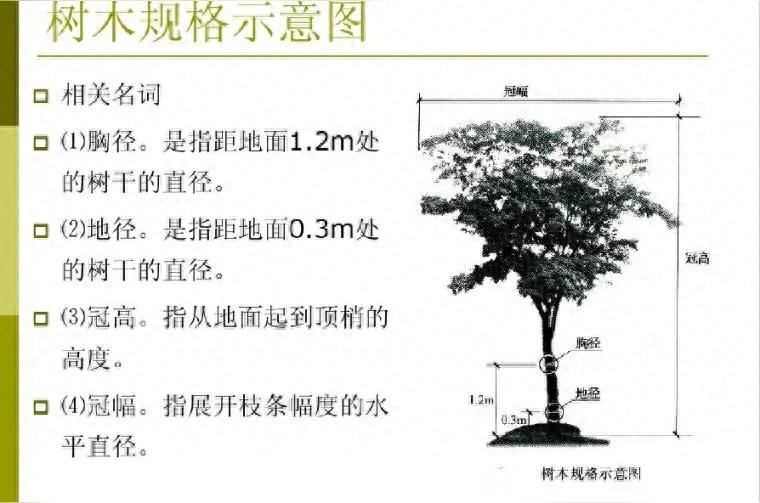
Chest diameter: the trunk diameter of the wood stem at 1. 2 m altitude. It's often in the name of Φ
Geometry: tree trunks close to the diameter of the ground. The diameter of the tree (sapling) measured at a distance of 30 cm above the ground. Depending on the variety of species, some of the tree tracks range from 30 to 50 cm above the ground and some of the directly attached floors (also known as the base path) are often expressed as “d”。
Tube density: number of up-drives within a unit area of lawn。
The greening of the facility space: the greening of buildings, subsurface structures, walls and fences。
(b) grass-roots planting: a non-greenland greening plant planting infrastructure, which includes root-resistant penetrators, drains, filters, plantings, etc。
Maintenance of planting works: conservation management after gardening until the completion of the acceptance handover。
Visual quality: the greening of the garden project reflects the external quality of the project through observation and necessary measurements。
Green plant conservation terminology
A wood: the tree is large (usually 6 to dozens of metres) and has a visible high trunk with a clear distinction between the trunk and the canopy。
Shrubs: trees that have no visible backbone and are in a swarm are usually smaller and do not exceed 6 metres。
Fujimoto: plants that are long, entangled or uplifted。
(1) woody vine: thicker and harder wood. - like dragons, chicken blood vines
(2) grassy vine: long, small, soft grass. Like chicken dung vines, 100 pieces, etc.
(3) entangled fujimoto: the main branch entangled in it, vivet, goto, etc。
(iv) the climbing of vines: the climbing of organs such as rolls, non-predictable roots, suctions, etc., to help with other things, such as climbing tigers, grapes, etc。
Herbs: one year or more, with no nested tubers on the ground。
An ancient tree called wood: trees over 100 years old or precious rare, of great historical and commemorative value and scientific value。
The ground is covered by plants that are dense and low and cover the ground。
Palms, sodiums: tree stem cylindricals, with long-lived leaves bearing the handles of the old leaves and their lower leaves, which grow at the top of the trunk。
Orphanage: the method of planting single trees。
(b) plantation: the manner in which the trees are programmed in relation to a certain axis。
Columnation: plant cultivation along straight lines or curves at equal distances or according to certain patterns of change。
• group planting: multi-tree, multi-gauge。
Green fence: vegetable walls formed from line plantings and thawing。
(a) a hedge: a green fence planted and trimmed with flowering plants。
Flowerfields: multi-flower staggered and mixed planting, laces formed along roads。
Forest and plant conservation management: technical measures such as irrigation, drainage, trimping, pest control, winter control, support, weeding, chinese farming, fertilization, etc. For gardening plants。
Cutting: one of the management of horticultural crop cultivation, which usually includes depreciating, short-cuting, cutting, cutting, heartening, etc. Through this process, plants are modified into the shape they need to produce and improve their quality。
Uncertainties: there are no fixed bitings on the branches and a large number of buds will grow when they are recut or irritated。
Growth: plant growth is strong and weak. Broadly defined is the rate of plant growth, alignment, leaf colour, growing strength, and the abundance of branches or branches。
Main: the upper part of the ground and the branch parts of the wood or the non-scrubbed bush, with the crown and the bottom line。
Main branch: a large branch of a tree's skeleton produced autonomously。
Intrusion: trees are cut or otherwise traumatic, resulting in a large flow of tree fluid from the wound。
Intracting: technical measures to shape trees by cutting, sawing, swirling, binding, binding, placheting, etc。
Short cut: select several suitable buds on the branches and cut them short, with the aim of reducing them and stimulating the emergence of the sides。
Retrospect: cutting some of the branches on trees for more than two years。
Snitching: cutting the branches of trees close to the living or ground cutting。
Carcinating, cutting: the method of cutting the branches of trees off the top of the young part。
Base manure: before plants are grown or planted, they are applied to the soil or pits as a base fertilizer, mostly as fully decomposed organic fertilizers。
Fertilizers: plants are planted or planted with additional fertilizer to compensate for deficiencies in the nutrients required by plants。
Artificial control of pests and diseases: manual control of different pests and diseases. These include, inter alia, bait-traps, light-traps, submersible booby traps, heat treatment, tree-cut-off, hand-capturing, pick-up, removal of ovarian vermin bags, swirling of eggs, stabbing of dry pests and a combination of cutting and cutting of diseased branches, removal of leaves and scratching of disease spots。
Re-blue water: irrigation of plants following soil thawing for normal growth。
Frozen water: irrigation of plants before the soil freeze for plant safety。
Bottom line of the crown: a line formed from the line at the bottom of the tree crown of each side of the same road。
Yellow earth is not open: areas such as grasses are covered by other materials, such as plants or barks, and bare land in green land and under tree crowns is covered for the purpose of greening, beautification, dust suppression and preservation。
Specialized terms for greening cultivation
Closeness: rareness of spherical plant coronary. Quality indicators for spherical plants are usually available。
Length (principal chicken): also known as long tubing, long tubing, usually expressed as “l”, is the length between the root and the tip of the creeping plant。
Years of nurturing: also known as seedlings, usually expressed as “one year” and “two years”. Number of years of breeding, breeding, etc。
Earthball thickness: also known as the height of the mudball, the height of the mudball floor to the surface of the mudball when transplanted by a sap is often expressed as “h”。
Earthball diameter: also known as the ball diameter, the diameter of the mudballs carried by the root is often expressed as "d" at the time of the transplantation of the tree。
Naked dry height: refers to the height of a palm plant that is dry below the surface of the ground to the lowest foliage。
Canopy diameter: the mean diameter between the largest and the smallest range of tree coronary, also known as coronary diameter, aeroplane, is often expressed as “p”. The maximum width of the extension of the branches of trees. Canopy: the average of the largest and smallest diameter of the coronary projection. Aperture: the average of the largest and smallest diameter of the shrub crown projection。
Tree height (high): a vertical distance between the ground and the top, often expressed as “h”。
(b) number of forks: also known as forks, branch numbers, which are trees with branch capacity, and the number of branches that emerge from underground。
Saplings: underground systems (under the neck) produce several primary dry trees。
Scrambled seedlings: several primary dry trees are produced above the root neck。
Monochrome: there is only one main dry tree from the ground to the coronary。
Sapling: saplings grown by sowing。
Direct seedlings: also known as seedlings, seeded and bred。
High: vertical height from the surface to the top of normal bush growth。
Transplanted seedlings: any tree that has been planted in a nursery and continues to grow in another nursery (area) is called a transplant。
Plug-in seedlings: trees planted with branches drying or cutting trees。
Emplaced seedlings: all the trees that are grown from the nursery, dry or seeded。
Saplings: trees grown from trees or trees, inserted or planted in the nursery。
Root seedlings: also known as seedlings, are trees that are bred from new roots under the ground。
Crushed seedlings: trees that are not separated from the parent, either buried in the soil or packed with wet soil in the air, until they are cut off from the parent。
Grouping of seedlings: trees grown in nutrients using parent tissue or cells。
Bed seedlings: trees that continued to grow in the last year's nursery。
Famous terminology
Heavy petals: gardens and plants are grown, and they produce the best petals from the male petals。
Plugs: cut flowers as materials, which are designed to cut, model and insert into the container an ornament created. It can be divided into sort of flowers, wreaths, baskets, flowers, bottles, etc.; for use it can be divided into ceremonial bouquets, art bouquets, etc.; for flowers it can be divided into dry bouquets, flowers bouquets, etc.; and for style it can be divided into east bouquets, west bouquets, etc。
Dry flowers: also known as dry flowers. It is a flower decoration obtained after dry processing of artificially grown or wild flowers. Dry flower production began in europe at the beginning of the seventeenth century, and has become increasingly prevalent in the world since 1950. It is divided into two main types: natural dry flowers that maintain their natural colour, and manual dry flowers。
Period: refers to the period when a flower is open, or to the duration of a plant group flower。
A flower: means a total leafless flower infarction。
Sequence: refers to the raw sequences that are spent on the tubing. Sequences can be divided into unlimited and limited sequences. The flowers of the lower or peripheral axle of the former are opened and gradually develop towards the top or centre, and the axle can continue to grow upwards. The flower at the top or centre of the latter opens and gradually moves towards the base or peripherals, and the axle cannot continue to stretch. Whether or not they are part of an infinity sequence, they can be divided into simple and complex sequences. A simple sequence includes a total sequence, a swirling sequence, a soft swirl, a swirl, an umbrella swab, an umbrella swab, a basket swab and a hidden head. Composite bouquets include chorus, troupe and cone. Limited sequences include one single umbrella sequences, one multidisciplinary umbrella sequences, and one of two。
Root: refers to a block increase in root used to store nutrients. The plants, such as the daffodils and the hairs, have roots。
Tube: it's a short, fat tuber. Vegetables like tart。
Greening seedlings
Trees are usually divided into carpentry, shrubs, palm and sodium, bamboo and woody vines. Specification indicators for saplings tend to have many items, but specifications are sequenced in order, first being the main criterion and second being the subsidiary standard. The actual specifications of the trees should be determined by determining the main criteria and then the supporting criteria. If the specifications are not met, the price may be downgraded according to the corresponding criteria。
Gem:
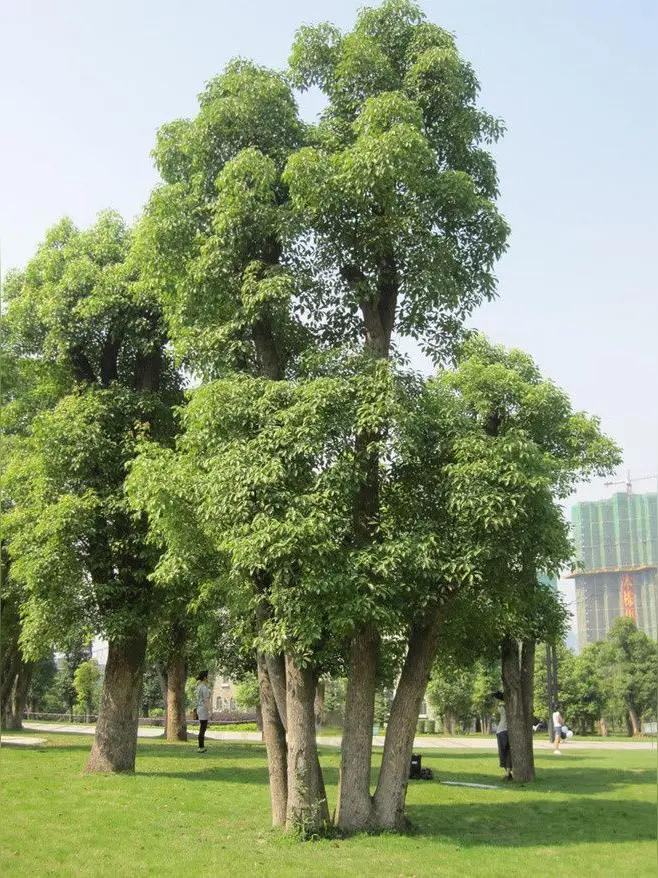
Whether leaves fall in winter or dry season is divided into leaves fallows and green trees. It is common for kimmer, pine trees, jade, platinum, platinum trees, high-leaf vegetation trees, hainan peaches, pot racks, firewood, human face, plum trees, peach tree, etc. The specifications of the wood can be expressed in terms of chest size, branch height, high length, coronary band, branch number, earthball diameter, among others, where the market is dominated by “heart diameter” (twice), but for smaller trees, especially those that are produced one year ago, prices are often determined by the size of “earground” (d) and “high” (h)。
Shrub type:
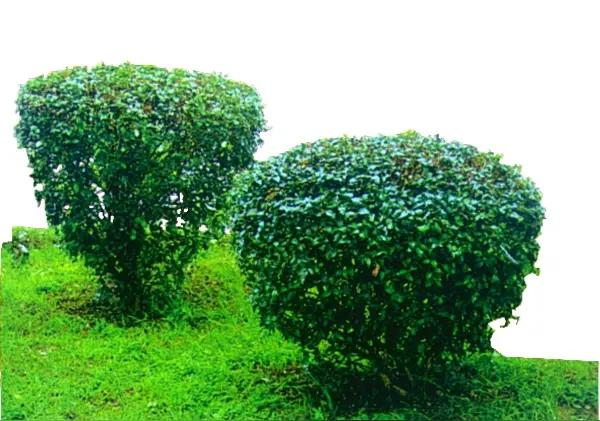
It can be divided into the following categories: flowers, fruits, and branches. It is common for red cars, red velvet balls, krypton, african jasmines, ledoux, big red flowers, soft twigs, pickles, roses, dowds, policemen, chastity, twigs, yangs, sandebbles, platinum, twirlings, twilight, seasons, african jasmines, big red flower balls, etc. The specifications of the shrubs can be expressed in terms of heights, permutations, earthball diameter, etc. Currently, the market is dominated by “high” (h) as the main specification standard, but spherical trees are priced more by the diameter of the ball, commonly referred to as “blowing” (p)。
Fujimoto:
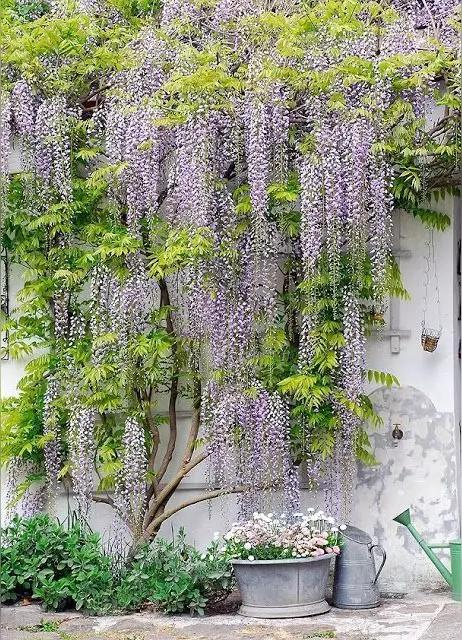
The specifications are often expressed in the diameter, length of the main chicken, number of branches, earthball diameter. The main specifications are often used in the market as “geographic” (d) and “principal chicken length” (l)。
Palms, irons: aoi, canary dates, middle eastern dates, coconuts, king leaves, beautiful needles, sunflowers, etc. Specifications may be expressed by base diameter, high-stamp, dry-naked high, crown, branch number (or number of leaves), earthball diameter. The main specifications are often for palms and slurry trees in the market, which are “naked high” (h), and for small seedlings, which are often based on “baseline” (d), also known as headline “t”) and “high” (h)。
Bamboos: the bamboo plant poles are long and long, and their specifications are often expressed in base diameter, number of branches per bush, dry height, earthball diameter. The market often uses “baseline” (d) and “numbers per branch” as the main specifications。
Select the tree for attention
It should be noted that, in the course of the actual trade in trees, the corresponding symbols are commonly used for the above-specified terms: for example, “h”, which is commonly used to indicate height (high, high, dry naked), for example, “h200-220”, which generally indicates a tree height of 200 to 220 cm; but the concept may be different, for example, in the case of carpentry, which is “high”, and in the case of palm, which is “high naked dry”. Commonly used “twilight” for chest diameters, such as “twilight-5-6” typically indicates a tree size of 5 to 6 cm; common “p” (or “w”) for coronal (caps, trophies), such as “p80-100” typically indicates a tree crown size of 80 to 100 cm; base diameter is commonly expressed as “d”, such as “d10-12”, which typically indicates a tree size of 10 to 12 cm; and main chicken lengths are commonly expressed as “l”. As a general rule, the factors determining the price of the wood are usually “heart diameter”, the price of the shrub is “drinking high”, the price of the spherical tree is “core track”, the price of the palm and iron is “naked high” and the price of the small seed is “high” or “geographic diameter”。



