


Recommended language
“the lemon is a treasure, both a forest and grass, protected from wind and sand, grazing firewood for fertilizer or saving lives by animals.” this is an easy way for farmers and pastoralists to vividly describe the value of lemon strips. The lemons have strong drought-resistant, infertile, cold-resistant, heat-resistant, salin-resistant properties, and their roots are well developed, embryonic and flourishing. It is referred to as a sand-fixing vanguard and has demonstrated a strong capacity in weather-proof sand and soil conservation. At the same time, the abundance of the leaves, flowers and seeds is good feed and fuelwood, as well as raw material for electricity generation. The roots have the effect of tumour-fixing nitrogen, which increases the fertility of the land, and whether the leaves are high-quality green. The flowers of the lemons are like golden birds flying their wings. They are of great value, and the sea of the lemons is a beautiful view and a good source of honey. In sum, the lemons are of high ecological and economic value, they are an important tree species for desertification control in the tri-north region, and they are the main tree species for the ecological restoration of arid pastoral areas and the development of large-scale industries。
Tree archives
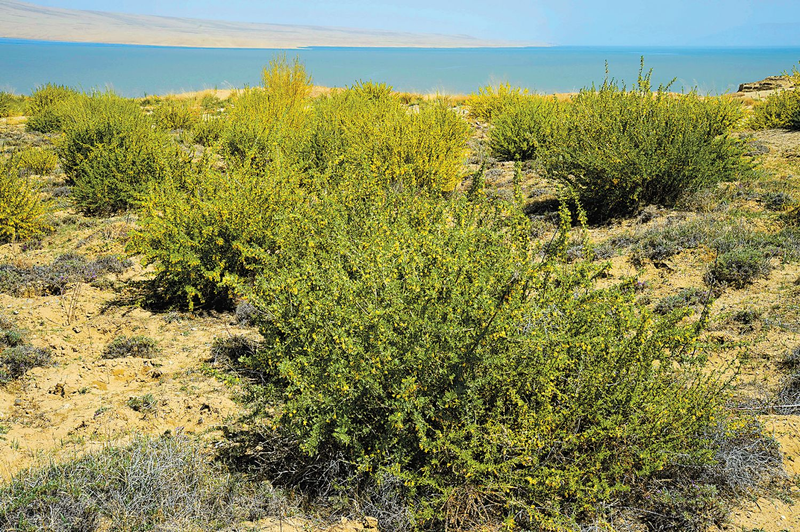
The lemon chicken, which is a soybean chicken, is a bush that falls up to 4 metres high and is known as lemon, wool, white lemon, etc. Its old branches are golden and radiant, and its young ones are covered with white feathers; it has six to eight pairs of small leaves on its plume, with a pin or a narrow circle, and it is green, both of which are covered by white twigs, with thorns at the front end; and the leaves on its long branches are hardened into needles. Its flowers are yellow singles, butterfly-shaped crowns, with a flowering period of may; its nuts are elliptical, with a tip of the top, with a fruit period of june. The plant is mainly located in inner mongolia, ningxia and gansu. It is strong and can produce 60 to 100 more branches per plant after it is flat, forming a thick bush that can grow to more than one metre. It can usually last for decades or even more。
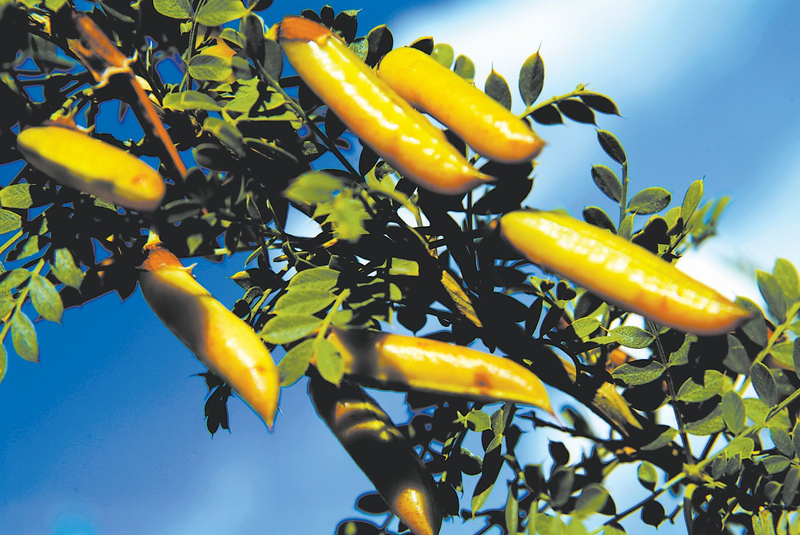
Lemonades are highly adaptive bushes with important ecological functions such as wind-proof sand and soil conservation. Here's a map of the lemon bean
Lemons are one of the most important plants for sand control. It has a resilient life and excellent ecological function, capable of growing up on arid and marginal lands and adapted to adverse environmental conditions. Its roots are well developed, deeply rooted in the ground, and it is able to secure sand and prevent soil erosion. At the same time, the thick leaves of the lemon can effectively reduce wind speed and the erosion of land by wind and sand。
In the sand-proofing process, lemons play a key role. It gradually expands vegetation cover through its own growth and reproduction, improves soil quality and creates conditions for the growth of other plants. They also provide habitat and food sources for biodiversity conservation and restoration。
In addition, the cultivation and conservation of lemons is relatively simple and less costly. The widespread cultivation of lemons can effectively curb the trend towards land salinization and improve the ecological environment。
There's a lot of wood and grass
The lemons have a variety of excellent characteristics and are good in maintaining soil and water against wind and sand. It withstands low temperatures of 39°c and cold heat of 55°c and can grow normally in fixed, semi-fixed and mobile sand. The lemons are strong and the roots are well developed. It was determined that a series of lemon strips could contain 23 cubic metres of solid soil, which could divert 34 per cent of the rain, reduce ground run-off by 78 per cent and reduce surface flushing by 66 per cent. In more than 70 years of sandy journeys in the new china, lemon strips are an important wind-proof sand-fixing species that fought side by side with the wheat-grass square as early as the 1950s, contributing to the blockage of the tenggli desert expansion and the protection of the bolange railway. Today, it has also been extensively deployed during the “ten north” offensive。
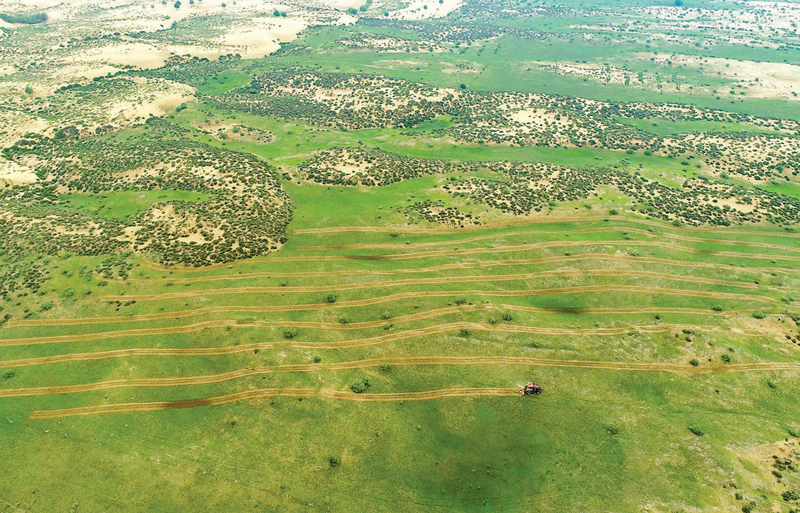
A sand machine planted a million acres of lemon strips in the ordos-otoke front flag area
In addition, they also have a feed value, including a variety of uses, such as grazing and storage forage. The nutritional value of its young leaves is high, containing 22. 9 per cent coarse protein, 4. 9 per cent coarse fat and 27. 8 per cent coarse fibre, as well as high levels of active substances such as lysine acid, acetone, polyphenol and soap, which contribute to livestock growth and meat improvement and are resistant to inflammation and oxidation. Seeds can be processed for feed. In the winter and stale seasons and in the event of disaster, the lemon strips are the main feed known as “life-saving grass”. Lemon bushes can be herded over four seasons, growing over five years of age, with a yield of 200 kg of dried grass per acre。
It is also used in fuelwood and biomass energy. Its branches contain a high fat content, which is flaming, whether dry or wet, with a heat value of up to 19799 kj/kg. There are also large biomass power plants, such as those based on lemon strips. For industrial purposes, the leash is rich in dry fibres and can be used to make “chaste” and seed oils can be used to make industrial lubricating oils, instead of soybean oils to make glycerine paints and instead of subsmelted oils to make water soluble electron paints。
A cure for poverty
The salt pond district is located in the dry zone of central ningsha, close to the southern edge of maususha, and its special “salin pool sheep” is a protected product for the national geographical indications. However, as a result of natural causes and overgrazing, 75 per cent of the county's arable land was sanded in the 1980s, and many farmers were forced to work。
In order to remedy the situation of sand-fed people, it is necessary to continue the remediation of the sand by choosing the lemons as the main forest species, thanks to such projects as the “tri-north” conservation projects, the reforestation of trees and the closure of the mountains. At the same time, sheep and sheep farming is prohibited. However, the amount of feed required to feed the sheep is high and, while encouraging the cultivation of fodder, it is still not sufficient to meet the demand。
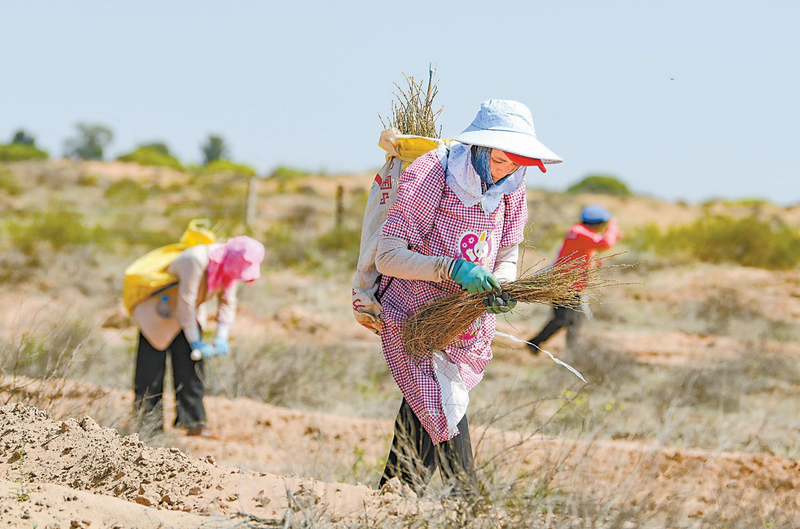
Sandmakers planted lemon sticks in the mauzon desert
From 2016 onwards, on the basis of the remarkable results achieved in sand management, people began to explore the use of “leaving by forest”, flattening the lemon forest and processing the flated lemons into feed, and promoting the development of the sheep-farming industry. In cooperation with scientific institutions and universities, research and development of equipment for the processing of lemon strips and fodder have resulted in a uniform mode of operation for flat, multi-point processing and centralized distribution of “enterprises + cooperatives + farmers”, producing about 5,000 tons of feed per year. The feed not only supplies the county, but also attracts the neighbouring gansu and inner mongolia cattle and sheep farmers to purchase it, presenting a situation of oversupply。
As a result of the recovery of the silhouette forest, the growth of sheep and sheep farming and the growth of farmers are mutually reinforcing, by 2018 the salt pond district became the first national poverty-free county in ningxia. More than 2 million acres of sanded land will be greened by 2020, more than 100 acres of sand dunes will be virtually eliminated, with 2. 65 million acres of maim forest, representing 85 per cent of the area of protected wood, 200,000 acres of silt and more than 400,000 tons of grass, and the number of beach sheep reserves will increase from 800,000 to more than 3. 5 million by 2020. In the same year, there was a drought in the salt pond district, other fodder shortages, and the seed feed was to some extent used as a “life-saving weed” for sheep. At present, the type of fermentation feed has evolved, with a well-colored, less ill, less tender meat and a 15 per cent reduction in rearing costs。
The main force of the green barrier
Hebei province, zhang jiaguchi, in kanbo county, on the edge of the mixin daqsa, has long faced severe drought and sand violations and a very harsh environment。
Since the 1980s, the local population has opted for large-scale cultivation of lemon bars as the main tree species for wind-proof sand. In the town of yang-yang, where wind and sand were particularly severe, villages had to be relocated three times, and the rate of activity in planting wood was extremely low. Following the successful conversion of the experiment to a trial lemon bar, the town began to expand the area of the stock, gradually creating a green barrier of 200 million acres. This has led to a significant improvement in the local ecological environment, as well as the flourishing of farming and animal husbandry throughout the town, which has also earned the reputation of the town of the sunyang river。
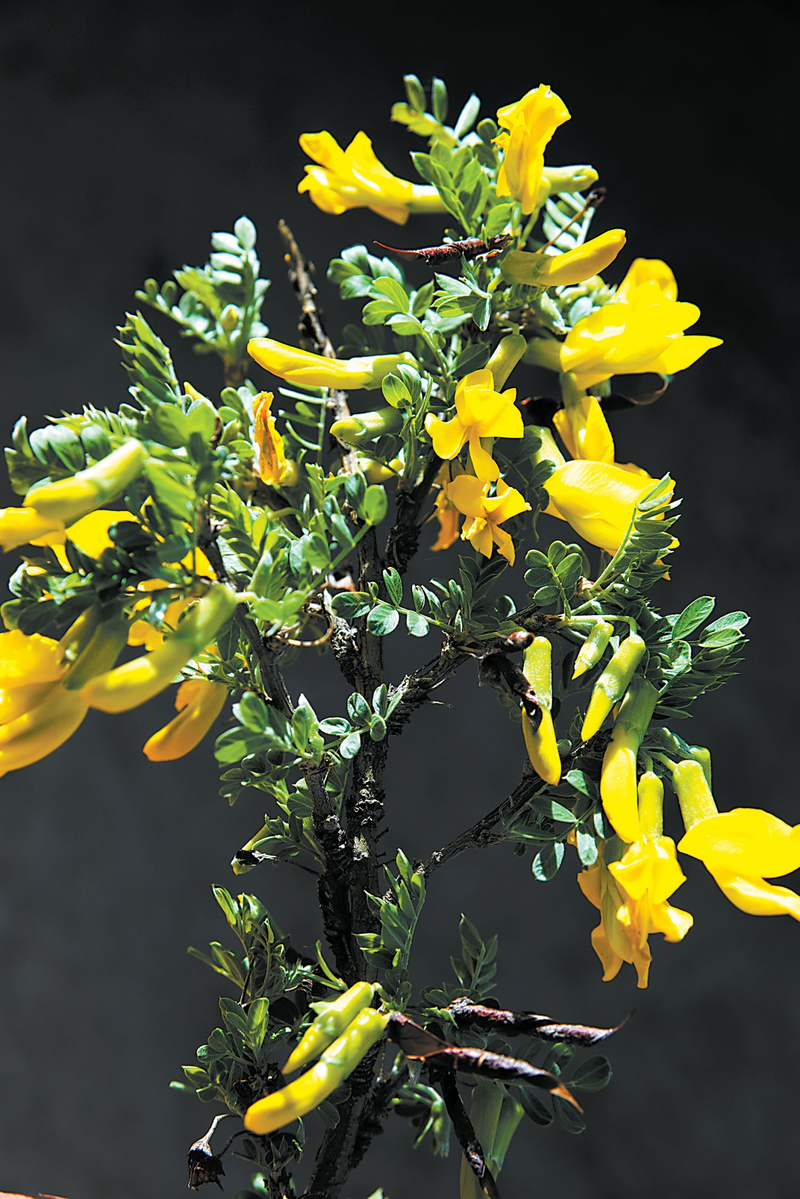
The lemons are blooming
Today, more than 700,000 acres of citrus forest are owned by the county, not only to make the cobbanore prairie more beautiful, but also to create a north-west tourist attraction in beijing and to play an important role in curbing the source of wind and sand in kyoto。
Take the eco-industry and raise the flag
As a livestock-raising region, the country has in recent years been active in planning the development of the lemon strip industry around the larger national agenda of “building a green ecological barrier in the north”。
Although the city of ordos has developed some of the flag counties in the lemon strip industry and has more than 10 million acres, the protection and construction of the grasslands remains critical, with the kubushi desert and the mausulusha area accounting for about half of the city's total area, and the sandy sandy vegetation community, which dominates, is a serious constraint on the development of the wool and fine wool industries. In response to this problem, the city of ordos has established an implementation programme for the development of the lemon barnade industry, which plans to plant more than 1 million acres per year between 2023 and 2025, with a target of 15. 6 million acres per year for the whole city. As a result of the programme, there has been an unprecedented increase in the enthusiasm of farmers and pastoralists to cultivate improved sandy pastures for lemon strips。
Zhang seung-bong, the lemon plantation
The otoke flag, which is the largest pastoralist in the city of ordos, is located north of maususa, and the issue of land desertification is a serious constraint on the quality of agricultural development. The flag organization's expert scholars have developed new technologies to rationalize the use of rainfall and soil moisture, to sow seedlings of lemon strips, carry-on seedlings and balance mechanical flatting and wind-proof sanding effects, while planting intelligent microdrops in seed belts to promote seedlings. This technology, which has a survival rate of 97 per cent, saves 50 per cent of the cost of planting or transferring seedlings, provides technical support for large-scale growing of lemon strips and is now successfully silviculture of 3,700 acres。
In the city of ulaanbaatar, the main pattern of ecological rehabilitation was the cultivation of grass, mainly of lemons. A green belt across the north is a large area of lemon bush that was planted in 11 counties throughout the city in the 1990s, thanks to a major ecological rehabilitation project in the country. Twelve million acres of lemons, representing 72. 6 per cent of bush land, are not only ecological barriers but also “building blocks” for livestock development. In order to accelerate the development of the lichen industry, it is planned to plant an additional 1 million acres of lemon paste over the five-year period from 2023 to 2027, using 2. 5 million acres flatly for the processing of large-scale and strong stock feed, and promoting high-quality animal husbandry throughout the city。
Inner mongolia, through the development of the lemon strip industry, ecological and industrial interactions are being pursued to lay a solid foundation for sustainable development in the region。



