


Basic knowledge of lilies
The lilies belong to the lilies and are a multi-year herbivorous plant. They are beautiful, colourful, and common in white, pink, yellow, and so on, and they have great value. The lilies are also seen as a symbol of grace and purity, often used for festival decorations and gifts。
Choose the appropriate species
Before growing lilies, the choice of suitable varieties is required. There are common lilies
Asian lilies: adaptive, early and diverse。
Orient lily: the flowers are large, the scent is rich and suitable for the plant。
Ot lily (eastern and inter-american hybrids): colorful and long-lived。
The selection of varieties suitable for their own living environment and farming conditions can significantly increase the chances of successful farming。
Soil selection
Soils are an important factor in plant growth. The lilies are suitable for growing in a lax, well-drained soil. Here are some of the recommended soil formulations
General florist: directly available, usually including peat, pearl rock, etc。
(b) homemade mixed soil: the corrosive soil, the garden and the sand are mixed at a ratio of 433, which preserves both water and good air-transmission。

Prior to planting, it is recommended that the soil be sterilized to avoid plant damage to bacteria and eggs。
Watering technique
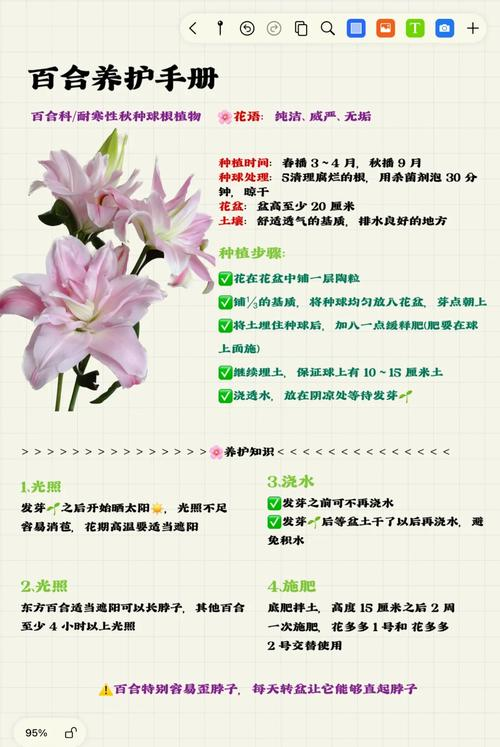
Lilies like wet environments, but they don't accumulate water. The principle of watering
Stay humid: during growth, water is poured 1-2 times a week and soil is kept humid but not overwet。
Pay attention to drainage: ensure drainage holes at the bottom of the flower basin to prevent root decay。
Observation of soil: the soil can be touched by finger, if the upper soil is dry, then watered。
During high summer temperatures, water is duly increased, but in order to avoid flooding at noon, it is best to choose morning or evening。
Fertilisation methods
Lilies are in high demand for nutrition, and proper fertilization can promote healthy growth and flowering. The principles of fertilizer are:
Use of compound fertilizers: in the long-lived period of life, application of composite fertilizers with balanced nitrogen, phosphorus and potassium content is applied once a month。
Flow fertilization: phosphorus fertilizer can be appropriately increased during bud formation to promote flower growth。
Note concentration: be diluted during fertilization and not directly use strong fat to avoid root burning。
During the fall and winter holidays, lilies enter hibernation, reduce fertilization and keep the soil wet。
Light conditions
Light is an important factor in the growth of lilies. Lilies need plenty of sunlight, but avoid a strong direct light. Here's some of the light
Suitable light: at least 4-6 hours of light per day is required, and it is recommended to select the bright but soft position of the light。
Avoiding flashing: especially at noon in the summer, strong sunlight may burn leaves and provide adequate shades。
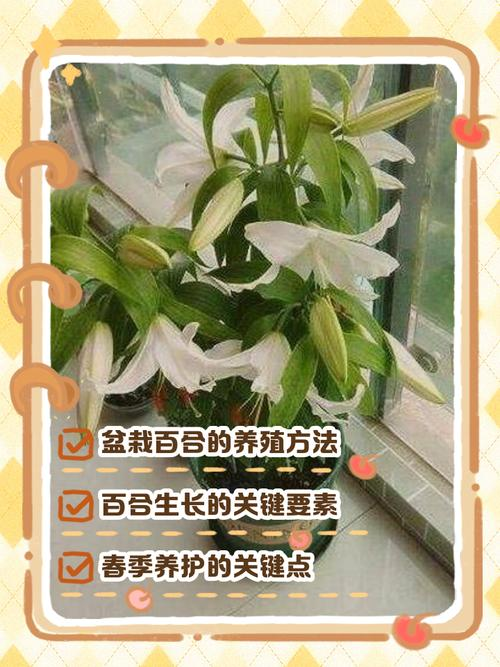
Indoor farming: if in-house farming, lilies can be placed by windows to ensure adequate light。
Temperature requirements
Long-term: keep it between 20°c and 25°c, promoting the growth of the leaves。
Flowering period: appropriate temperatures of 15°c to 20°c, with low temperatures contributing to longer flowering periods。
Rest: at autumn winter festival, temperatures can be reduced to 5°c to 10°c, giving them rest periods。
Pest control
In farming, pests and diseases are common problems, and timely prevention and treatment is essential. Common pests and pest control methods
Aphids: aphids can be sprayed with soap or special pesticides。
Frosty: maintain good ventilation, clean up leaves in a timely manner and spray with multibacterium。
Root causes of decomposition: mainly caused by the accumulation of water, which should immediately cease when discovered and improve drainage conditions。
Reproduction methods
The lilies reproduce mainly through the planting of bulbs and the separation of plants。
Bulbs
A strong, pest-free tuber is selected, with a distance of 10-15 centimetres at planting。
Put the tubers in the soil, covering 2-3 cm, and water is kept wet。
Division
In the spring or fall, ripe tubers are dug out and split into small pieces。
Each piece must have its roots and then replant。
While lilies require some skills, they can enjoy the beauty and fragrance of the lilies at home, provided they have the basic elements of farming. Regularly observing the growth of flowers and adjusting conservation measures in due course, it is believed that every florist can successfully grow healthy and beautiful lilies. I hope this strategy will help you to make your lilies even worse



