Twenty years ago, sunjiang abandoned traditional crops for the protection of lake sen and introduced blueberry test seeds. Today, the city of sumijiang has become the country's blueberry quality production area, with 152,000 acres of blueberries producing over $900 million a year, of which 142,000 acres have been upgraded to a “greenhouse shed + whole-matrix + water fertilizer integration” model, and blueberries are also eating “nutrition”
The integrated water fertilizer system is well drip-drinked, the worm monitor is alert in real time, small weather stations are able to regulate temperature and humidity, and all functions can be controlled via a mobile phone or a tablet computer..
In recent days, journalists have visited an eco-blueberry project base in sumijiang city, under the city of yunnan yu creek, and have been able to see the agricultural sheds of the digitalized facilities with a dense sensor。
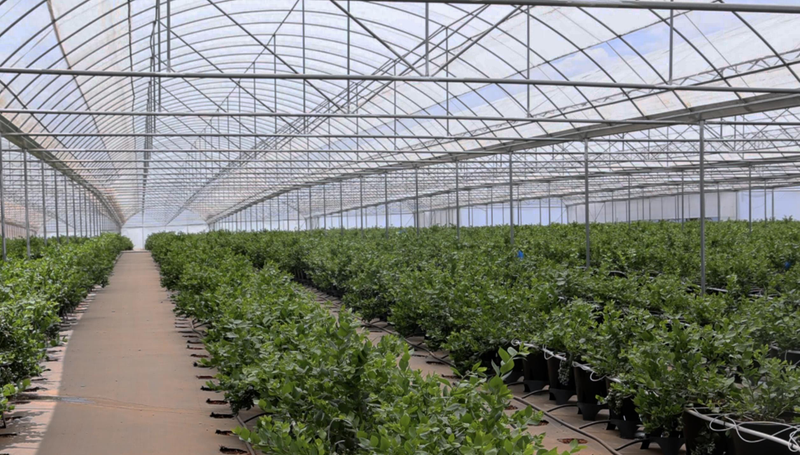
The figure is the agro-eco-blueberry project base at the digital facility in haikou town, sunjiang city, yunnan province. Xinhua news agency, reporter choi
“standard crop management has significantly increased acre production compared to traditional patterns. The production of blueberry acreage can be increased at least twice, to over 1. 8 tons and to over $90,000 per acre, in terms of 600 to 800 blueberries per acre.” the director-general of the base and managing director of the mid-chain datum agricultural technology company ltd。
Lee long, the mayor of haikou town in sucheng city, briefed the press that the enterprise, as a project partner, had invested in the construction of the blueberry facility shed and in providing all-round material and technical security, such as matrix, water fertilizer and tailings collection. Farmers, as industrial partners, are responsible only for day-to-day care of the plant and fresh fruit harvesting。
Land conversion base, farmers become workers. Through large enterprises, cooperatives form the “corporate + cooperative + farmer” form, employing more than 20,000 casual workers each year, such as seasonal blueberry pickers and supervisors, with an increase of $20,000 to $30,000 per person。
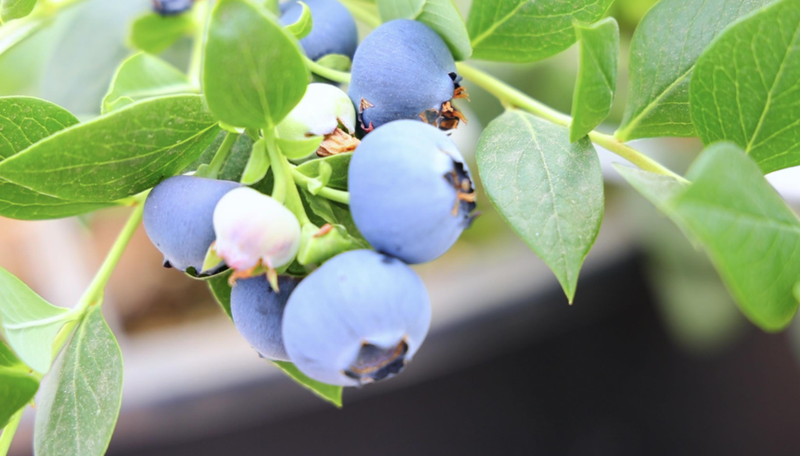
The figure is the blueberries planted at the agro-ecological blueberry project base at the digital facility in the town of haikou, sumijiang, yunnan province. Xinhua news agency, reporter choi
Journalists have found that agricultural products in the highland specialty agriculture model are either grown in highland lakes or in dry-hot valleys. By virtue of their geographical location and climatic conditions, early-maturized varieties of blueberries are on the wrong market at higher prices. In kunming city, when the market for new farmers was viewed, mr. Lee, a businessman, revealed that the price of blueberries had been revised downwards every spring. Blueberries, sold between $240 and $260 per kilogram during spring festivals, could be purchased by approximately $500 per kilogram in the april-may blueberry season。
Phil's interior, jade qingbrook. The city of yu creek in yunnan province, which has the reputation of a “highland water village”, also faces a long-standing agricultural development dilemma, not only because of the scarcity of arable land resources, but also because of the need to balance environmental protection, eco-red lines and crop red lines. This dilemma is particularly acute in the town of sumijiang, which is located in the county-level city of shunjiang. Of the 2005 million acres of arable land in the city of sumijiang, 1758,000 acres are in the area of the clearing of the lake, and agricultural industries such as vegetables and flowers, which are fat and fat, are included in the negative list。
In order to solve this dilemma, local industrialization has been used to cultivate modern agriculture, with a view to achieving sustained growth in highland-specific cash crops in the direction of green, high-end, high-quality agricultural products with high value added, high land output and high labour productivity。
Little blueberries are just a microcosm of the jade creek layout facility agriculture. With the growing integrity of the “6+n” agricultural industry system, which was developed in partnership with the tobacco, vegetable, flower, fruit, medicine, livestock and food, oil and other industries, the past was merely a “mountain” of cloud food and fruit, now enters the “national kitchen”, moving towards the “world table” and becoming “a life called yunnan”。