


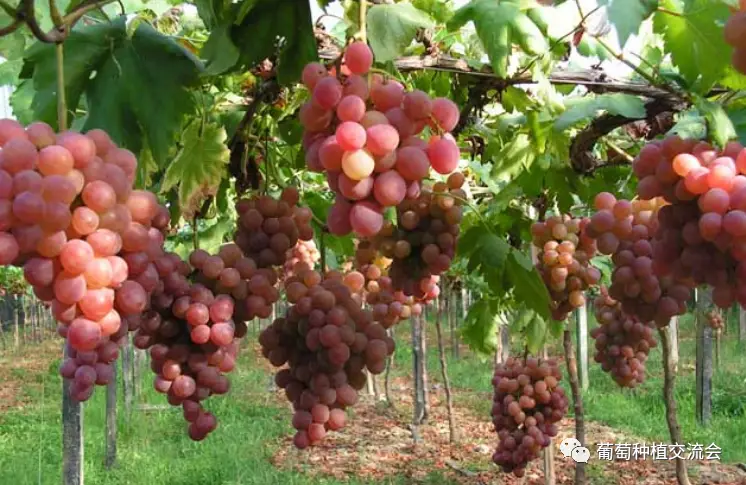
Red-ti grapes have a long history of cultivation in our country, and cultivation picks in our rain sheds in the north-western part of the country can last until the end of october-early november. The application of quality production techniques to red-tied grape cultivation is an important initiative to improve the production and quality of red-tied grapes。
I. Science site
It is chosen to grow red-tied grapes on high-lying slopes below 15°m, and to prohibit the cultivation of red-tied grapes on low-lying, adhesive, adhesive, salinous lands. As far as possible from sources of pollution, such as chemical plants, slaughterhouses, farms, etc. Gravity gardens must be accessible, close to water sources, with adequate light, and should be protected from high trees。
Ii. Standardized parks
When the vineyards are built, it is desirable for the vines to move east-west, with a distance of 3 m between them, and to climb northwards to ensure that sufficient light is absorbed and the fruit quality guaranteed. In the absence of a wind forest on the north side, the shelf should be made to climb south to avoid the impact of strong winds in the northwest. If the plot is long and narrow, it is desirable to climb eastward when it is used. Road planning is required to facilitate operations and transport. Water facilities should be properly planned to meet later demand for red-tied grape irrigation and drainage。
Before planting red-tied grapes, open ditches, 70 cm wide, 80 cm wide, separate topsoil, subsoil when digging ditches, refilling bottoms of ditches, and mid-story filling of decomposed farmers ' fats, calcium fats of 2,500 kg, calcium fats of 100 kg, compound fats of 20 kg, top-soil fillings and flatting。
Iii. Regulating planting operations
1. Selected seedlings
Before planting, you have to make a selection of trees, and the seedlings require a thicker than 0. 5 cm, and the roots are developed. Green seedlings require a three-leaf, developed and disease-free。
Time of planting
Controlling the timing of red-tied grape cultivation, combining local temperatures with rainfall, and setting it at the best of the soil, helps to ensure survival。
3. Crop density
In order to control red-tied grape density, with flexible control of variety properties and soil acreage and cultivation patterns, the range of plants is 1~1. 5 m at 3 m and 200 per 667 m2 at the time of planting, and the distance of 1. 5~2 m at the time of planting with the fence is 1. 5~3 m at the time of planting at 150~290 at the time of planting。
4. Plantation
When planted, water is used to soak the tree 24 h so that it can suck up the moisture, and the broken roots and the leaves are trimmed to accelerate the growth of the new roots. When officially planted, the cave is to be dug about 30 cm in diameter and about 15 cm in depth. The tree is vertically placed in a fixed den to allow the root system to stretch fully, and the layer is then refilled with the soil, with the first layer of the soil being filled with lightly, so that the root system and the soil are fully exposed and then refilled and laid down. The refilled soil and the ground are levelled and then filled with sufficient root water, which seeps all the water and then fills the pits with soil, which helps to keep the temperature wet, helps to accelerate the germinate and does not step in order to avoid the impact of the slabs on the growth of the roots。
Iv. Fertilizer management
1. Fertilizer management
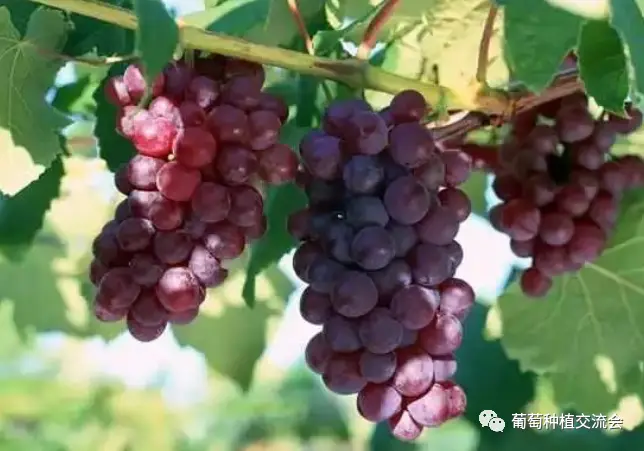
It is recommended that a targeted fertilization programme be developed using soil formulation fertilisation methods, combined with soil nutrient determinations, to increase the application of fertilized organic fertilizers and potassium phosphorus, to reduce the application of nitrogen fertilizers, to control the ratio of potassium nitrogen phosphorus and to ensure fertilization. Sufficient base fat is applied in the preceding period, which is followed by flexible pursuits combined with red-tied grapes. It is recommended that three to four times a year should be followed up, with first-time pursuits of fat before the bud, mainly by nitrogen, potassium and phosphorus, to accelerate the onset of the bud. The second fertilisation is carried out within one week of the flowering period, with the re-energizing of nitrogen and potassium fertilizer, and the spraying of 0. 3 per cent boron on the right side of the leaf, which promotes flowering and increases sitting rates. The fruits grow up to soybeans-like hours for the third time in pursuit of fertilisation, and the re-application of nitrogen and potassium fertilizers act as catalysts to increase the commodity rate of fruit. After harvest, the fruit can be followed up for the fourth time, mainly by nitrogen and potassium, in conjunction with the application of decomposition organic fertilizers, which will facilitate the restoration of tree positions。
Water management
Drainage and drainage management is combined with natural rainfall and growing capacity. When red grapes come out of the ground, they can be soaked with water, dominated by light water, which cannot be overflowed with water. One week after the flower is spent, it is possible to refill the plume, promote the expansion of the fruit and increase the sit-in rate. Before winter breaks, winters will have to be filled, the temperature will have to be raised, freezing will be mitigated and drought will be prevented in the coming spring. When water is poured, water should be managed, drip irrigation should be promoted, water utilization should be increased and the demand for water for plant growth should be met. It needs to be noted that if sustained rainfall leads to the accumulation of water in vineyards, it is necessary to clear ditches in a timely manner to prevent the accumulation of water from affecting the respiratory mortality of plant roots。
V. Integrative shearing management
Intracting is a priority in the management of red-tied fruit orchards, which helps to promote the quality, abundance and stability of red-tied grapes. A single-chronic drying technique is recommended, with a long, strong branch chosen as the main chicken, with a result branch grown at a distance of 20 centimetres, and a proper nutrient branch left, so that it and the results rotate only and increase production. In the first year, when a single dragon is trained, it must be recuted, 20 cm for the mother, 1 m for the main chicken, 3-5 for the next year, and one for each of the branches, which can be largely covered by the sheds in length until the third year, with 1. 5 m for the main chicken, 11 for the main chicken, 2 for each of the branches, 1-2 for the nutrient branch and the preparatory branch, and 1-2 for the tree。
Growth season management
One, the chicken
When the average daily temperature stabilizes at around 10°c, the cold-proof soil is removed, and the strains are then put on the shelf, which suggests the use of a concrete stake, using the model of a two-barrel fence, to achieve productive ends at the same time as the early results. The spread of the red-tied grape branch has increased its distribution on wooden poles, increasing its luminousness and facilitating plant and fruit management。
2. Sprouts
Red raisins should be plastered in two stages, with the first sprouts in the early stages, with a focus on the elimination of double and triple sprouts and stunted sprouts. After the first sprouts, 10 d, with a double sprout, with a focus on removing the growth-free sprouts, with two sprouts per parent branch, it is recommended that each chicken should have eight growth points and 10 new stubbles per 1 m2。
3 - discovery, snoopy
The implementation of the combing process has helped to create scientific branches, control the ratio of fruit branches and ensure the production of grapes. It is proposed that the trimination work be carried out three weeks after the spread of red-tied grapes, with a focus on the removal of the twigs and the small, small, small hairs, and keeping the twig ratio at 3:1. You're doing summer work. For nutritional purposes, heart breaks when 11 leaves grow. For the results, 10 leaves are left after the flower blooms, and the lower side is removed and the upper side is left with one leaf. For bystands, a leaf should be left behind to provide for light co-operation, while the onset of winter sprouts can be inhibited。
Vii. Strengthening the drug management
1. Reasonable load
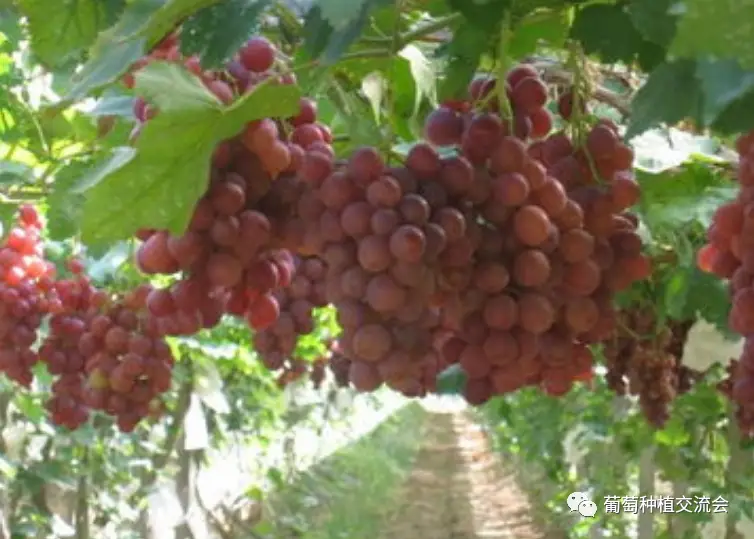
It is recommended that the production of each 667 m 2 vineyard be controlled at around 1,500 kg. 3 per 1 m 2 face with a single fruit mass of about 800 g, result and nutrition the ratio is kept at 1:3 and it is generally recommended to leave two or three ears, while the middle is recommended to leave one and the weak is forbidden to leave。
2. Episode
It is recommended that one third of the sharp point be cut before the flower blooms, and that the larger branches of the fruit base be combed out to improve its compactness. One to two weeks after the fruit blooms, the small grains of the difference are removed, and each ear suggests 60 grains to ensure the same size and even colour. Three weeks after the gravitation, 100 times the diluting fluid is used to improve the quality and overall production of the fruit. After the application of the swelling agent, 1,000 times more methyl tobuzin was sprayed, followed by a fruit pack to mitigate the threat of pests and pests to the ears and increase the value of the commodity。
Viii. Pest and pest control measures
1. Anthrax
Anthrax is a major disease of red-tied grapes, which weakens and decompositions the affected fruit, seriously affecting production and quality. Annual july-august is a high-precipitation period, with severe disease in poorly drained and over-heavy vineyards. In the fight against anthrax, plant management is carried out in a timely manner to create a good ventilation environment through the implementation of whole branches, chicken bindings and hearsings; increased phosphorus fattening and corroded organic fertilizer are used less in nitrogen fertilizer to develop a strong plant; and, in cases of severe disease, it is recommended that 70 per cent of the dissonant zinc humid powder be sprayed in turn, 800 times more liquids, 75 per cent of the bacterial humid powder be sprayed in 600 times, one dose per week and two to three continuous sprayings per week。
2. Frosty
The occurrence of frosting can cause greater harm to red-tied grapes, leaves, fresh sands, and young fruit, which can occur at any time, compared with the continued rainfall in the autumn, which is more prevalent when the dew is high and the temperature is low, and further increases the incidence of red-drink frosting if light is in the vineyards with poor ventilation, high humidity and the misuse of nitrogen fertilizer. In the case of rhesus frostic disease, preference is given to high-quality varieties that are resistant to disease; the management of orchards is strengthened, including: the provision of good lighting and ventilation by heart, whole branch, drainage, weeding, fertilization, etc.; if a strain is found, it should be removed and destroyed in a timely manner; and, in cases of serious disease, it is recommended that 25 per cent of the agent be sprayed alternately to 700 times more liquids, 58 per cent of the substance berths manganese humid powder to 500 times liquids, 75 per cent of the bacterial clean humid powder to 500 times liquids, one dose per week and two to three continuous sprayings per week。
3 aphids
Aphids are one of the most common pests in red-tired grape cultivation, with greater damage to leaves and straws. Aphids accumulate on leaves and straws to extract juice, resulting in a shrinking plant and anomalous buds. And aphids are an important vector of transmission of the virus, so it is important to take care of it. Among the measures taken to combat aphids are the following: use of the colouring characteristics of aphids to effectively trap aphids per 567 m2 of yellow cedars in vineyards; emphasis on the use of natural enemies, such as aphid flies, which are natural enemies of aphids and are released and protected in vineyards, which can have a good preventive effect; and emphasis on the use of plant-source agents, such as caviar ketone, which can effectively kill aphids; and, in the case of high-risk aphids, the recommended replacement application of 5 per cent of high-efficiency cyanide cream 1,500 times the soluble, 10 per cent of aphid hysteria humid powder 4,000 times the liquid, with 1 dose per week and 2-3 continuous spraying。
4. Green blindness
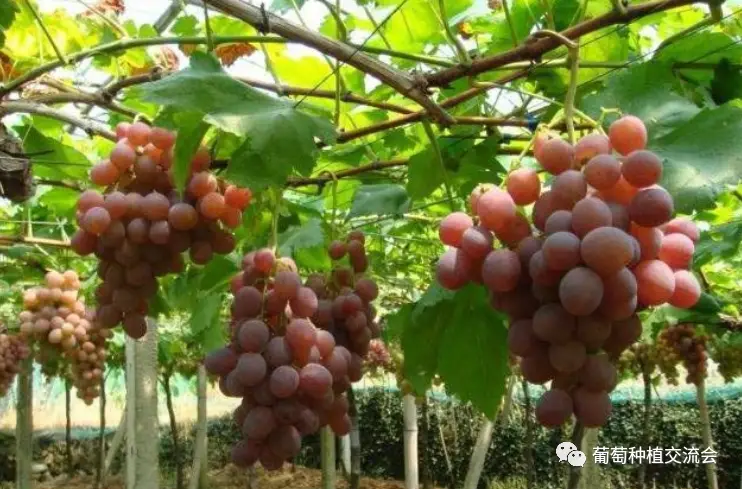
The green blind leaf is active mainly in the early morning, at night, and causes harm by stinging the juice of young grape organs, with large numbers of small black and brown dead spots and holes in the affected leaves. The value of commodities declined significantly after the fruits were affected. The luminous characteristic of red-teether green-blind vermin can be used to trap green-blind vermin effectively when insecticidal lamps or black lights are placed in vineyards; the management of vineyards is strengthened to clean up the burning of grass in gardens in a timely manner to prevent the production of eggs in green blind cucumbers; the advantage of natural predators, such as spiders and grasshoppers, is used regularly to release natural predators and to control the number of green-blind vermin pests in vineyards; and, in cases where the number of pests is more dangerous, it is recommended that 25 per cent of the pyrethrin be sprayed 1,500 times the fluid, 20 per cent of the rhesium beamamine 2,000 times the liquid, 5 per cent of the pelican cream 2,000 times the liquid, with one-one-one-one-one-one-one-one-sea-one-one-one-one-one-one-one-one-one-one-one-one-one-one-one-one-one-one-one-one-one-one-one。



