


When information explodes, we attract a great deal of knowledge every day, and it is difficult for us to improve our effectiveness. What we need to do is to manage knowledge and use it efficiently through methodological know-how to promote ourselves。

01 what is knowledge management
Knowledge management is defined in encyclopaedia as the construction of a quantitative and qualitative knowledge system in an organization that allows information and knowledge to flow back into the knowledge system through processes of acquisition, creation, sharing, integration, recording, access, renewal and innovation, and to create a cycle of organizational wisdom through which the cumulative knowledge of individuals and organizations can be built continuously。
In short, km is a management and planning activity for knowledge, knowledge creation processes and the application of knowledge。
02 why knowledge management
The success of the information age is increasingly dependent on the quality of the knowledge that is available, whether it is an enterprise or an individual, and in an era in which all people are knowledge workers, knowledge management will be the key to determining competitiveness and developing space。
Knowledge is critical because of its reusable value, but in daily life, much of it is hidden and fragmented. The more we learn, the more we forget, the more we end up with a lot of unnecessary duplication。
The idea of using "mr. L says" is that the brain is used to think, not to remember. Making more hidden knowledge visible, reducing the consumption of “residency” of the brain and avoiding unnecessary redundancies that ultimately lead to insufficient attention in key areas。
Knowledge management is like creating an external knowledge pool that enables the flow of information to which we are exposed on a daily basis, which is filtered and integrated into a stock of knowledge, reduces the burden on the brain and creates “economies of scale” in the temporal dimensions of knowledge。
03 knowledge management objectives
Knowledge management has three main purposes
Discrepancies knowledge is found and mobilized in a timely manner when the intangibility of hidden knowledge is required
Visible knowledge is knowledge expressed in words, symbols, graphics, etc.; hidden knowledge is knowledge that is not expressed in words, symbols, graphics, etc., and is present in the human brain. “not as good as bad as a pen” to record the thoughts in mind, i. E., to facilitate system combo validation and reuse。
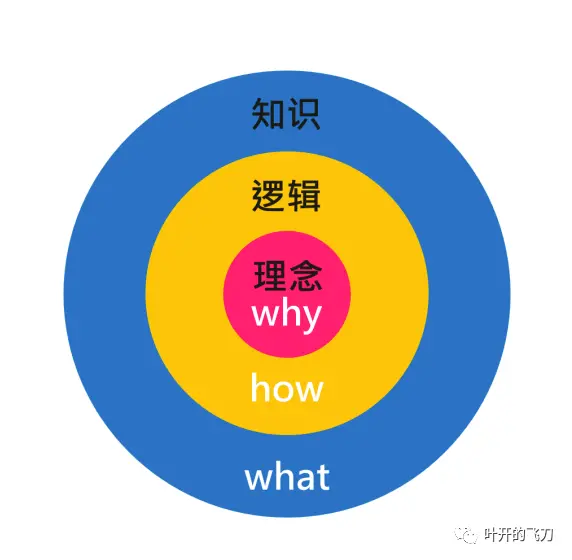
The ultimate goal of km, on the other hand, is to build a coherent and logical knowledge system. In general, a complete knowledge system contains at least three levels of knowledge:
The cognitive level is the inner core of one's mind and its basic knowledge of the world, which includes, inter alia, the study of philosophy, history, economics, psychology, literature and other forms of sciences such as humanities and social sciences, mathematics, systemic theory, etc。
More at the thinking level is management decision-making, an operating system of people in their working lives, and for internet people, it includes learning in three dimensions: organizational management, decision-making science, and marketing。
The application level is the rule of conduct or methodological theory of the daily actions of a person, which, for internet people, includes learning in three dimensions: product design, business growth, and brand marketing。
If a person's knowledge system is seen as a building, knowledge at the cognitive level is the foundation of the building, which is difficult to detect by outsiders, but it is critical. If the foundations were unstable, the environment would change slightly, and the entire building would float. The establishment of cognitive knowledge systems is therefore also key to our ability to build self-acceptance and self-identification。
The intellectual level of knowledge resembles the framework of the building, which determines its appearance and daily stability。
The knowledge of the application layer is like a room in one room, where different renovations are made, as required, “rent” on an irregular basis。
04 how does knowledge management work
(1) knowledge management is premised on a smooth-on tool
People's habits can reduce the cost of everyday knowledge management and foster knowledge management habits by relying on the least resistance path。
As a result, the knowledge management tools we need do not have to be too high or functional, and the use of low-cost and timely responses is the most critical requirement。
(2) bottom-up step-by-step improvement of knowledge systems
It is difficult for us to build a complete knowledge system of the framework from the outset. From the bottom up, from a certain point of view, the accumulation of a knowledge module continues to give thought and understanding in our minds, through words, pictures and symbols, step by step to broaden the boundaries of knowledge, refine the knowledge framework and build a reusable knowledge system。
(3) knowledge management practice process
A complete knowledge management process is broadly divided into seven steps, from the initial learning understanding to the integration of outreach to the final application and iterativeization。
A. Planning directions:
Clarify the direction and focus of learning in the near future。
Screening channels and sources of knowledge content include mainly books, mentors and internet channels. High-quality channels can make knowledge learning work in half。
B. Access: access to relevant information
“we receive 174 newspapers per day. And today's newspaper has more information than an ordinary englishman in the 17th century's life experience.”
In this age of information explosion, indiscriminate reading can easily lead to intellectual anxiety。
The first step in learning to acquire knowledge is to scan: quickly judge the categories and themes of information content through key information, such as title names, authors, and then look at the content to define the framework, find the core content and determine whether it is worth further learning。
C. Understanding
If it is identified as a valuable knowledge content, it goes into the reading stage and analyses the author's narrative。
A broad understanding of the content of the objectives will also be followed by an extended thematic reading: based on the subject of the knowledge gained from the understanding, the reference will be further expanded to avoid cognitive biases caused by the words of some authors。
D. Integration
Based on its own understanding of the knowledge that has been learned, the knowledge architecture is restructured to explore the nature of the knowledge behind it, integrate it into text and archive it according to type。
E. Outreach
The integrated knowledge point/knowledge module will be linked to the existing knowledge point/knowledge module and eventually become a more complete knowledge framework
F. Applications
Practically apply and share knowledge with others, improve learning efficiency and validate learning outcomes
G. Intersection: looking for errors, continuous optimization, iterative framework
Identify errors or redundancies in knowledge systems through practical application or sharing of exchanges, remove modifications and continuously optimize iterative processes。
At the end
“rome is not built in one day, and knowledge management is not a shortcut to growth, but learning is used to build its competitive advantage over time and over time, believing that we can also see our own exponential growth curve。
References: mr. 100 degrees encyclopedia, knowledge management note l, said that " four levels of learning " was empty-handed, " how can an effective knowledge system be established without being a porter of knowledge? " charles van dolen/charles van dolen, how to read one book, scott jan, how to learn effectively



