Compared to the field-planted celery, solar-screed celery is a relatively closed environment, so disease control is particularly important. Among the many diseases that affect the production of celery in the shed and reduce its quality, celery is both a multiple disease and an indistinguishable and poorly controlled disease. When celery heart attack occurs, the growers are vulnerable to miscalculation, resulting in dry medicine and no cure. The disease has been one of the most painful for many growers. In addition, early scabging of celery is a serious problem for many growers. During years of practical cultivation, the writer explored and summarized the "celium heart" and effective methods of controlling early extraction, known as the "direct control" method. It is shared here, and it is hoped that the celery growers will benefit from it。
I. Celery protection
The main symptoms of cardiac fever in celery are the greenness of the leaves outside the celery, which are dry and yellow. The main causes of the disease are the following:
1. Cardiosis of celery, which is caused by a lack of calcium, or by excessive temperature and lack of moisture due to high temperatures, drought and poor fertilization, hinders the absorption of calcium by roots and causes heart burning; it may also be due to excessive nitrogen, potassium and magnesium in the soil, which hinders the absorption of calcium by plants due to stress。
2. Scelican morbidity. The disease is a bacterial disease, which occurs mainly on the base of the leaf handle or on the penis. Symptoms are expressed in dimples of water impregnated or irregular form, followed by wet decay, blackened colours and stench。
Three, lack of boron heart. Low effective boron content in soil or a lack of proper absorption of boron by plants due to resistance。
4. Bacillus nuclear disease. The bacterial nuclei, which is mainly contaminated from the base of the leaf handle and the root stem near the ground from celery, results in water immersion and decay in the affected area, which, in the event of high humidity, can be seen in white bacterial silk, which then forms the black fungus core。
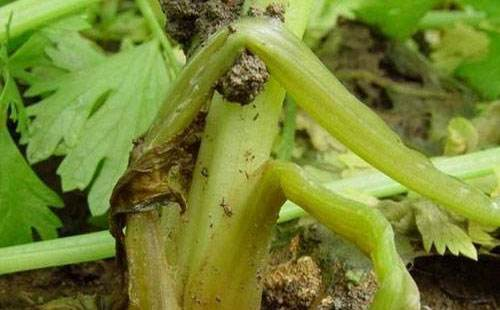
Prevention: 1. Cultivation of seedlings. The birth of a child must take place in time, so as to promote the growth of the leaves and their roots. (b) rational watering to prevent the wetness of the gills and the formation of seedlings. 2. Balanced fertilization. Take care of potassium nitrogen phosphorus co-operation and re-enact organic fertilisation with appropriate increase in the medium and trace elements. Controlling ambient temperatures and soil moisture to prevent physiological calcium deficiency in celery. Prevention can also be achieved by spraying 0. 3 per cent of calcium nitrate solution mixed with 0. 2 per cent of boron sand solution. At the same time, the use of nitrogen fertilizers, especially ammonium nitrogen, should be reduced and the use of potassium fertilizer should be increased, as appropriate, to facilitate the absorption of calcium. 3. Drug control. Soft scabies: 72 per cent of the treatment can be carried out with microbicides such as cystacin or carbamin. (b) bacillus nuclei disease: control can be achieved by spraying agents such as cracking, e. G., amphibian。
Ii. Protection against smoking
Celery grows pre-harvest, affecting production and reducing quality, known as pre-spilling. The pre-screeching occurs mainly in winter and early spring celery, and the celery that was planted after the festival was rarely smoked that year. The reasons for the pre-spilling of celery are as follows:
The first is that celery seedlings produce two to four real leaves, i. E. The conditions for sprouts to be divided, which, through the springing phase, is prone to stinging. Second is a seedling with springing conditions, growing for more than 10 days at temperatures below 10°c, which may pass through the springing phase. The lower the temperature through the springing phase, the shorter the time required to complete the springing phase, the easier it will be to draw up the first. The longer you stay at low temperatures, the higher the extraction rate. And the third is that the seedlings that pass through the springing phase, and in the later stages of growth, the late spring and early summer, have the conditions of high temperatures and long sunlight, so that they can be pumped quickly. And the stronger the sun and the higher the temperature, the easier it is to smoke。
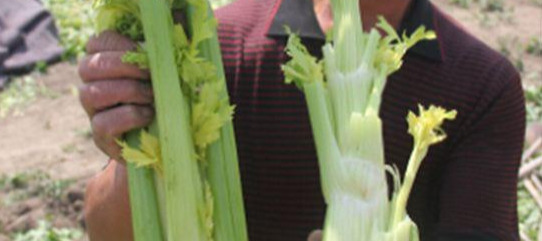
Prevention of pre-spilling of celery: 1. High-quality varieties with high winterity, low-temperature tolerance, high nutritional growth, rapid growth and late smoking are selected to prevent the pre-emission of celery. 2. Prevention of hypothermia. In winter and spring celery, whether in sunflowers or small arch sheds, measures should be taken to raise the temperature of the nursery. In order to sow in due course, be careful to keep warm and avoid temperatures below 10 °c, temperatures should be above 10 °c at night, and temperatures should be 15 - 20 °c at daytime, so as to prevent the stinging of seedlings through the spring phase. 3. Strengthening management. Before planting, bottom fertilizer should be applied, seedlings should be established and not crouched, and management of fertilizers should be strengthened and pests and pests should be addressed in a timely manner. Promotes nutritional growth, inhibits reproductive growth and slows pre-smoking. 4. Spraying cactin. 20-50 mg accumulin (92o) per 7-10 days and 2-3 times per day during the boom period can boost nutritional growth and slow pre-smoking. Early harvest at the appropriate time. The celery is usually 60 to 70 centimetres tall, and the leaves are harvested from 6 to 8. The harvest before the bouquet grows, mitigates the effects of the pre-spill, and does not occur when the plant ages。
These are the “two-proof control method” for the cultivation of celery, which has been summed up over the years. Questions can be communicated in private. I will share an analysis of the benefits of greenhouse shed cultivation in the next period。