


Today, in beijing, where climate conditions are very different, we can eat fresh dutch cucumbers, and fresh summer fruit and vegetables in cold winters -- all of which are dependent on the development of greenhouse technology。
The greenhouse, also known as the heating room, refers to rooms with cold, warmer and perceiving facilities for winter breeding of warm plants. In seasons that are unsuitable for plant growth, fertility periods and increased yields can be provided, most of which are used in cold seasons for planting or breeding plants such as hot vegetables, flowers, trees, etc。
In many people's perceptions, greenhouses are the product of near-modern agricultural technology, but as early as the time of sihan, the ancestors had acquired the skills to build simple facilities and to plant various anti-season vegetables with fire。
However, although our country was the first country to grow greenhouses, until the 1960s china's greenhouses industry remained small, low and slow to develop; in the 1970s and 1980s, plastic sheds and solar greenhouses were created; in the 1990s, the level of agricultural technology in chinese facilities was significantly improved, and greenhouse technology was gradually becoming larger, more intensive and more scientific
Today, let us summarize some of the more popular greenhouses in the current market and give some information to friends who do not know how to choose the greenhouses and build them。
1. Solar greenhouse
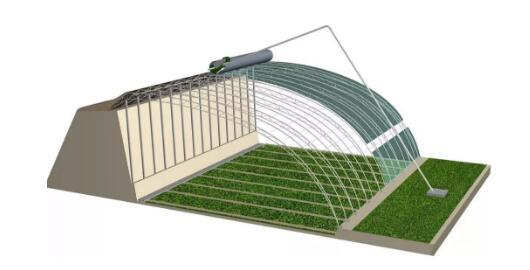
The solar greenhouse, also known as the winter vegetable shed, is a unique type of greenhouse in the northern part of the country, and most of the anti-season vegetables that the population has been eating for almost 20 years have been produced by the solar greenhouse。
The solar greenhouse, which is typically an east-west route, consists mainly of three parts of the wall, the rear and the front, referred to as the “three elements” of the solar greenhouse, which does not need to heat the room, uses the back wall to absorb solar energy during the day and releases heat at night to keep the indoor temperature at a certain level to meet the growth needs of vegetable crops and achieve “winter production”。
However, due to the light weight of the plastic greenhouses themselves and their weak resistance to wind and snow loads, the overall stability of the structure needs to be taken into account and a well-resilient spatial system developed。
There is also a branch of the solar greenhouse, which also makes a smaller greenhouse on the shade for the cultivation of anti-vaginal crops such as bacteria。
Single archipelago
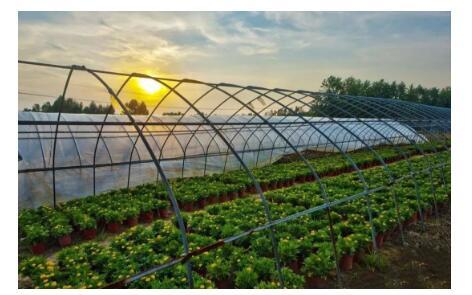
The single archer, also known as the arch plastic shed and the spring and autumn shed, is a greenhouse that is used as a spring and autumn shed in the northern part of the country. It is used as a spring and autumn shed in the southern part of the country to protect against cold and frost, and is currently divided into three main types of concrete-stretched arch, steel-barrel and new hot arch sheds。
Single arch sheds are the least expensive and the easiest to build in agricultural sheds, but the disadvantages are that they are short-walled in terms of snow resistance, temperature protection, mechanization, automation and size and are suitable for use in labour-rich areas。
Three, double-side greenhouse
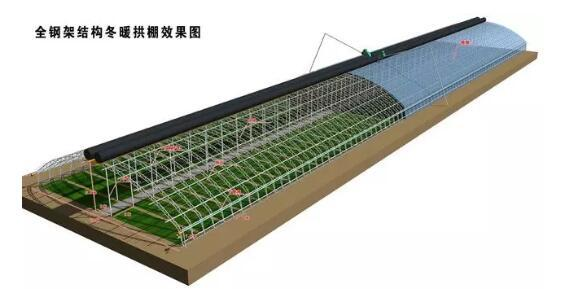
The two-sided slope heating shed is an enhanced version of a single arch, with a north-south route where the top can be coated with cotton, with a good temperature protection, which has the advantage of having a high land use rate and having modern, automated agricultural equipment. However, in the north, where humidity is below 10°c, heating is still required to produce more winterly。
As a major contributor to our early facility farming industry, the “sun-hot room” “two-sided greenhouse” has made a historic contribution to the solution of the winter-season supply of vegetables, which has long plagued the northern part of the country, and to increasing farmers' incomes。
With the launching of national research projects in recent years, and based on learning from and absorbing advanced technological achievements abroad, china's facilities have developed more rapidly, with the emergence of a series of examples of greenhouses and glass greenhouses。
A greenhouse
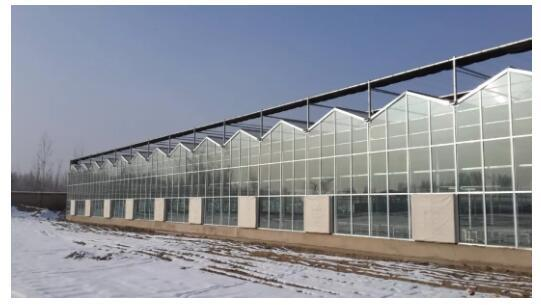
The greenhouses are an upgrade of the greenhouse, which is in fact a “super-heathouse”, that is, a modern greenhouse form that, through a rational design, connects the former independent greenhouses to a much larger area of use than the traditional greenhouses, suitable for large-scale, fully automated agricultural production。
Depending on their coverage, the greenhouses can be divided into thin film, sunboard and glass。
The thin membrane greenhouse
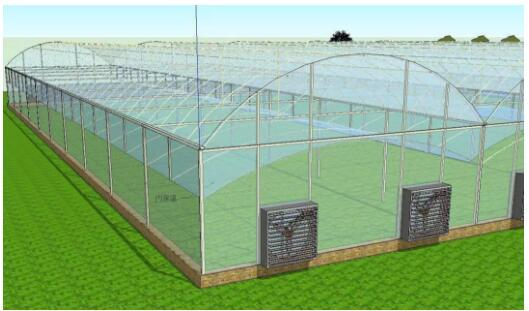
The membrane complex refers primarily to the greenhouses at the top and around which high temperature-free plastic sheeting is used as a covering material and is a simple form of temperature-saving energy in the greenhouse。
A series of membrane greenhouses have significant energy savings, with a general energy saving rate of around 40 per cent and a maximum of 57 per cent, with a simple structure and low cost。
However, in terms of operational effects, the light rate of the thin membrane greenhouses is lower than that of the glass greenhouses, and because of their high sealability, they are also prone to high indoor wetness。
Sunboards and greenhouses
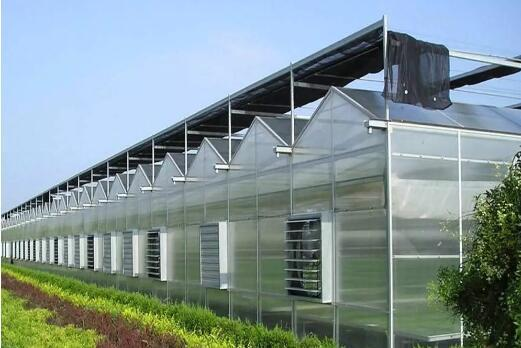
The solar plate greenhouse, also known as the pc plate greenhouse, has a pattern of skin skeletons similar to that of the venro glass greenhouse, which differs from the cover material: the top and surrounding cover material is a national standard 8 mm sunboard with drift-drop-down panels。
The sunboard has the reputation of a “coring steel” and has a unique advantage in terms of resilience to shocks and temperature protection. It is not enough for the united states that the sunboard has a useful life of about 10 years, a life of less than a glass greenhouse, and that the current domestic market is mixed, with many producers stealing less than they can afford to save, leaving the sunboard without any effect on ultraviolet and mist-proofing drops, with the result that it becomes yellow or cracking two to five years after installation. Therefore, extra care should be taken in the selection of materials。
A glass-coated greenhouse
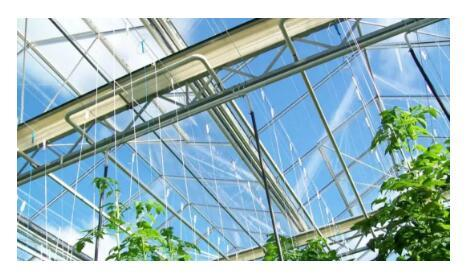
Energy conservation and the ease of ventilation and moisture in glass greenhouses are the reasons for their popularity, and with technological advances in production, the construction of greenhouses has entered a truly golden period。
A chain of glass greenhouses is a contours of surface-covered materials consisting of glass, typically with a single layer of steeled glass, surrounded by two layers of mid-empty glass, with large spans, large openings, high space, aesthetics, long-lived life, high photometry, capable of meeting the demand for space, etc., for plant-based production and vertical stereoculture, which is one of the highest in the greenhouses。
The overall construction of the greenhouse glass system is very good. It is generally used as plant seedlings, high-end flower cultivation, displays of specialty fruit cultivation, education in intellectual farming, eco-cafés, flower supermarkets, etc., and can also be used as eco-parks, eco-cafés, etc。
At present, the solar greenhouse is the largest greenhouse in the country, favoured by small farmers in the north for its low cost。
In the long run, however, owing to the size of the area, the disadvantages of mechanization and plant management, the combination of sun-board greenhouses and glass greenhouses is increasingly being replaced, and experience in the use and use of even greenhouse-side products and production has matured, so that growers and others can design individual areas according to their needs。
The choice and construction of the greenhouse should also take into account the following:
1. Photogrammetry
Sunshine is an indispensable energy source for light cooperation in green plants, as well as a major heat source for solar greenhouses, and perceiving is therefore one of the most basic indicators for evaluating greenhouses' permeability。
The greenhouse radiance rate is influenced by the photo-perceived properties of the covered material and the shading of the greenhouse skeleton, and the greenhouse radiance rate is changing over time as the solar radiation angle varies from season to season. Therefore, the solar greenhouses are designed to address first and foremost the photogenic problems of the greenhouses and to maximize the exposure of the sunlight to the interior of the greenhouses。
In terms of perceivability, energy-efficient solar greenhouses generally have a radiance rate of 60 ~ 80 %, top 8 mm sunboard greenhouses of about 70 %, top 5 mm monolithic glass greenhouses of over 80 %, superwhite glass or reflect glass of over 90 %!
In the northern part of the country, where light is insufficient in winter and spring, artificial lighting systems can be added to provide adequate light for plant growth。
2. Heat protection
For modern greenhouses, heating energy is a major obstacle to the operation of greenhouses in the winter, and improving the greenhouses' temperature retention and reducing energy consumption is the most immediate means of increasing the productivity of greenhouses。
In terms of temperature retention, the heat transfer factor for the 8mm sunboard at the top is 3. 3 w/(m2 k) and the heat transfer factor for the 5mm single layer glass greenhouse at the top is 6. 4 w/(m2 k)。
While the heat transfer factor for monolithic glass is larger, it can be offset by the design of the insulation layer。
3. Durability
The building of greenhouses must take into account its durability。
The sustainability of greenhouses is influenced by the aging properties of greenhouse materials and the carrying capacity of the main greenhouse structure. The durability of permeable material, in addition to its own strength, is reflected in the continuous decline of material permeability over time, which is a determining factor in the life of permeable material. In general, solar light perceiving in the 8mm sunboard greenhouse at the top has been declining with the increase in the number of years, and has declined significantly since the cedaring, and must be replaced and the input increased. Top 5mm single-story glass greenhouse radiance is stable, non-decomposition for years, long life!
As greenhouses operate over a long period of time in high temperature and humidity, surface preservation of components becomes one of the major factors affecting the working life of greenhouses. Steel-structure greenhouses, which generally use thin-walled steel in their main structure, are less resistant to corrosiveness and are treated with thermal impregnation of zinc surfaces, with a thickness of 150 ~ 200 μm or more, guaranteeing a useful life of 15 years. For wood structures or steel welding chambers, surface preservation should be guaranteed once a year。
4. Wisdom networking
As computer and network technologies are developed and applied, smart greenhouses are the future trend of greenhouse technology development。
Smart greenhouses, also known as automated greenhouses, typically consist of three main components of a signal collection system, a central computer and a control system that directly monitors and regulates a wide range of factors, such as indoor temperature, light, water, fattening and gas, bringing the greenhouse environment closer to the desired values to meet the growth and development needs of greenhouse crops, achieving high-yield, steady and fine fruit and flowers production throughout the year, with cost-effectiveness, and is a successful example of modern agricultural services where high-tech results are produced on a scale。
Young people, middle-aged people, entrepreneurs, villages welcome you back to the village, parents wait for you to come home, and “back home” help you. There's hope in the country
I would like to draw your attention to the latest knowledge of the dry goods of wei-shin weimeicountry (a rural country only). Focusing on research and development services such as tri-farmers, rural construction, rural tourism, leisure agriculture, field complexes and special towns
From development to operation, selection of projects, capture of policies, market and targeting of operations; projects are comfy here, experts are comfy here, programmes are comfy here。



