What is the future of knowledge and economic upheaval
— expert scholars on the knowledge economy
On the eve of new year's day 2020, many people chose to listen to the new year's speeches, both on the ground and in the audio of words, and to look forward to new thinking, showing their thirst for knowledge and innovation。
Knowledge payments, artificial intelligence, the digital industry, the creative economy... The age of the knowledge economy, driven primarily by the elements of knowledge, advances in science and technology, innovation and innovation, has come to us in more social transformations. Knowledge and creativity are growing in importance in economic development and are becoming a leading factor. The emergence of the knowledge economy is a silent revolution that has a profound impact on our methods of production and thinking。
What are the most valuable elements of the age of the knowledge economy? What are the impacts of the knowledge economy on our productive lives? Let us come closer to a number of expert scholars and listen to their understanding of these hot spots。
1. Knowledge payments: a wave of well blow-out growth
"it's a great idea to watch the new year's speech and see the world in another way." the chief operator of an internet human resources enterprise lamented the fact that, after the dawn of the 2020 new year's bell, he had spent three consecutive years watching ro jin woo's “friends of time”, the founder of the rolo thinking programme。
One day before the "knowledge spring" of biraud jin woo, the financial writer wu xiaobo gave a multi-year speech on the theme "prophet 2020". Xinhua’s senior journalist, liu lina, flew from beijing to xiamen to celebrate this knowledge. “at the moment, `knowledge payments' became a fashion that affected the way many people live.” liu lina told reporters。
As an intellectual, liu lina believes that the “knowledge-paying” becomes a climate that benefits from a number of reasons.” it coincides with a change in the way knowledge is transmitted by new media technologies, with the desire of chinese to update knowledge after decades of reform and opening up, and with the rising tide of emerging middle-income groups。
Fee-based reading, pay-off payouts, live commendation, and pay-for-reproduction indicate that fast-growing knowledge is gradually moving towards more dollar product patterns in content and models, and that the industrial chain is becoming more sophisticated。
However, while the knowledge-paying industry is growing rapidly, it is not always a flower. “this may require a combination of rational competition and moderate regulation in order to match its social responsibility in growing up.” liu lina says。
“as knowledge-paying users consume rationally, content is at the core of a large number of knowledge-paying products, and vertically deep content will become a new trend, in addition to general knowledge of debris time.” according to zhang yi, founder and ceo of the atc, knowledge-paying landscape is widening, moving from finance, business, health, reading, skills, etc., to more sophisticated and diverse areas, where specialization is more demanding. Sustained production of quality content that makes users feel “value for money” is a key factor in the development of the knowledge-paying industry。
2. Collaborative innovation: a universal concept
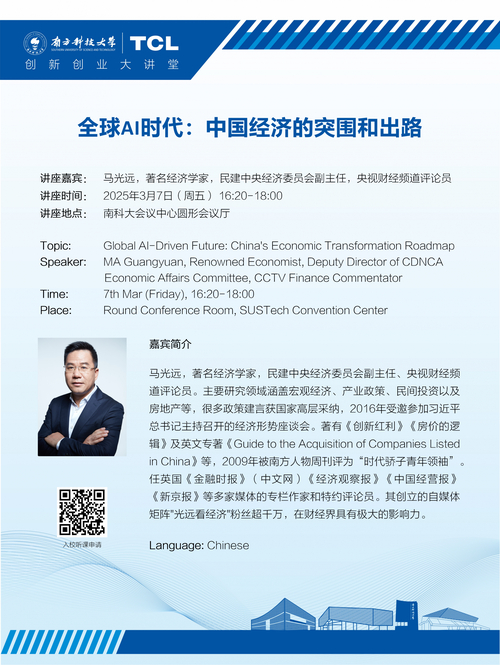
As an expert in the digital economy, the executive director of the centre for the study of the digital economy of the central university of finance and economics, chen zheng, paid more attention to the changes in production patterns brought about by the age of the knowledge economy。
At present, our economy has shifted from high to medium-speed growth, and the engine of economic development has shifted from factor-driven, investment-driven to innovation-driven. In this broader context, knowledge becomes a central factor resource for economic development, while knowledge innovation in itself can effectively contribute to the optimal allocation of resources for other elements and to the overall productivity of society as a whole。
“the concept of the knowledge economy was first proposed by the organization for economic cooperation and development in 1996. Unlike the traditional economic model, which is dominated by the exploitation and use of scarce natural resources, the efficiency and effectiveness of social output increasingly depend on the effective production, dissemination, innovation and application of knowledge, which constitutes an important source of social wealth and national competitiveness.”。
It was pointed out that a new productivity system built with science and technology at its core would inevitably lead to a reshaping of productive relationships. Driven by entrepreneurship innovation and supported by venture capital investment, and driven by cross-border growth towards capital markets, many knowledge-based, information-based, platform-based enterprises emerge, and social wealth distribution systems increasingly favour groups with expertise and technology。
Under the traditional economic model, social and business competition are often a zero-sum game of “you have to lose” because of the development ceiling brought about by scarce resources. And collaboration and synergy are all the more important in the knowledge economy, where knowledge and information are shared to generate social wealth. “this requires us to adapt our mindsets in a way that expands our own patterns, sets goals and considers issues based on dynamic development and collaborative win-winness, while maintaining lifelong learning capabilities in the face of evolving knowledge and technology.”。
Intellectual property rights: an indispensable underpinning
In the age of agricultural civilization, development depended on land; in the age of industrial civilization, development depended on energy and raw materials; and in the age of the knowledge economy, development depended on intellectual achievements and their intellectual property rights。
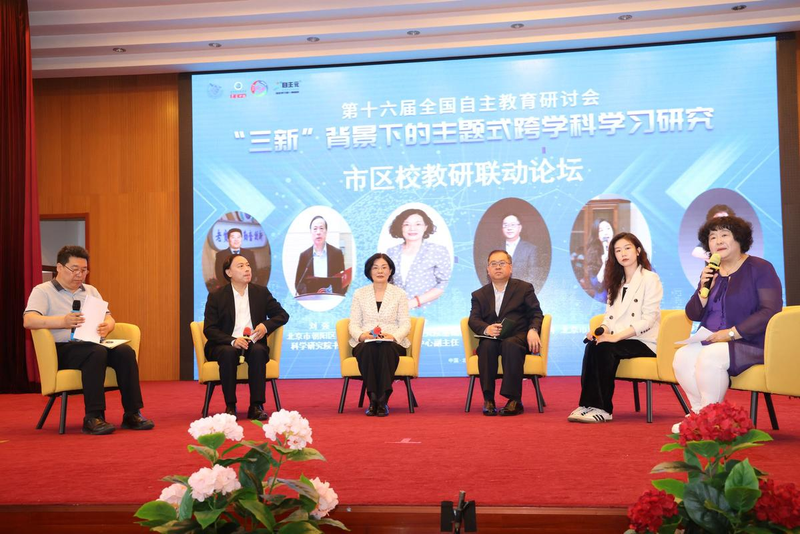
In the recent past, one of the priorities of the research carried out by luvi, a researcher in the department for research and research on innovative development at the state council's centre for research and development, ho jinghong, executive vice-president of the institute of intellectual property of the university of central and south china, and sun guo shwe, director of the institute of intellectual property and science and technology law at beijing university of aeronautics and astronautics, was the recent publication by the central office of the communist republic of china and the office of the state council of its opinion on enhancing the protection of intellectual property rights。
In the view of experts, intellectual property protection must be strengthened in the age of the knowledge economy。
In the new context of the luvi analysis, the country's innovation capacity has moved from being tracked to running, running and running side by side, and there is an urgent need to improve its original innovation capacity; some enterprises have entered the technological frontier of the industry and international competition for intellectual property rights has intensified, and the quality of intellectual property rights must be improved. “improving the protection of intellectual property rights is the most important element of improving the system of protection of property rights and the greatest incentive for improving the competitiveness of the chinese economy.” luvi said。
“it is also important to note that, in practice, poor protection of intellectual property rights and poor enforcement of the law, the risk of intellectual property rights violations persists, and that the situation of rights holders `proven, prolonged, costly and low compensation' has not significantly improved; the use of new technologies, such as the internet, artificial intelligence and so forth, poses new challenges to the governance of intellectual property rights violations.”。
For the future, multiple social forces, such as industry associations, chambers of commerce and volunteers, must be involved in governance, leading to a “big protection” model that combines the development of multiple protection models of intellectual property rights。
“intellectual property protection is not a `one-size-fits-all' exercise for a certain sector, and the increase in the level of intellectual property protection depends on the collaborative efforts of the executive, the judiciary, law enforcement and related professional bodies and associations, as well as on the awareness of the whole community of the culture of innovation and of intellectual property rights.” sun xianxiang said。