On 18 april 2018, on the eve of the 23rd world reading day, the chinese institute of press and publications released the results of the fifteenth national reading survey. The survey report indicates that the rate of exposure to digital reading (online online, mobile, e-readers, pad reading, etc.) by our national population in 2017 was 73. 0 per cent, an increase of 4. 8 percentage points from 68. 2 per cent in 2016. At the same time, more than half of the adult population tends to read digitally and with a voice becomes a new growth point for reading. (publication of the results of the fifteenth national reading survey, chinese publications network, 18 april)
With the social progress brought about by technological development, reading patterns are more oriented towards digital reading. In recent years, however, the social discourse on digital reading has been characterized by a variety of criticisms, fears and questions, with a focus on the ills of digitalization, such as the “web-reading threat theory” put forward by some scholars in the country, and voices such as “electronicization will ruin reading” from new media platforms, which has resulted in undue stigma and criticism。
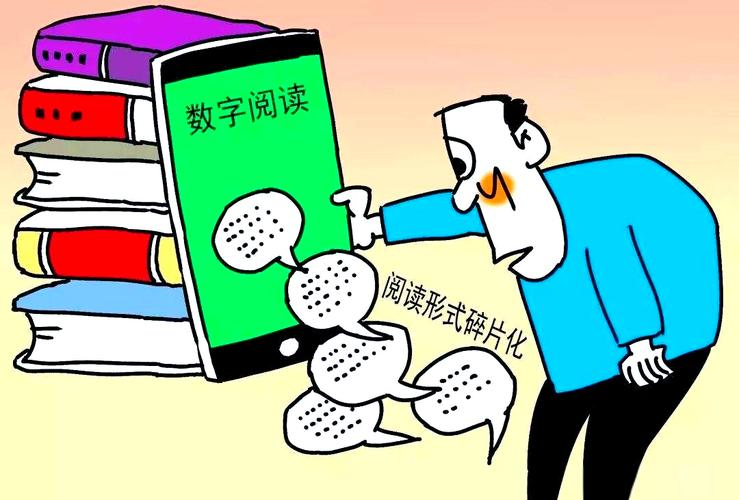
It is undeniable that digital reading is silently changing our way of reading and our habits, even affecting our way of thinking. But such changes and impacts are not necessarily all negative; technology is a double-edged sword, and all changes and impacts should be seen in two. We should give appropriate tolerance and understanding to digital reading and evaluate its growth in a more rational and objective manner, rather than simply accusing it。
Of course, as the subject of reading, we sometimes have to recognize this new form of reading, or reading media, as a disadvantage for us. To some extent, it contributes to the inertia of our minds, which, in a digitized reading environment, leads to the customary preference for superficial perceptions and to the abandonment of deeper thinking, leading us to superficiality and inefficiency at the level of our minds。
But does digital reading have to be superficial? Must the knowledge systems accumulated and constructed through digital reading be fragmented and fragmented? Is fragmentation bad? I can't agree. Digital reading is not equivalent to fragmentation reading, but, at best, the behaviour of the former has an element of the latter conduct or is actually involved。
First, digitization changes the medium and vector of transmission during reading, and textual content and core ideas are largely unchanged. It merely digitalizes reading content, especially electronic books. Is there a difference between content and thought between the paper version of ideal country, which is printed in ink, and the version of ideal country, which is produced through modern technology? Can we call this process “discretionary reading” because of the use of electronic devices to read ideal nations? The answer is no. The digitalization is nothing more than a vector of objects and information that we read, in which the intellectual content and intellectual content remain intact, not so-called fragmentation。
Secondly, human beings are subjective. For the time being, human beings are not entirely technology-dependent or manipulated. Since we have the ability to distinguish and choose, we have the ability to choose ourselves in light reading and thorough reading of leisure and entertainment, in fragmented and fragmented reading and in a holistic reading of systems. We can use mobile phones to watch chicken soup, to brush news, or read a philosophy book or a literary classic with a reader, which, if the former can be described as fragmentation reading, then the latter can be “face-to-face”。
Finally, digital reading can make a fuller use of our space, allowing us to have access to effective information in scattered time, which is the efficiency of fragmentation reading. According to the author, the reading process should also include the relationship between “mass” and “mass”, which is a deep reading that is necessary and necessary, so that we can devote the entire amount of time to “deep reading” and improve the quality of reading. At the same time, there is a need to leave fragmented time for reading, such as reading poetry on the subway, listening to writings or watching news on the phone, so that you can make full use of your own piecemeal time. Even though it takes a little bit of time to read, how can it not be a sight-and-mass gain for us if we have built up habits? “quality” is excellent and “quantitative” increases are a reading efficiency。
As we rationally analyse the negative effects of digital reading, we also need to see its positive significance and not let ourselves be cast in the shadow of such a “web-reading threat theory”。