I was often complained to me: i stayed at home after a little time off, brushing my tweets every day, chatting with my mail, reading the words, but i was in deep pain because i always felt that these days were too bad。
So i saw good movies in weibo, documentary resources, downloading right away to the computer, reading any good articles on the wireless commons, collecting them instantaneously, and seeing the new and weird ideas of your defenses all day long。
Even if it is repeated in the daytime, every night they lie in bed, and they find their heads empty and they learn nothing。
I was very tired。
I don't know if you've ever been in such a state。
I was troubled before, especially when i was just graduating, and it seemed like i was working on a daily basis to receive new knowledge and ideas, but in the end, i didn't get anything, and i was really worried。
"scattered knowledge" is more familiar to our young people than to our elders。
Why
Because of our generation, we live in an era of radical social transformation and development。
The dissemination of information, the flow of information, are no longer simply dependent on newspapers and magazines, new types of media emerge as springs after the rain, and access to information and resources of interest is available to anyone at extremely low cost through the spread of smartphones and high-speed networks。
The time has come for the flyer's tale to become a distant myth and reachable。
But the "discretional knowledge" that comes out of the air today has several distinct features:
First, it disseminates only facts, but ignores the process by which they are derived。
The compulsory education we have received since we were young requires that we focus on the process of extrapolation at every step, especially in the subject of mathematics. The problems that lead us to grow up are particularly repulsive。
Think about it. There's a lot of straight-up so-called knowledge, and in front of you, of course, you don't wonder what to do with it。
Someone put the answer to the test in front of your eyes, and your subconscious is definitely "happy"。
The problem of knowing the heat is not a discussion of debrisification knowledge, but what is “the coldest knowledge”, “the most useful life experience”, “the most resonating words” and so on。
The answer would certainly be one fact after another, but it would not tell you how that conclusion could be derived。
Secondly, to follow only hot spots, little systematic and sustained knowledge is available。
A few days ago, " glory of joy 2 " was broadcast, and almost all public figures were reading the play, either in costumes, or in professional socialization, or in character class。
What is popular in real society, and what we can get from new media, is an extremely solid cycle。
They'll take you away。
Why are we so interested in "discretional knowledge"
First, we need all kinds of stimulus。
Admit it, you don't want to go to school right now because it's not enough for you to read, because it's not enough for you to write, because we don't get tired of you sitting at your desk, but you have an urge to die, because we have to change the software。
It's because of the immediate stimulation of these softwares, which is faster than reading, you don't have to wait until the end of the school year, or graduate, to get the long-awaited feedback, so if you open microblogging, you can see the parents of all the street stars in short, tan and tan, why not
And it's hard to get the stimulus back when we turn it on, like you drive a very fast car, and when you brake, it's pretty bad for tires。
That is why it is difficult for some to leave once they have become obsessed with the game。
Secondly, we want rapid success。
I've known this before:
Your problem is not to want success, but to be rich overnight。
And so-called fragmentation knowledge has just met our unrealistic and false goal of searching for fast-track ways to meet it on the internet day and night。
To see today, as mentioned above, a method and technique of self-confidence is to think that it can be quickly popular and be popular, and to see tomorrow a course that can put its own ppt on the same level, it is to think that it is a great god and that it is beginning to become complacent。
But i can't tell how much i am, how much i have。
It's just that it exposes itself to the sea of "discretional knowledge" and forces itself to believe that it is learning and working, and that these so-called efforts are like punching in the air and getting nothing。
What should we do in the era of fragmentation
First, you squeeze out a certain amount of time every day。
This is the first and most important step in deciphering the “discretionary knowledge” challenge。
As i insist on writing now, there have been a lot of mistakes. Because in writing, i'm going to want to brush my circle of friends, to see how other people describe a story, the story, how it goes, what good words are used in writing。
There's a particularly odd phenomenon, the less we notice time, the faster it slips away。
Even though i sat in front of the computer, half an hour passed, i didn't get a word out, and i felt terrible pain and suffering in front of my sleep。
So guilt, and then insomnia, and the more insomnia i go back and forth the next day, and more and more, the more i write。
Then, when i was free, we set ourselves free, brushing the circle of friends, watching the beauty, and knowing。
But at 9:30 p. M., i'm gonna throw the phone, ipad, open the computer, and immerse myself in writing。
Because of this, my brain is operating at high speed every hour, and the faster i move, the more i forget all kinds of outside interference, the more efficient i work, the less guilty i feel in bed, and the better i sleep。
It's a virtuous circle。
You can squeeze out a certain amount of time every day to do what you like and make yourself a contract like this:
During this time, i can only do this and everything else。
Secondly, know what it is and know what it is。
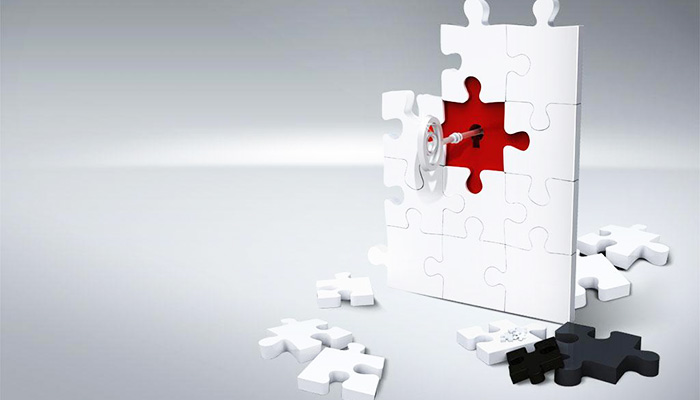
"scattered knowledge" is fragmented because we know only one single fact, how these facts are derived from, and how they relate to, other facts。
What we know is that it is an island that cannot be linked to a vast continent。
So the next time you see a fragmented knowledge point, try to stay on this island for a while and start with this island and explore the possibility of finding a new continent。
Every individual is an independent adult and should know how to find a large land that can drive himself, not just a corner。
Thirdly, don't do anything for fear of "discretionary knowledge"。
To be honest, we experience fear and fear every moment。
It's a natural instinct of human beings, and our ancestors saw hungry lions, fierce beasts of all kinds, and in their hearts, there must be fear。
Fear enables our ancestors to make the most sound decisions in situations of power disparity:
Run, run hard, flee far away。
And some people, in the face of "discretionary knowledge," are like our ancestors。
Fearing what they learned was also an isolated island, they stopped moving, stopped exploring, and ended the possibility of finding a bigger world。
In fact, we should change the mindset:
Fragmentation knowledge is not terrible. It is terrible that before we leave, we have our dreams that are torn into pieces。
I hope it works for you。
Zeng xian, known for almost a million praises, is good at ideas, efficient learning, communication skills, etc., and is dedicated to providing interesting and informative content to everyone who goes forward. Only good dry stuff is written, and occasional chicken soup。