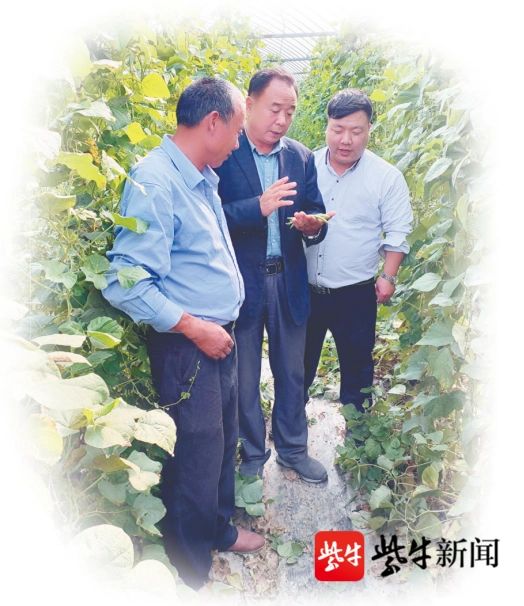
This is a new type of grass that has been successfully grown through a multi-year high-yielding herbiving method, using the following steps:
Step 1: serialized and batched sorghum infertility as a mother's book
Step two: scroll parentage and rice breeding materials 5359 in stages and in batches, with the selection of the father's distant relative and rice, and pollinating with pollinating devices and with paper bags
Step three: repeat step two on the second day
Step iv: cutting the mother beams of sterile ears and selecting the first generation of hybrid seeds full of particles
Step five: planting alternative first-generation hybrid seeds and re-planting the second-generation hybrid seeds with parentage and rice breeding materials of 5359 complexes
Step six: the second generation of hybrid seeds will be planted in the land in the second year, managed in accordance with conventional grazing techniques, which will allow them to survive the natural winter, and the following year will be followed by the selection of an excellent monolith for non-sexual reproduction, culminating in years of high-yielding herbage and high-pastoral straw, currently known as high-grass-2 grass。
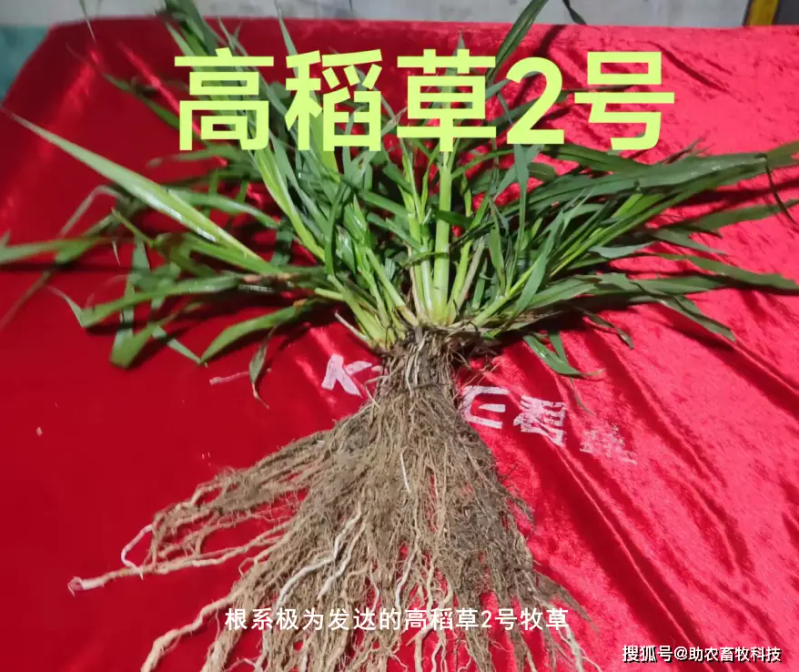
Some references to high straw 2 grass
1. This species, which is a non-genetic food herb crop, is the first of its kind in the world to have artificially integrated a combination of high-yielding carbon 4 and rice carbon 3 by means of artificial traditional hybrid technologies (rather than genetically modified techniques)。
Its hybrid technology route is multi-familial, multi-diverse complexes, the rapid fixed advantage of non-sexual reproduction, the state-of-the-art, state-of-the-art, state-of-the-art scientific breeding techniques created by the herd breeders, and the new varieties of food herds that combine the advantages of multiple bastards. It is currently the only species of the same species of grass that have been produced in the world as new varieties of food crops following the mixing of food。
2. The food herb is particularly fertile and fast, is highly divided, is highly regenerative, and produces extremely high yields and of particularly good quality. Longer-term growth can last 10-20 centimetres per day; maturity can last up to 5 metres or more. Each plant can be divided into about 50 seedlings and more than a hundred. Reharvestes can be repeated 6-9 times per year (area by area), producing about 40 tons of grass per acre per year. Over 65 tons can be grown. It is highly resistant to the cold, and it is possible to grow food grass with its roots over the years, with one-time planting, and to harvest it for more than 20 years. It is particularly resilient, has a wide range of cultivation, is acid-resistant, high-temperature, drought-resistant, cold-resistant, and is particularly fertile and suitable for ultra-high-yielding cultivation. Insect resistance is particularly high and no pest hazards have been detected in cultivation. Therefore, there is no need to treat disease with any pesticide throughout growth, but rather to produce real green food pastures. It is suitable for any soil planting, from the high mountains to the plains, from the fertile plots to the corners of the field, from clay to the sandy layers, and it is possible to plant any plot that is capable of drying up water automatically after rain. The roots of the saplings are known to survive at below 7°c and to repeat reproduction for many years。
3. The food is particularly nutritious, with much higher levels of coarse protein than normal pastures (up to 14. 2 per cent of coarse proteins have been tested by authoritative authorities) and is rich in amino acids and trace elements required by various animals, which, once consumed by animals and animals, greatly enhance their own immunity and resistance to disease。
4. All kinds of grass-fed or groceries may be fed, including, but not limited to, cattle, sheep, rabbits, horses, donkeys, deer, pigs, chickens, ducks, geese, fish, etc., and the herb contains suitable moisture, fresh grass, high sugar content in rods, suitable for direct feeding of herbivores, more suitable for the use of professional super fine shredders to crush into super-micro-fry unfermented fermental packs, which can be stored for long periods of time for self-use or long-distance transport to high-quality feed pasture units where needed。
5. The quality of high-grass pastures is the real achievement of foliage-free, soft, soft, sugar-rich, sweet and juicy poles, a variety of animal and animal foods, and of a quality that is not easily woody。
6. The herb is sweet because of the size of the rod and the high sugar content, which can also be developed for use in the processing of eco-beverages。
7. Because of its sorghum and paddy mixing, the high-intensity sorghum, whose genes are entirely derived from the low-intensity stratification capacity of the rice establishment, and the primary root of its growth, allows it to grow new seedlings that replace the main stubble after harvest. When people harvest pastures, these spare new seedlings can quickly replace the growth of the primary tubers, rather than waiting for the seedlings to grow from the poles after harvesting like other herbs. So, high-grass pastures can be said to have been created to harvest herb more than once
8 the distinctive advantage of high-grass is that it is a hybrid of food and grain crops, that the light-efficient c4 crop + rice is a high-quality c3 crop, that the high-grass perfectly combines the multiple functions of the c4 and c3 genes, and that, therefore, it has other super-high-light co-operations not available for the same type of herb, and that it can grow quickly to transform light into protein, sugar and a variety of nutrients, such as minerals, micronutrients, to leaves and rods. Other species of grass in society are weed species that are mixed with weeds. Nature has the law of the best and the best and the best, and the existing weeds are basically grasses that animals do not like or can't eat to survive. Almost all of the herbs that animals love are produced over the years by humans who have chosen to be cultivated. High-grass pastures, which are grown from human food crops with sorghum mixed with rice, are the only way to produce high-quality, high-value pastures, which are very good for grazing animals。
High straw herbs are not only suitable for all herbivores. It also drives one, two, three chains。
Weeding + feed + beverage + edible bacteria + paper + sugar + meat supply chain, etc。
In short, high-grass pastures are the highest known in the world. By the crop good casting institute, a herbivores expert, it is the only known grass in the world where food is mixed with food. And the only super-high-powered new species that combines the high sorghum c4 and rice c3 genes
The above information is collected as breeding units, news reports, etc., and is not used as a basis for commitment, for information purposes only。
Presentation on the high straw 2 herbs in subtropical plants
High straw 2 is the new herb species that were born in 2022. They are particularly fertile and fast-growing, highly divided, highly renewable and highly productive and of particularly good quality. Longer-term growth can last 10-20 centimetres per day; maturity can last up to 5 metres or more. Each plant can be divided into about 50 seedlings and more than a hundred. Some four repeat harvests per year (view area) are reported to be up to 40 tons per acre of fresh grass per year (we should not be able to produce more than sugar cane 3 grass, plumb grass and sweet weed in subtropical comparative sugar cane 3, although high straw 2 has a slightly greater capacity to split, but growth and regeneration is slow, as in the case of high ground to a point of growth of 1. 2 m, and high straw 2 is more than 20 days later, so it is cut 2-3 tons per year in the subtropical tropics, with annual production of less than 15 tons in the first year and around 25 tons in the second year). These are our comparative data, for reference only)。
It can be regenerated naturally in the coming year (the frost is not less than 7°c below zero, while the sugar cane 3 grass is currently tested at a minimum of 5° below zero) and can be grown for years to produce root-type food pastures, with one-time planting, which can be harvested over 20 years. They are particularly resistant and are widespread, acid-resistant, high-temperature, drought-resistant, cold-resistant, particularly fat, and suitable for ultra-high-yielding cultivation (not recommended for planting in plots with poor, fertile water). Insect resistance is particularly high and no pest hazards have been detected in cultivation. Therefore, there is no need to treat disease with any pesticide throughout growth, but rather to produce real green food pastures. It is suitable for any soil planting, from the high mountains to the plains, from the fertile plots to the corners of the field, from clay to the sandy layers, and it is possible to plant any plot that is capable of drying up water automatically after rain. The roots of the saplings are known to survive at below 7°c and to repeat reproduction for many years。
High straw 2 has a fine straw (compared to sugar cane 3, on average, about one third) and is not recommended for planting in areas where there are often larger phoenixes in order to prevent inversion。
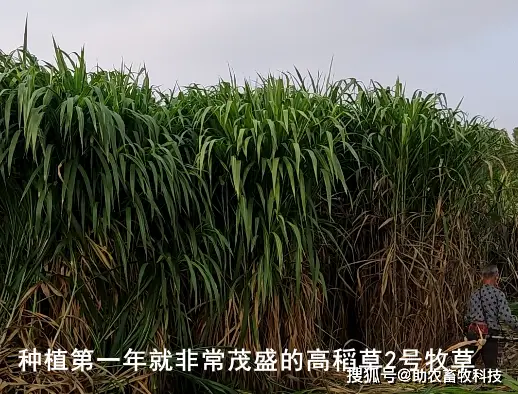
Guangxi aid farmers were the first growers (involved from inventors) of high straw 2 in the southern subtropical region, including saline-resistant high-grass pasture varieties。
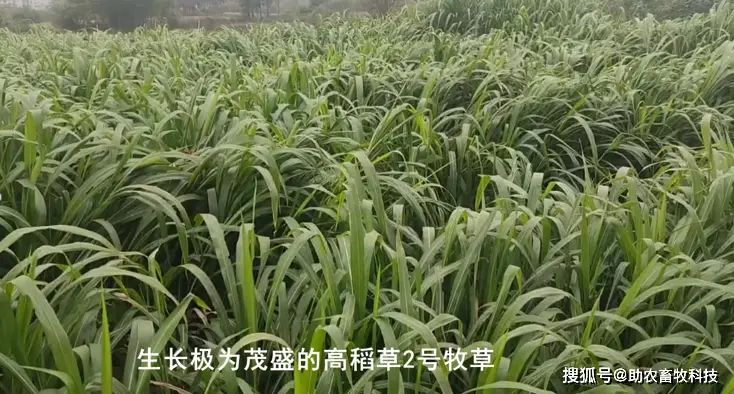
As high-grass 2 and saline-resistant high-grass are all new varieties, no large-scale yield measurements, animal feeding tests, etc., are currently compared with open parameters such as sugar, coarse protein, carbohydrates, etc., which are slightly lower than the herb species such as royal bamboo and sugar cane 3。
High straw 2 bid: 2 yuan/sprouts, heavy purchase required until april 2023。
There are approximately 25000-5000 sprouts per ton of high straw 2 and 800 (breeding pattern with a distance of 0. 8-1 m x 1 m) and 2,500 (feed feeding model 0. 6 x 0. 6 m) sprouts per acre. The method of planting is suggested to be about 20 days per sprouts before planting, and the sprouts are discontinued in june of each year and can be grown by the beginning of november。
The following two images are a comparison of the growth of herbage no. 2 with sugar cane no. 3 under the same planting conditions in the city of nanning, guangxi:
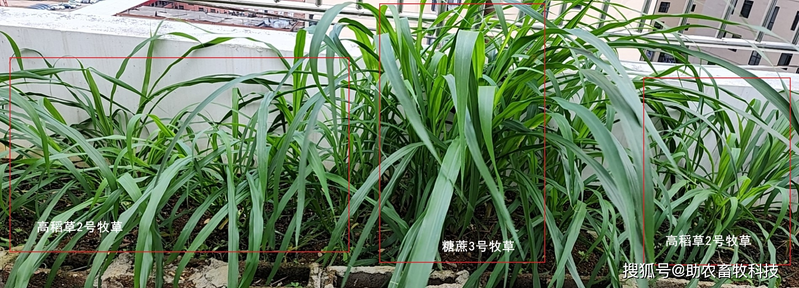
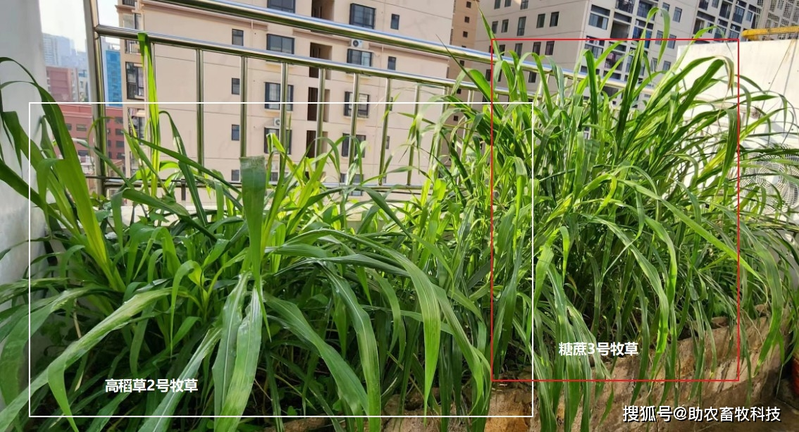
The comparison was tested in nanning, guangxi, for information only
Finally, many of the parameters of high straw 2 may not yet be comparable to sugar cane 3 and, in addition to the advantages of high straw 2 splitting and cold resistance, sugar cane 3 is more advantageous in terms of production, sugar content (carbohydrates) and may be the reason for a new species and has not been carefully compared。
In contrast to sugar cane no. 3 (under the same conditions), we believe that sugar cane no. 3 cultivation in the subtropical regions of the south is, in many ways, a new type of grass that is currently more advantageous。
In addition, the high straw-3 plant, based on the advantage of the high straw-2 herb, is growing even larger (breather) and has higher sugar content, with the potential to go beyond the high straw-2 herb and sugar cane3 pastures, with guangxi aid agriculture granting the first seeding sites, with the first supply needed until july 2023 (at undetermined prices); the high straw saline-resistant pastures parameters are closer to the high straw-3 herb, with saline and drought-resilient areas, and the guangxi support farmers are also the first seeding sites, which are currently being tested in several places, such as the guangxi coast, and are expected to be in august 2023。