


Along with the widespread use of smart media such as smart phones, the “digital divide” is growing and escalating to become a global social problem. In his 11th issue, media watch, professor wang minjie and masters of science and communication, shaanxi university of pedagogical sciences, recognized that the digital divide in the mental and physical age era had generated new issues in terms of gender, class, age, intergenerational, and had simultaneously advanced the deepening of traditional digital divide theories at the foundation of divide generation, core signs, and technological logic. Faced with the global digital divide challenge, values, institutional and practical rationality in the application of technology were needed to bridge the digital divide in an integrated manner and to promote good digital life through tangible social action。
Introduction: the “digital divide” as a social issue
As of june 2023, the number of internet users in the country was 1,079 million, with an internet penetration rate of 76. 4 per cent. The forms of social services in the age of smart media, such as instant communication, web video, online office, internet shopping, online travel booking, internet medicine, online education, online literature, etc., are widely used, and the mediaization and intellectualization of life are increasing. In this process, some marginalized and silent “digital vulnerable” groups have difficulty integrating into contemporary digital life, and the growing “digital divide” among social groups has become a global social problem。
The concept of the “digital divide” stems from the “knowledge divide”. According to the “know-how gap” theory, those with a higher economic status in society are faster and easier to access and accumulate information and knowledge than those with lower socio-economic status, an important condition being that information systems of the mass media are more accessible and accessible to those with higher economic status. The emergence of the digital divide is also closely related to the understanding and use of digital media technology systems, and the significant differences in the use of media technology and the occupation of digital resources by people in different regions and industries and socio-economic status have further contributed to the imbalance in practical capabilities and even the inequality in the realization of interests, as well as to the widening of disparities in the level of inter-group development。
The digital divide has undergone a three-tier shift in access-use-effect gap and is constantly generating new patterns, such as the silver digital divide, the gender digital divide, the rural-urban digital divide and the digital divide in developing countries, which are a constant social phenomenon embedded in society and in which “disparities” and “inequality” have always been key words and concerns, and these new social realities drive the digital divide to explore multiple perspectives at both theoretical and practical levels。
Ii. Thematic focus: factual concerns of the digital divide in the mental media age
The major causes of the digital divide and its increasing growth are the gaps and conflicts between social classes or groups resulting from the varying degrees of use of media technology at the social level. It can be said that the digital divide essentially focuses on the emergence of new existential inequalities in a digital society and the inadequate protection of digital human rights. These problems have shown some new signs in the intellectual age。
(i) digital access and the digital gender divide
Looking at the global context, the access gap remains significant as a level-i divide, and the digital gender divide manifests itself mainly in the gap between mobile access and participation in digital activities. In low- and middle-income countries, 900 million women still do not have access to the mobile internet; for female mobile users who have learned about it, the primary barrier to its use remains economic affordability, literacy and digital skills. Gender disparities in the divide at the first level have further influenced the development of internet action, and the widening of the gender divide at the digital access level shows that women remain a vulnerable group in the digital society。
In our country, the proportion of active internet users among women rose to 49. 3 per cent in 2022. Despite a marked narrowing trend, the digital gender divide persists。
(ii) new forms of digital divide between media use and youth
With the development of digital infrastructure over the decades, the lack of digital equipment or access to the internet has improved over the years. Yet another form of divide emerges, namely, how web-based resources can effectively support the social life and self-development of individuals and provide equal opportunities for individuals in education, occupation, etc. This new digital divide manifests itself in the youth and youth groups. For example, many studies show that young people in rural areas are more susceptible to games, while in economically better urban areas smart media such as mobile phones can play a more active role in youth growth。
New forms of digital divide exist among the youth population, mainly in terms of the quality and social effectiveness of internet use. The rational and effective use of smart media is an essential factor influencing adolescent growth and socialization。
(iii) bipolarity between mental disability and the group with silver hair
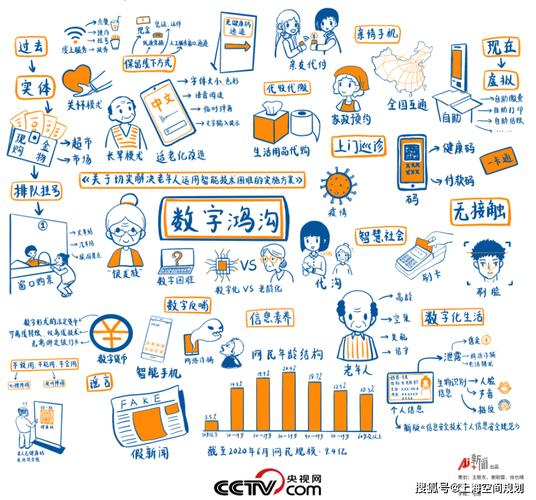
The group of older people, known as the "silver ones", displays the extreme difference between the "failure to adapt and refuse to apply" and the "silent virtual world" in the face of smart devices. On the one hand, under a wave of deep mediaization, the majority of older groups show manifest resistance based on a combination of physiological factors, while on the other, older users at the front end of innovation and diffusion of new technologies find themselves in a “digital obsession” because of undiscovered single use。
China's share of the silver-haired population on the internet rose rapidly from 5. 7 per cent at the end of 2008 to 25. 8 per cent in 2022. Network access is gradually becoming adequate and digital applications such as short video, instant messaging and online shopping are available. It is worth noting, however, that the middle and senior population groups that have crossed the digital access gap are also facing the test and challenge of the second digital divide and are wary of the physical and mental health damage caused by over-ingestion. At the same time, it is necessary to protect against cyber rumours, cyber-fraud, algorithm fraud, information cocoon houses, etc。
Iii. Theoretical outreach: deepening the multidimensional dimensions of the digital divide in the intellectual and mental age
The new social reality, represented by smartphones, smart algorithms, emerging forms of chatgpt and content production methods of aigc, has become a “common technology” in social life, creating an ecologically sustainable environment around which the new social reality poses new challenges to the digital divide theory, expanding on multiple dimensions and deepening the digital divide theory。
(i) rethinking the foundations of the digital divide
Early ditch theory focuses on access to knowledge/information, and its main research targets the media that influence access to knowledge/information. When the internet became widely available, many scholars continued to look at the relationship between internet media use and access to knowledge from the same perspective, arguing that people with a good educational background were more willing to access the internet and more likely to use it in a instrumental way; the lower the level of education, the more the internet seemed to be used for recreational purposes only。
The digital divide theory of the smart age has shifted from a “access” perspective to a “production” perspective, which more fully explains the complex basis on which the digital divide is created and exacerbated. Some scholars have argued that the concept of knowledge should move away from the perception bias of objective knowledge, complete the paradigm shift of “objective to subjective” “public communication to people”, thereby broadening the interpretation dimension of the theoretical study of knowledge gaps, and introduce the concept of “dominant objective knowledge gaps”. The new concept of “knowledge regenerative digital divide” has also been advanced by scholars who have called for “the need to focus on the growing knowledge regenerative divide” and have called for “the digital divide of knowledge regenerative as a potential force for public opinion and as an instrument of activism to change public policy” from a social and theoretical perspective。
(ii) re-awareness of core digital divide manifestations
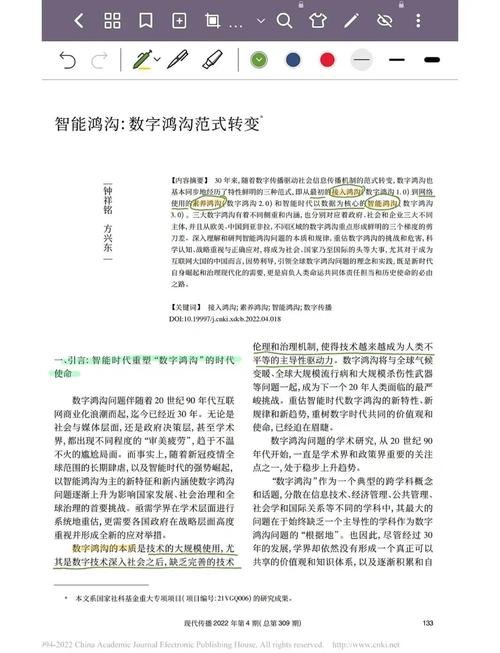
The digital divide theory goes through the three phases of the “access ditch” “use ditch” “effect ditch”, in which the “punishment ditch” is intended to observe the gaps in the ability of individuals to “facilitate technology for me and maintain the rationality of digital technology”. In particular, in the future internet phase, represented by the meta-cosmos, the development of a new generation of human interaction will drive a new era of human symbiotic life and how to symbiotic with technology becomes the greatest challenge for future societies。
Access to technology, vigilance about the risks and controls it entails, is a self-fulfillment of rare technologies to domesticate and, more importantly, a manifestation of the human nature. There is a great disparity in the consciousness of technology domestication among people in the intellectual and mental age. The pervasive media, with their vast amounts of information coming in on a daily basis, and the deep anxiety that surrounds them, have created an image of resistance practice, “digital detoxification”. “digital detoxification” is the initiative of users of the internet and mobile phone applications to limit their own access to the internet and to introduce a conscious “digital isolation” that allows subjects to remain autonomous while enjoying the facilities offered by the machine and avoid becoming subordinates to it. Digital detoxification has the potential to reduce the risk of forced use of smartphones, thereby reducing health hazards to young people's groups through the use of various social media. It can be said that the emergence of the “training ditch” is a typical sign of the digital divide in the intellectual age。
(iii) rediscovering the technical logic of the digital divide
The algorithms of the mental-media age are “at all times present” and coexist with them as the core media necessary for individuals of the mental-media age. On the one hand, we need to accept the existence of algorithms and use them to expand human capabilities and enjoy the benefits they bring; on the other hand, we need to be sufficiently aware of and resistant to the controls and other risks posed by such a “partner”。
For different algorithm users, there is a huge literacy gap in being aware of the risks associated with algorithms and in being conscious to resist them. Algorithms influence people's decision-making, ranging from route planning, access to information, daily consumption, environmental diagnosis, etc., and are influenced and controlled in all areas of social life, even to some extent controlling their social status, creating phenomena such as “calculative discrimination” and “calculations bias”. These “autonomous” and power-colored technologies “controlled the boundaries of the establishment of freedom and relentlessly conquered our public and private lives, which many do not fully understand or even are unaware of. The study concluded that lack of or insufficient awareness of algorithms may have become a democratic challenge. The digital divide, including algorithm awareness, is therefore a global problem。
Iv. Practising reason: the path to bridging the digital divide in the mental media age
The digital divide involves social development, protection of interests, social equity and the building and realization of a better digital society. Bridging the digital divide requires upholding public values at the social application level of technology and, more importantly, reflecting the institutional rationality of integrated governance at the social governance level and the practical rationality of the actors in digital life。
(i) upholding the public value of technology applications
Once technology emerges, it exists as a force that at all times seeks to participate in the historical development of humankind and the existence of a decent social presence, which is stronger in a “technological society” where, for example, we will find it difficult to move forward in life if we leave smartphones now. That is why the public value of technology is now more important than ever, and it is only by following the public value of technology applications that the digital divide and the new social inequalities resulting from differences in technology applications can ultimately be bridged。
Technological development should be aimed at the benefit and benefit of humanity, and not, in turn, be contrary to human well-being and to human dignity. Thus, the digital divide is undoubtedly a representative phenomenon of technological alienation, contrary to the public principle of technological development. The development of smart media technology is the result of technological innovation and evolution, with technological innovation and technological applications premised more on expanding the well-being of public human values。
(ii) institutional design to safeguard realization of interests

The digital divide in the age of smart media means that certain rights of digitally vulnerable groups are being violated and that the most basic objective is to break down the barriers and barriers to the digital survival of vulnerable groups, with the aim of safeguarding their basic digital rights while reconciling social relations and resource allocation between the strong and the weak。
The fundamental purpose of bridging and bridging the digital divide is to break the social divide, the isolation and the injustice of technological change and progress, to enable every member of society to benefit equally from the dividends of technological progress, and “society can be based on `equity'” `humanism' considerations develop, in an institutional manner, specific facilitation policies to address the technological divide for age-specific groups that are unwilling or simply reject new technologies.”
In particular, we must not only constantly identify the main subjects of society, including the disadvantaged, but also guarantee the realization of their specific rights and interests at the implementation level. For example, at the institutional level, we are constantly exploring long-lasting mechanisms to address the digital divide among older persons. The implementation programme on practical solutions to the difficulties faced by older persons in the use of smart technologies, published by the office of the state council in november 2020, provides a package of solutions to the digital difficulties faced by older persons in the areas of daily transport, medical treatment, consumption, participation in cultural and physical activities and services, thereby demonstrating the rationality of the system in the pursuit of social equity and justice。
(iii) practising rationality towards social development
The new digital economy and the development of smart technologies inevitably result in crowding out and harming the living space of certain social groups, making it more difficult for vulnerable groups that are socially disadvantaged to survive digitally; on the other hand, the digital and intelligent technological environment is the social context in which all people live, and bridging the digital divide is the overarching requirement for the overall development of society。
First of all, the social security system's bottom-up function and barrier are used to safeguard the survival and development needs of vulnerable groups and to maintain social vitality and resilience in the fight against digital inequality, digital exploitation and digital discrimination. Social security resources favour low-skilled and low-income groups and strengthen skills education and training for counterparts. Second, special forms of digital services are used for specific groups, helping groups with digital difficulties to cross the “service gap” and achieve “accessibility”. Thirdly, internet enterprises, social organizations and other social forces are used to help, encourage and support the digitally vulnerable。
In short, bridging the digital divide and helping those “digitally weak” who are individual or particular groups to emerge from their marginal existence in the age of the intellectuals is a basic act of social civilization and universal morality, and more of a desirable “digital china”。
(media watch, no. 11, 2023, with approximately 7800 words, originally entitled " digital divide in the mental media age: focus, theory development and practice reasons " . This is an extract from the note. For academic references, please refer to the original language. Full-text link to media watch magazine: https://mp. Weixin. Qq. Com/s/hhbobypcuz1jggfzmbqmg
Wang minjie, professor, school of journalism and communication, shaanxi university
Master's studies, faculty of journalism and communication, shaanxi university fan



