The original, the new passion, the new passion, from the album's re-examination of the classic dissemination theory
It's in front
One of the questions that we are often asked in the internet age is: are the classic theories in those textbooks okay now? Can they still resist new technologies? Or should most of them choose “retire” and give the stage to the “poster”? We have therefore decided to introduce a series of “revising the classic dissemination theory”。
In today's presentation, cécili gaziano, a communications scientist, read the “knowledge gap hypothesis”. Gaziano is a student of tichnor, the author of the ditch hypothesis, and is also a flag figure in the current study of the ditch. In 2017, she wrote for the international encyclopedia of media effectiveness, the knowledge gap: history and development, which can be seen as an authoritative combo and vision of this theory。
In this issue, we have compiled for you the core of this article, and we have joined you in “update” the understanding of the knowledge gap hypothesis。

01.
System and conflict: the nature of the ditch lie
One of the first findings of mass communication research was that people's level of education is related to access to public knowledge. Based on this conviction, in 1970 tichenor et al. Presented the well-known ditch hypothesis: “as the mass media spread more and more information to society, better socio-economically well-off people will have faster access to such information than the less well-off. Thus, the knowledge gap between these two groups will tend to widen rather than narrow.”
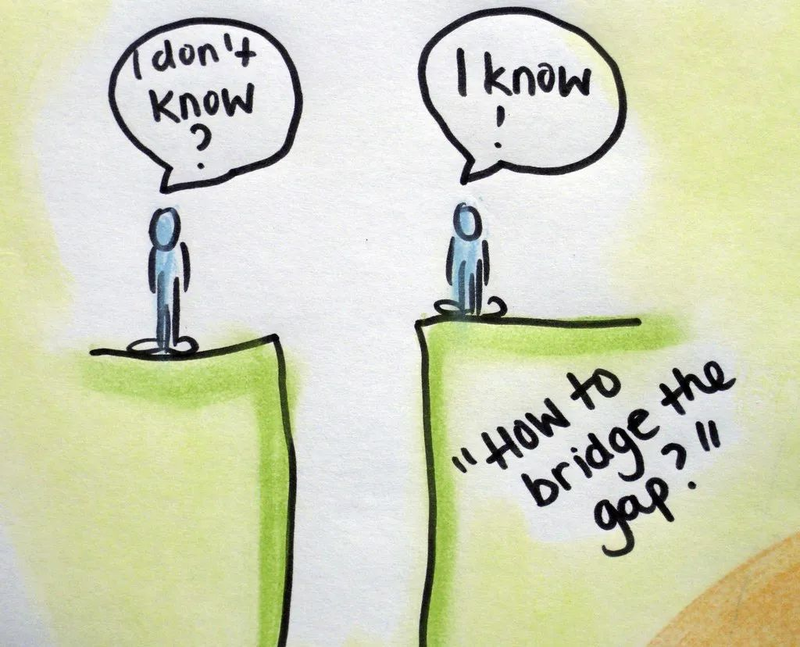
Here, knowledge is defined as “information acquired and remembered through the learning process”. There are different ways in which knowledge can be measured, either by “knowledge of an issue” (known or unknown dichotomy) or by “understanding of an issue” (from very familiar to unknown). These conceptualizations correspond to knowledge of early sociologist robert park and knowledge aBut. At the level of knowledge of an issue, there may not be a clear gap in knowledge, but at the level of understanding of an issue, it may be very obvious。
In a paper presented by tichenor et al., some data were taken from the 1965 doctoral thesis by tichenor at stanford university, science transfer and knowledge among the adult population of the united states. This paper focuses more on social psychology. However, in the ditch hypothesis, the three collaborators chose the macro-social perspective. They were concerned about people's educational attainment, and since then education has also been used as a measure of socio-economic status (ses) in most knowledge-sharing studies. It should be noted that the knowledge hypothesis applies to public affairs and scientific information, or is relatively generally attractive. On the contrary, information that only attracts a particular audience, such as stock market events, sports, garden care, etc., may not be appropriate。
In explaining the reasons for the knowledge gap, tichenor and others believe that people with higher levels of education have better communication skills and reading and understanding skills and are more likely to be exposed to such topics before. In addition, research has shown that the higher the level of education, the more reference groups, more interpersonal contacts and more social integration. These factors make them more likely to discuss public information with others。
The most critical point for the initial ditch hypothesis is that mass media information dissemination systems themselves have structural layers. For example, scientific and public information tends to be more publicized in the print media, thus reducing access to people with lower levels of education. Of course, it cannot be overlooked that the print media tend to cater more to the higher social strata of ses than to radio and television。
When the ditch hypothesis was introduced, the theory of systems was widely welcomed in social sciences. Tichenor and others are also keen on this theory. They believe that the knowledge gap is the result of social control. Knowledge is an essential foundation of social power, and therefore knowledge control is essential to the development and maintenance of social power. In their eyes. As social systems such as the state or the community become more diverse and complex, people are increasingly dependent on secondary institutions for information, especially the mass media. The mass media are both the controllers of information and the subjects of other social subsystems. The subsystem may generate conflict when it interacts, and information control may be an element in dealing with the conflict。
Photo from flickr by flickr user.
Concepts and conditions: critical theory of knowledge
The united states is in the midst of great social reform at the time when knowledge is given. In this context, prejudice against minorities is one of the important topics of society. First, according to some scholars, the know-how hypothesis is too decisive and ignores the capacity of vulnerable groups and is therefore biased. In 2003, everett rogers understood the term “difficult” as the result of dissemination activities and renamed it the communication effect gap. As a result, the perpetrators of the knowledge gap became sources of information rather than recipients (including minorities)。
Ettema and kline (1977) say in a similar way that those with lower education are voluntarily informed of knowledge useful to them. In their view, motivation was the key to knowledge acquisition and a ditch hypothesis based on motivational differences was proposed. This helps to move from the “defector theory” to the “differentiation theory”. According to dervin (1980), failure to focus on receiving information is tantamount to accusing the victim. She also questioned the traditional mass transmission “transmission-reception model”, which considered the individual to be the creator of meaning. However, from the point of view of the social structure, some of the knowledge available to the less educated may not necessarily give them greater social power or move up the class。
Gaziano and gaziano (1999) created a four-fold type of knowledge-sharing hypothesis study. Two of the dimensions are: (1) the dichotomy of describing sociocultural phenomena as natural or socially constructed (2) the dichotomy of focusing on individual actors or collective actors. Social construction refers to the concept attributed to individual/group interaction. Socially constructed knowledge embodies a belief in the reality of things. In other words, knowledge exists within the social environment and does not grow alone. Dervin's work focuses on individual dimensions and knowledge that occurs naturally. The framework for ettema and kline is sociopsychological, and they focus on individual dimensions and socially constructed knowledge. Tichenor et al. Initially put forward a ditch hypothesis focusing on knowledge at the collective level and naturally occurring. The last category, research focusing on the collective dimension, social construction knowledge, did not appear until 2009。
With the development of research, tichenor et al. Found that conditions existed for the occurrence of the ditch hypothesis. For example, community conflicts contribute to a more “balanced” dissemination of information within a social system. As media attention diminishes, the knowledge gap may shrink. Even in some cases, there is no knowledge gap, or there is a reverse knowledge gap, i. E. The less educated are more aware of a subject than the more educated。
03.
From knowledge to belief: recent research progress
There are already hundreds of studies worldwide related to knowledge ditches. Most studies tend to confirm the existence of knowledge gaps. Researchers are most interested in the areas of public affairs, elections, science and health; other studies continue to apply these findings in community settings and extend them to political participation. Experimental approaches have also been used to try to identify conditions that could improve information construction and dissemination。
Education and motivation are important. Sometimes motivations and interests are related to socio-economic status, but sometimes they are not. Indeed, increased access to and use of the mass media can improve the level of knowledge of the “low-ses groups”. On the other hand, how the mass media define and report on public issues can have an impact on the expansion/bridgement of knowledge gaps。

Researchers believe that radio and television can contribute more to bridging the knowledge gap than the print media. However, there was no consensus on the outcome. A more systematic study of the issue in different societies might be a good idea. High-ses groups may live more in the print environment and low-ses groups may be more exposed to the broadcast media environment. This may be due to the higher demand for knowledge in printing, which makes it more acceptable to the dominant groups。
The introduction of new media is both a hope and an impediment to the goal of closing the knowledge gap. Knowledge differences may increase if internet access, use and education are associated. The internet integrates influence and printing. The former may be easier to interpret, while the latter may be more difficult to decode. Differences in internet use are often referred to as the digital divide. Even if access increases, other barriers may not diminish. Even data suggest that the internet may lead to a greater knowledge gap. Perhaps, with the spread of computer and information search teaching in schools, the knowledge inequalities associated with the internet will be reduced。

Since the 1970s, united states citizens appear to be increasingly living in isolation from each other's media environment as united states politics becomes more polarized. Some studies have shown that conservatives and republicans tend not to trust the mainstream media, and that they view the television programmes that support the democrats and liberals as fraud. Similarly, the democrats and liberals considered cnn and npr to be more honest. Party bloggers may magnify these tendencies. This isolated information environment can lead to less tolerance of different views and less understanding of other groups。
In the context of a polarized political climate, hindman introduced the belief ditch hypothesis (belief gap hypothesis) on the basis of the ditch hypothesis. He used faith as a variable, and liberal-conservative ideology was a more important interpretation variable than education. The belief gap is that, as the mass media spread more and more to society, the gap between political beliefs will widen rather than narrow among people with different political ideologies。
This new view of the theme of the knowledge gap has inspired many studies, albeit with mixed results. If we go back to the four dimensions of the knowledge that we spoke of earlier, the belief gap that hindman has put forward fills the last gap, because political belief is precisely a collective dimension, a socially constructed knowledge. Of course, it is not easy to distinguish between knowledge and belief. It was criticized that, in the first study of the ditch hypothesis, tichenor and others did not distinguish clearly between social construction/natural knowledge. Thus, they use “humans will soon be landing on the moon”, “ whether or not they believe that smoking causes lung cancer” as information rather than faith to measure disparities between different populations。

It is noteworthy that the belief gap raised by hindman highlights an interesting issue. We have often said that conflict is an important factor that may help us to narrow the knowledge gap, but it seems that hindman has proven that conflict also widens the gap because different party groups are unable to agree on the meaning of knowledge, who is qualified to validate knowledge and how to interpret facts。
04.
Five future research directions
In conclusion, i would like to offer some thoughts for the future study of the ditch hypothesis:
1.
The concept of “knowledge” should be further refined and conceptualized. Different types of knowledge can be addressed in a study. Perhaps we will find that gaps in knowledge of public affairs (e. G. Fluorination) can be bridged, but the technological knowledge gap on fluorination may widen。
2.
More research can be done to focus on misconceptions about data among individuals and groups, inaccurate information flows, the dissemination of misinformation, and information avoidance behaviour. These perspectives are particularly important in the area of public health。
3.
We need to know what the long-term impact of this is on the knowledge gap if the readership of newspapers continues to decline. What is the impact on democracy if the internet goes beyond newspapers in disseminating information on public affairs
I'm sorry.
The information and social environment is gradually becoming more fragmented and the resulting divides have led to a deepening and increasing divide within cultures, ideologies, religions and other areas. These processes further divide social groups so that it is increasingly difficult for us to agree on “what is knowledge”, “what is society” and other political issues. That is equally worthy of our vigilance。
5.
The reasons for this need to be examined further. The process of developing motivations for knowledge seems to have begun early in life and is often associated with many socio-economic factors. Poverty limits the ability of parents to invest emotional resources in their children, and may also make it difficult for them to access or use resources for the development of their children's capacities. These issues appear to be more destructive in early childhood when cognitive links are emerging。