Washing hands, disinfecting, changing white work clothes, and the technocrats at the ketsing ho intellectual agricultural park in texas pushed wen qi to open the greenhouse door, and in the wet air coming from the puffs, she was familiar with the smell of tomatoes. Tomatoes, the main raw material required for beginners to produce tomatoes and eggs, are grown in both the north and the south, and are known as family names。
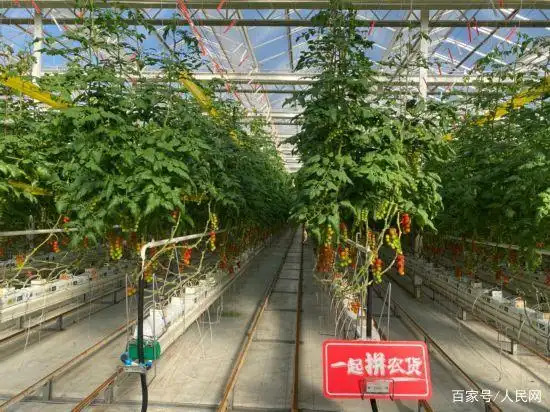
The kesing ho wisdom greenhouse, located in shandong county, is 25 hectares, the size of 600 standard basketball courts. Lee yun-fung
In the appendix to the qing dynasty's wide aromatic spectra, there's a mention of "toms": "a six-month tomato, with tremors. Four or five feet tall, leaves like an eye, flowers like a pomegranate, and a piece of five or three or four." unlike ordinary tomatoes, which grow up to one metre and six centimetres, the tomato here is a real tall one, which can grow up to more than 20 metres and can be called an infinite growth tomato. Not only are they high in size, but they also produce a large amount of fruit, which, compared to the normal tomato plant, may only hold up to 5-6 ears, while infinity-growing tomatoes can hold up to more than 20 ears, yielding 5-6 times more than the average shed, and reach 40-50 kg per square metre。
Tomato doctor: create a household account for tomatoes to monitor growth data in real time
In the sweet and sour tomato smell, wen qi made a tour of the garden and started a day of work. Wen qi is primarily responsible for the environmental control of the greenhouse and the management of water fertilizers。
“this single glass greenhouse, with a total of 25 hectares, equal to the size of 600 standard basketball courts, all grown with tomatoes.” according to hu weng qi, greenhouses use ultra-white-pressure dispersible glass to increase greenhouse light, which has a very high perforation rate and is known as the glass family “prince of crystal”。
Through the glass of the greenhouse, the sun is evenly exposed to the tomato plant, the tumbled bees shake their wings, fly between the plants and pollinate in a purely natural manner to ensure that tomato seeds are full。
“in order to ensure the healthy growth of tomato plants, each greenhouse is equipped with a plant protection technical engineer.” wen qi explained that, from the very moment the seeds were born, the tomato plant had been set up as an archive of household records, recording its weekly growth data, including data on the length of leaves, number of leaves, fresh hair, etc., and regulating the growth environment of tomatoes and irrigation。
This data is also traceable to agricultural products, which clearly know the origin of each fruit and even trace back to the father and mother of the tomato。
Private custom: grow the sourness you want
"it's not what tomatoes grow, it's what we eat, it's what we want to eat, and we grow it into what we grow." wen qi said that by monitoring data, it is possible to adjust resource ratios such as water fertilizers in real time and customize the taste of tomatoes. If you like acid, you grow acid tomatoes, if you like sweet ones, you grow sweet ones。
At the same time, various sensors have been placed in the greenhouses to detect the health of each plant, to send the data back to the computer, to allow technical engineers to monitor in real time to ensure that the tomato plant is healthy. Fawwen qi laughed, saying, “the problems identified during surveillance and park patrols are analysed and prevented before pests and pests occur. It's like a doctor for people. We're tomato doctors."
When the tomato season matures, it comes close to seeing workers walking through the tomato plant, beating leaves, fruiting, picking and performing their duties. A string of tomatoes was removed and placed in boxes, and the pick-up truck was then transported to the pick-up workshop。
On a fully automatic sorting line, tomatoes are screened through layers, removing the fruit that contains the bruises, black spots, cracks and scars, leaving the qualified tomatoes at the consumer table. In addition to off-line sales, the selected tomatoes will be packed and fast-forwarded and transported to various locations through a variety of electrical power platforms。
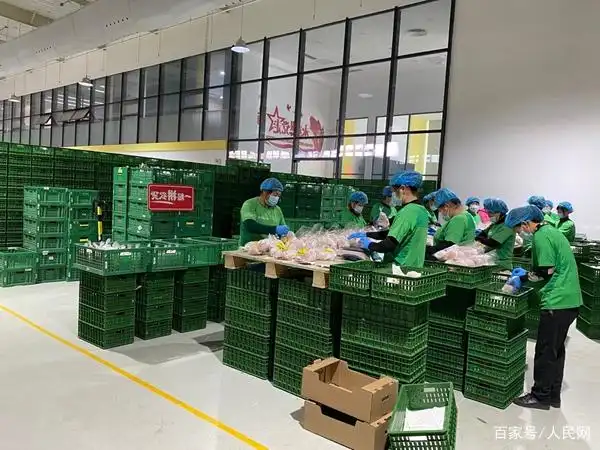
In june this year, greenwalkers joined a multibillion-dollar subsidy to sell more than 100,000. Lee yun-fung
In june of this year, he joined a multi-billion-dollar subsidy, which now sells more than 100,000。
“many consumers in the country know for the first time that `home-owned tomatoes', unlike traditional search-style electricians, encourage sharing in a variety of ways, can stimulate many of these tasted potential demands.” according to the head of the multi-farm project, “more than 800 million consumers have very diverse needs, with billions of subsidies, groups of people, seconds, etc., and different demands of consumers are grouped together in order to make a precise match at the cloud end, which will help consumers to buy their own good products at affordable prices, and help supply the quality of deep-tilled products across the entire industrial chain, help to make good brands and sell good prices.”
Digital agriculture: helping farmers say goodbye to "food by heaven"
“it is a farming model that explores changes in the way farmers eat from the sky.” wen qi said that, compared to ordinary tomatoes planted on the ground, smart greenhouse tomatoes were planted in a specially made coconut. As long as the temperature and conditions are appropriate, tomatoes can grow from september to july of the following year, with multiple adhesives in the middle and full-year cultivation。
This exploration coincided with the second multi-agricultural science and technology contest, launched jointly by the chinese agricultural university and zhejiang university. The competition is known to be aimed at engaging young global agricultural scientific teams to challenge high-quality and high-yielding tomatoes within six months, using cutting-edge nutrition science, precision agriculture and other technologies. The competition's advocacy for “scientific and technological innovation to increase land output, labour productivity and provide new pathways for farmers to grow wealth” has become the direction of the efforts of the younger generation of agricultural researchers。
Sun prey, his colleague, was one of them. Sun bae-bai, project manager of the kaesing ho-fung angryung base, has been working on the operation of smart greenhouses since he graduated from the chinese university of agriculture. Having seen the recruitment information for the second do-do-agriculture competition, sun was able to find that the contents of the competition were very compatible with his own job and that there were experts to guide him, he joined his colleague, lee hao, and two other members of the development team, and successfully entered the rerun。
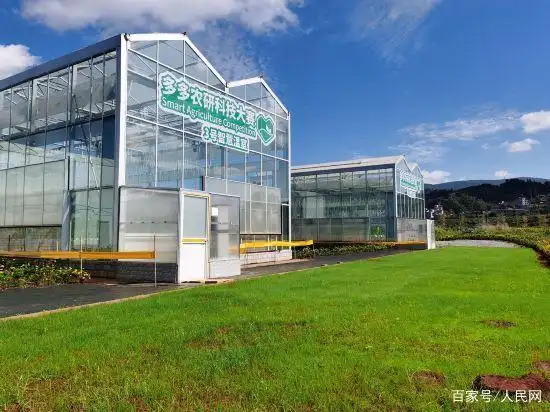
Four teams emerged from the resumed second multi-agriculture contest and made their way to the multi-agricultural research base in yunnan, opening a six-month tomato cultivation match. Pumbaa
“there was much guidance and advice from professors and experts throughout the reporting process, and, although not at the end, we learned much throughout the exchange and sharing.” after receiving feedback from the organizers of the competition on the evaluation of their teams, sun's team made a great deal of work and reflection.” if there are such competitions and seminars at a later stage, we will participate in them, hoping that next time we will be better prepared.”
It is understood that the multi-agricultural science and technology contest is one of the many initiatives that have contributed to the modernization and revitalization of rural agriculture in china. In august of this year, an additional $10 billion was invested in the creation of the “twenty billion agricultural research institute”. The purpose of the project is to address the vital needs of agriculture and rural communities, not for commercial value or profit, and to promote the advancement of agricultural science and technology, and to promote scientific and technological inclusion with the aim of increasing the motivation and awareness of agricultural scientists and workers. So far, the profits of q2 and q3 have been invested in the project in consecutive periods, in the hope of stimulating more young people into science and technology agriculture。
There are many agricultural scientists, like weng qi and sun, like tomatoes: dare to try, but have courage. They have dreams and perseverance, dared to try and believe that little power can also spread a great deal of light。