The fruit cucumber cultivation techniques of the winter solar greenhouse, including heating, ventilation, plant adjustment, melonization, disease prevention and timely harvesting, are used as a reference for vegetable farmers。
1. Take precautions to protect against temperature
The cucumbers are warm vegetables, with low winter temperatures, slow growth in the upper part of the plant, slow uptake of minerals by the roots, inhibiting the growth of the plant, and the incidence of top-of-the-horizon, head-heading, leading to lower quality of the finished product and lower production. Therefore, the temperature should be kept at 14 ~ 16 °c at night, preferably not less than 12 °c, and the temperature is prone to glucose peaks around 10 °c. During this period, weather forecasts should be viewed daily and, pending the onset of cold currents, measures such as the timely increase of cover such as temperature protection outside the sheds, high-level planting, ground cover of the membranes, and, where possible, the direct laying of heating facilities within the sheds. In the event of a freeze, the application of folate fats such as propyl esters and potassium dihydrophosphate can mitigate the freezing and reduce loss。
2. Ventilation and light
Light and carbon dioxide are key factors in the growth of cucumbers, and because of low winter temperatures, some farmers have extended the external temperature of their sheds to cover time and reduced the opening of vents. In the absence of light, cucumbers grow slowly on the one hand, and their production and quality on the other hand are heavily affected by the planting of thin, large-sized cucumbers. Therefore, during winter cucumber growth, the time of light should be extended as much as possible, and when the sun rises, the temperature of the sheds, provided that it does not decline sharply, should be lifted in time, e. G., the temperature of the shelter should be reduced to no more than 2°c at short intervals, and the temperature of the sheds should be reduced rapidly, so as to allow for short light of 8-10 h per day. In the event of successive low-temperature weather and in order to increase the light in the shed, even in the middle of the day, it is necessary to open up the warmth in time for the plant to receive the light. Artificial light-fixing or incandescent lamps may be used, if circumstances so permit。
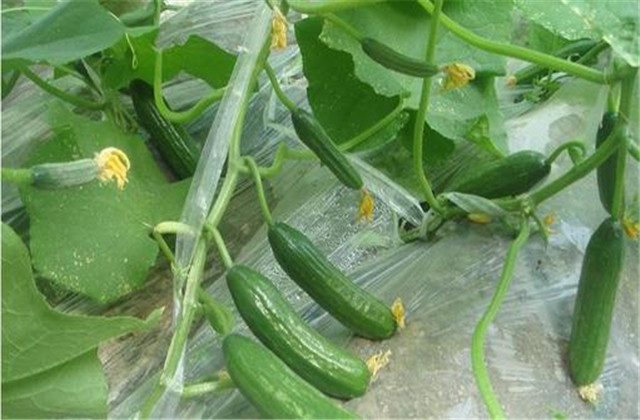
The low opening of vents in the shed during the winter in order to keep them warm has resulted in a severe shortage of co2 concentrations in the sheds, especially in the morning, in better light conditions, in high consumption of co2 for photosynthesis, in which the carbon dioxide concentration is almost minimal from 9 to 10 a. M. If vents are not opened, cucumbers have a very scarce material for photosynthesis, and cucumbers are hungry at this time, at which time the need for cucumbers can be greatly mitigated. When cucumber is grown during the winter season, general ventilation is three times/d, the first being about 1 h after the exposure of temperature protection, at which point it is mainly dehumid, at which point the wind opening is small; the second is when the temperature rises to about 28 °c, at which time the time is the strongest, at which time the main effect is to increase the concentration of co2 in the shed; and the third is at 30 ~ 35 °c, at which time the main effect is to dewet, cool and increase co2 in the shed. The concentration of carbon dioxide in the sheds can be increased by ventilation and, where possible, by burning wood, oil or chemical reactions。
3. Plantation adjustment
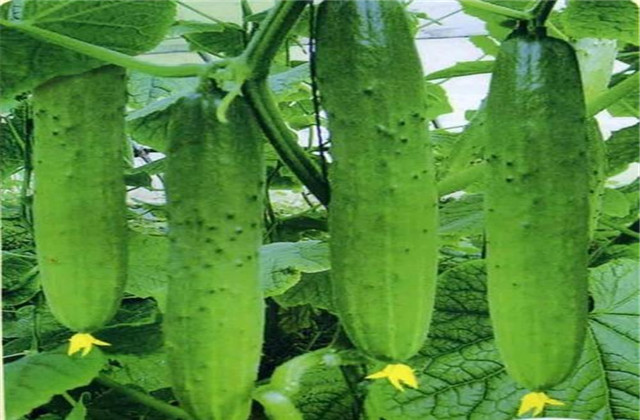
In winter, when the external temperature is low and the cucumber grows slowly, it should be full-sized in time to remove the old, sick, dead, useless leaves, improve cucumber light conditions and reduce the need for useless consumption and pest transmission. {\chffffff}{\ch00ffff} {\chffffff}{\ch00ffff} {\chffffff}{\ch00ffff}{\ch00ffff} {\chffffff}{\ch00ffff} {\chffffff}{\ch00ffff}{\ch00ffff} {\chffffff}{\ch00ffff} {\chffffff}{\ch00ff00} {\chffffff}{\ch00ffff} {\chffffff}{\ch00ffff} {\chffffff}{\ch00ff00} {\chffffff}{\ch00ff00 when the plant has six to seven real leaves and rolls must begin to appear, it is necessary to have a timely chow, which cannot be overstretched, and then, as the plant grows, tie the chicken in time, so that it is combined with a guacamole, male flowers, old leaves, sick leaves, non-functional leaves, etc., that it is ventilated and reduces nutrient consumption. When the plant is long enough to fall in time to facilitate farming operations such as harvesting and spraying. It should be done in the middle of the morning, which should take place in the middle of the day because of the heavy water content of the plant, the breakable length of the rod and the proper control of the water in front of the chicken; the height of the chicken should be 30 to 50 cm at a time. Surplus leaves should be removed before the chicken drops in order to reduce nutrient consumption while facilitating ventilation; the chicken drops should be accompanied by more growth and strength and less growth. It is best to choose between the mornings of the sun and the healing of the wound, to keep more than 20 leaves per leaf and at least 2 leaves under the bottom cucumber。
Four, pickle
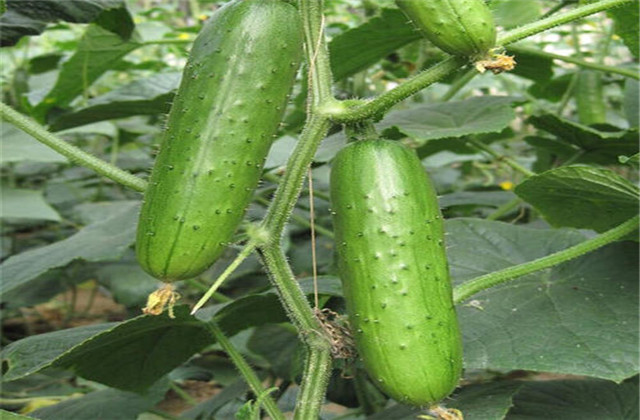
As a rule, at least one or more cucumbers are produced per section of fruit cucumber, and one can be left in each section when light temperatures in spring and summer are appropriate. In winter, given the poor photo-temperature conditions, if one in each section causes each cucumber to grow badly, and if it is found that the plant is long and larger, even if the melon does not meet the requirements for extraction, the extra cucumber may be removed in a timely manner at very short hours in accordance with the conditions of light temperature, leaving one or two in one section。
5. Disease prevention and treatment
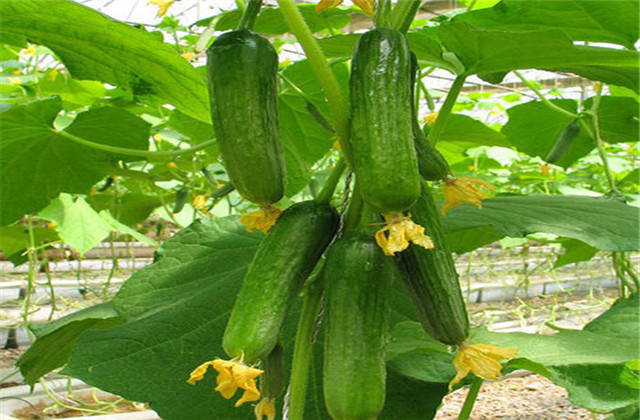
Winter temperatures are low, with a small number of pests, such as white powdered lice, and relatively few pests, but because of the long-term closure of the sheds, the roofs are extremely wet and prone to disease, the main diseases being frost, greyy, bacterial horny diseases, etc. The main causes of the disease are two: reduced ventilation and greater humidity in the shed; and farming operations such as strangulation and leaf removal, which produce a traumatic face on the plant and greatly facilitate the spread of the disease. Thus, on the one hand, it is necessary to reduce the humidity of the air and to control the onset of the disease by improving ventilation, laying a covering on the ground, keeping warm as early as possible in the afternoon, maintaining high temperatures at night and reducing the time of exposure; on the other hand, it is necessary to choose the time to heal the wound in the morning of the sun and to reduce the area of trauma by cutting leaves with scissors instead of hand chokes。
Precaution is also possible with the application of crop protection agents such as dyson manganese zinc, esters, and propsynzinc. When it occurs, the treatment of such agents as frosting, frosting and cyanide is applied in a timely manner. It is recommended that spray be carried out in the afternoon by fog-smoke machines, which use less medicine, less water and have good results. The use of fumigant fumigation control is recommended in the rainy weather and can yield better results。
6. Timely collection
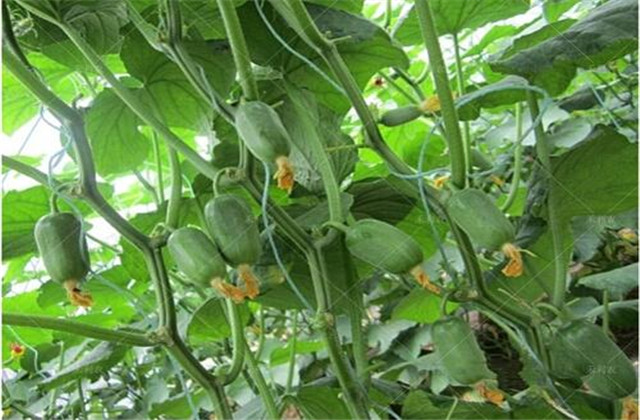
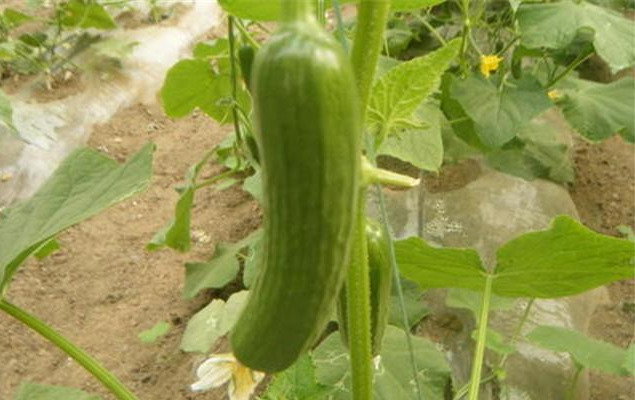
The fruit cucumber is a crop that has grown many times over time and is growing rapidly. It must be collected in a timely manner so as not to be too late, to be big, to be of poor quality, and to be hung in such a way that it can consume much nutrients, which weakens the growth of the plant, affects the growth of the plant and affects the growth of the lower section, especially in the event of unusual weather. When the melon grows to commodity requirements, care is taken to harvest early so as not to increase the burden of planting, which leads to weaker growth and lower resistance, while affecting the growth of other cucumbers. The pick-up requires a cucumber of 13-18 cm in diameter of 2-3 cm. The flowers begin to harvest at the beginning, with scissors cutting off the handles to reduce the trauma。