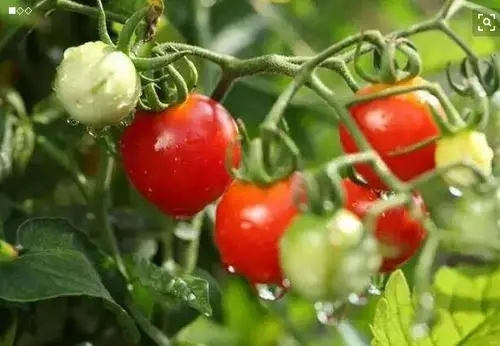
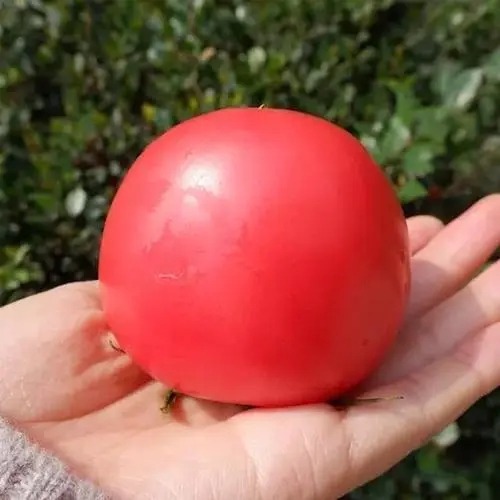
Tomato color red, sweet, nutritious, vitamin c, good for skin maintenance, and people love it. Tomatoes are growing in scale due to high economic prices. As facilities are costly to cultivate, tomatoes continue to be cultivated mainly in the field。
Plantation time
The tomato prefers to grow in a warm environment, with the most appropriate growth temperature between 20 and 25°c, so it is its habit that open-air cultivation is most appropriate around the time of spring, march-april, otherwise it is too early to grow and is prone to poor growth。
Fertilizing the whole place
Tomatoes are suitable for planting in deep soil, soil perturbation and well-drained land, which requires a deep-turning before planting, a sufficient amount of fertilizers as base fertilizer to increase soil fertility and, when the soil is razed, ditches to be used to prepare for planting。
Drumbing and seeding
The birth time varies from one region to another, and shanxi changji usually sows it in late january. With the purchase of tomato seeds, tomatoes can be tanned 4-6 h, then disinfected with 50°c warm water 10-15 min. Seeds are then immersed with water from 8-10 h and then removed from the water with wet paper towels or towel wraps which are humid and incubated at 25°c ~ 30°c. When the seeds are white enough to sow, a cave and a pelt of dust 1-2 cm. When the soil is covered, water with a canteen to avoid the seeds being washed away。
Shrimp management
We'll make sure the tomatoes grow and we'll lay the foundations for high-yield production. Shrimp management is carried out mainly in the light management of tomatoes. Tomato seedlings need better light, and if there's no light, there's no light, there's no light, there's no light, there's no light, there's light, there's light, there's artificial light, there's temperature management. Tomato seedlings are sensitive to temperature and should remain at around 25°c at birth, not below 15°c, or else they are prone to cold conditions leading to atrophy or even death; and tomato seedlings are wet management. The tomatoes must be soaked with water, and normally no more before they come out. It's either dry or watered; four is fertilizer management for tomato seedlings. Fertilizers in the base of general seedlings are sufficient and do not need to be applied before planting, but small amounts of organic fertilizer are required if the leaves of the nursery show symptoms of fertilization, such as yellowing。
Set it up in time
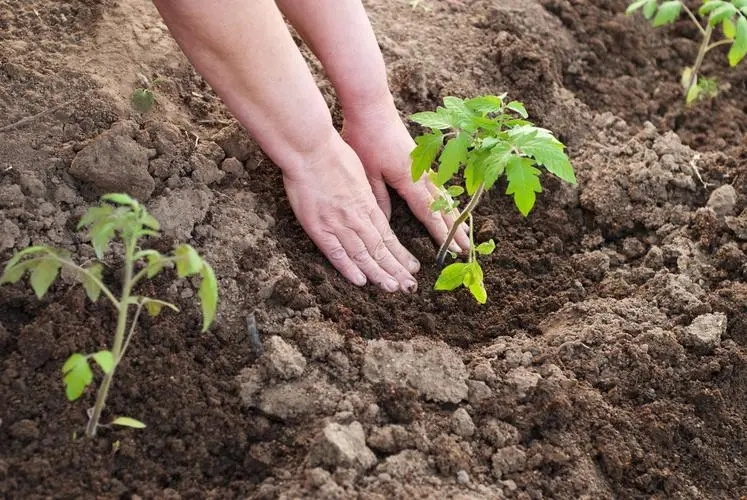
In mid-april, the tomatoes should be planted in due course when they are 45 to 50 days old, 15 to 20 centimetres tall and 5 to 6 pieces of the main leaf. Prior to planting, the tectonic lambrane bandages were tight, usually using a (50 cm + 70 cm) x 40 cm planting pattern, with an acre density of 2778 and a harvest density of 2361 (85 per cent seeding). During planting, holes are drilled by range, then water is poured into well-filled caves; when the water is half-dipped, seedlings are removed from nutritional bags and buried in the caves, then the soil is buried at the end of the roots。
Fertilizer management
The water is distributed in a timely manner from 3 to 5 days after planting; 15 to 20 days after seeding, with strict control of water recharge and promotion of root-stamping; 20 kilograms of urea per acre per acre per acre when the first ear swells; 15 to 20 kilograms of urea per acre per acre when the second ear swells; and 2 to 3 times as the fruit rises and the number and quantity of water is increased。
With a chicken
The first fruit shall be mounted in a timely manner, with a 1. 6-1. 8 m-long pole, fixed in a gutter of 8-10 cm from tomato seed, each of which shall be made into a “human” frame, before the flower is established. The chicken is tied when the 1st bouquet opens, and the chicken is then tied with a line or plastic rope to ensure that the tomato is out of line and that it is in the interest of the bouquet。
Pest control
Insects and pests are natural enemies of high quality and high-yielding tomatoes, especially in field tomatoes. Prevention is generally prioritized in the following ways: first, by reducing the occurrence of pests and diseases through seed treatment; secondly, by increasing the resistance of tomatoes plants through sound field management; thirdly, by fostering natural enemies of common endemic pests and pests; and fourthly, by using the biological properties of pests and artificial insects. If pests and pests continue to occur, pesticides need to be selected for treatment。
Collection in due time
After the flowering of tomatoes, 60 d fruit matures and is taken in batches, in accordance with the principle of “a full batch of ripening and harvest”, and the fruit should not be taken with a handle, so as not to stab another fruit. In order to avoid scavenging and fibrosis, the origin is marketed mainly with fresh fruit, which is suitable for harvesting during the chromosomal or semi-correstrial period; if storage or long-distance transport is required, it should be collected during the white season。