There are so many financial models on the market, which one to learn
Is that what you're wondering
Today, i talk to you about several common financial models, taking into account my experience over the years. I'll tell you where they're used and how they're used. You can understand and manage selectively according to your current needs。
Basic analysis model
With experience, the basic work of financial analysis is in these basic analytical models. Both monthly and quarterly self-checking of smes and regular financial monitoring of large firms depend on them. To be honest, they can help you figure out the financial situation of the enterprise and quickly find the problem。
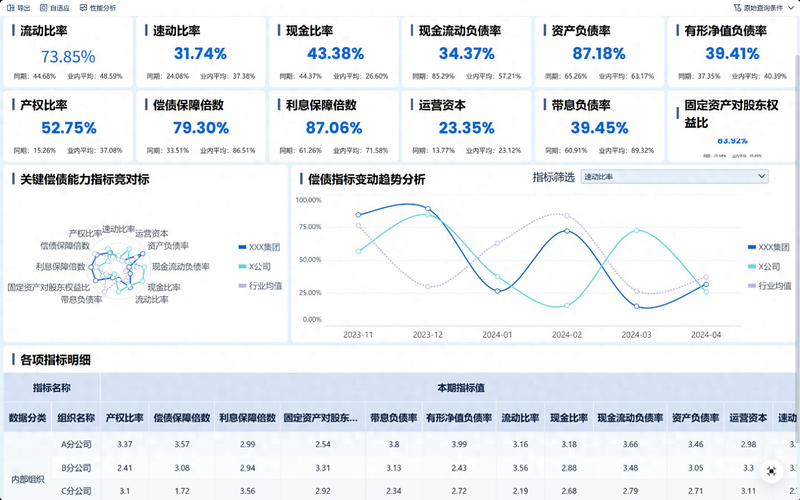
1 ratio analysis model
Are friends who do financial analysis often confronted with data and how to compare them
The solution to this model is to convert key data from the three tables into ratios and eliminate the impact of firm size so that they can be compared with their peers and with their own years。
When you use it, you can quickly judge the company's base finances by focusing on the liquidity ratio, the māori rate, the stock turnover rate and the revenue growth rate。
Looking at a ratio alone, such as 10 per cent of the net interest rate of the company, is not meaningful, but on average 15 per cent in the same sector, means that the profitability of the company is less than that of its peers and that it has to find costs and costs。
Two, dupont analyses me a lot
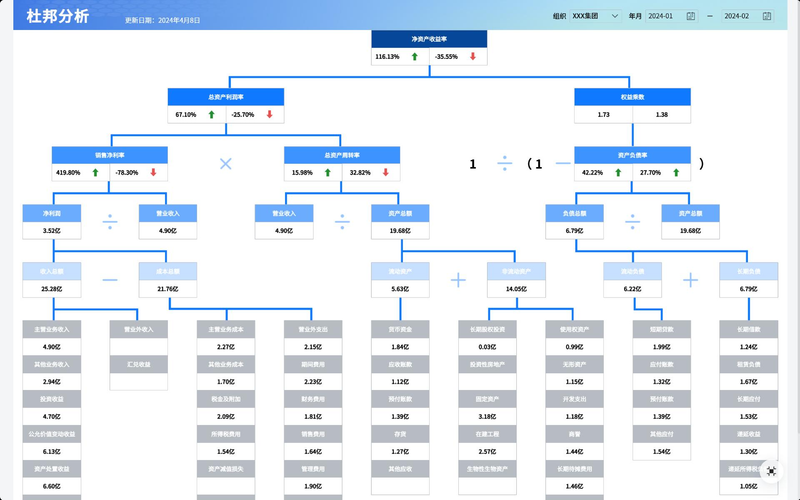
Its value lies in decomposition, i. E. Disassembling roe into a product of three indicators。
Roe goes down, and you can see the problem with this model:
It can be used by management for profit analysis and by investors for the quality of company profits。
To help make the analysis more efficient, i have assembled a dupont analysis template that shows key financial indicators such as net sales interest rates, total asset turnover and asset liability ratios, as well as detailed composition of operating income, costs, assets and liabilities. Self-required:
Https://s. Fanruan. Com/dbmh2
3. Cash flow analysis
This model focuses on three points:
The sustainability of operating cash flows is an important basis for judging the real profitability of the enterprise; the matching of investment cash flows with corporate strategies; the risk of financial exposure if firms expand and the investment cash flows are negative, and if they do not expand, then the asset goes wrong; and whether the financing cash flows are under debt-servicing pressure, for example, by borrowing many short-term debts and paying up centrally as they fall due。
It is enough to focus on this model as a warning to the risks of the financial chain and to judge whether new projects are sustainable。
Valuation type models
When investment, m & as or equity transactions are involved, we need to use the valuation model。
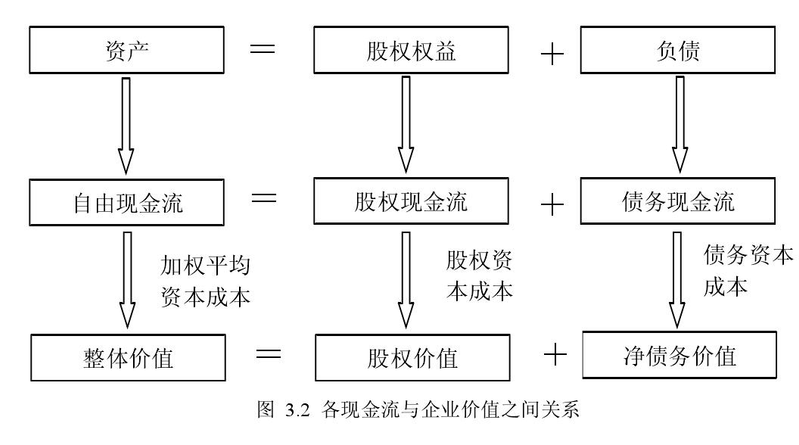
4 the dcf, or the cash flow discount model, is a theoretical standard。
It translates the free cash flows that companies may generate in the future into current values。
This model is suitable for companies with stable cash flows and mature business models, such as consumption, utilities, which can predict future revenues, cash flows and produce more accurate results。
In fact, you don’t have to be too complex to calculate the discount rate, with a professional investment team doing fine measurements, or a preliminary assessment by an sme or a rookie, as long as the key assumptions for future cash flows are set。
It also has two derivative models:
Choose as needed。
Comparable company analysis methods
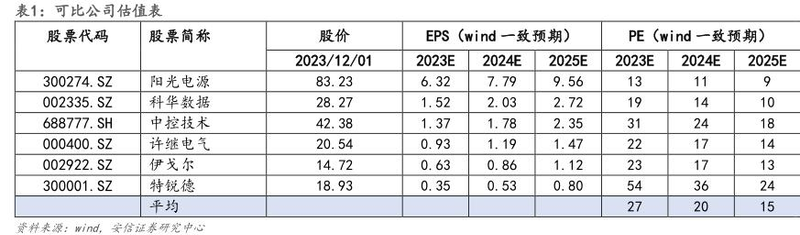
In practice, especially in initial screening, company analysis is more common than in practice。
In short, a few listed companies with similar operations, sizes and stages of development are identified to see what level of valuation capital markets give them, such as the average market rate, and then as a reference。
This approach is efficient and easy to communicate。
But it's got a clear problem: you can't find a totally comparable reference company. Moreover, if the valuation of the entire sector is high or low, the reference itself may be distorted。
So you can't rely on this alone to draw conclusions。
Iii. Modelling for addressing specific issues
However, not all financial work is routinely analysed and special jobs such as mergers and acquisitions, budgeting and so forth, require the use of specific scenario models。
6. Merger and acquisition integration analysis model
It is essentially a detailed financial simulation. The core task is to quantify synergies。
What do you mean
The answer is:
This requires a detailed consolidation forecast of the financial statements of the two companies, ranging from income, cost to assets and liabilities. This process is a test of your understanding of the business details of both enterprises。
7. Comprehensive financial forecasting model
That is, the preparation of a forecast profit statement, balance sheet and cash flow statement and the logical balancing of the three statements。
It requires you to start with the business plan and step-by-step the impact on costs, costs, asset inputs and funding requirements. To put it bluntly, it is to set next year's collection target, and then push back how much it costs, how much it invests, how much it borrows, and how much it produces a complete budget table。
The key to physical exercise is to assume that the business will fit and that the target will be determined in the context of market size and company business planning, otherwise the projected figures will be useless。
Annual budgets, new business expansion assessments are all based on this model。
This three-table linked projection process involves a large number of formulae links and scenario tests。
I used to do it with excel, and once the assumptions were adjusted, the balance had a headache。
And now i'm used to building prediction models in the finebi business intelligence platform. Its connection computing and visualization simulation functions allow for a very intuitive test of the overall impact of different business assumptions on the three tables and are clearly demonstrated in budget reporting. The tool link i put here is interesting for trial:
Https://s. Fanruan. Com/aa5nx

Iv. Models for supporting decision-making categories
In addition to the above, i would like to share two models that i have used to make the analysis more solid。
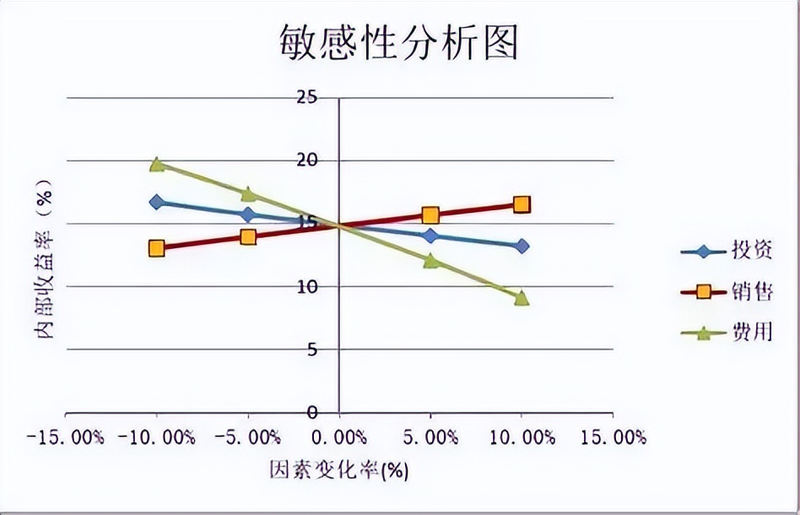
Sensitivity analysis
This is a step i have to make after any prediction or valuation。
I'll ask myself:
So i can quickly see which variables have the greatest impact on the results. These variables are the key points that i need to focus on。
Swot and financial integration analysis
Many companies do strategic planning, do swot analysis, see strengths, weaknesses, opportunities, threats, but only strategic analysis can be de-financial. The model combines strategy and finance, with data-supported strategies。
The model will not be one-sided in terms of financial data or strategic analysis, and when you do strategy development, new business layouts, the model will make the strategy more remote and financial。
Summary
There are many models and methods that i'm talking about today, but you don't really need to have them all in the first place。
You'd better get that part of the basic analysis solid first. Ratios, trends and cash flows are the basic daily function. You've been able to cope with most of the usual analytical needs。
This can be followed by selective and in-depth learning in accordance with the direction of their work. If you are engaged in investment-related work, then the valuation model is the focus; if you are at the group headquarters and may involve merger analysis, the corresponding integration model will have to be studied。
I hope that my experience today will be shared so that you can clearly know which one to use when you need it。
# financial analysis #